UK Economy: What the hell is going on?
(I wrote this on 3 Oct - nearly a month ago. Apart from a few edits it’s substantially the same as written.)
The more one studies macro economics - the way our financial institutes and government work - the more one becomes depressed.
On the surface, credentialed bankers and politicians, project a veneer of competence; that they know what is going on and that by pushing certain levers, dialling up or down certain controls, they can smooth our economic landscape.
My revelation - probably long overdue - over the last few years is that actually we have incompetents in charge at best, bad actors at worst.
Like the contemporary study of history, economics seems to take perverse delight in ignoring the received verities of the past and acting like everything is new. That there is only now. Now will be different from thousands of years of human history.
So, we - the general public, the uneducated masses - knew instinctively that printing money was bad. Printing money is a childish response that clearly provides a short term relief at the expense of long term stability. We used to look at the cautionary tales of the Weimar republic, Zimbabwe, Venezuela, Argentina, and be thankful we lived in Western democracies where such idiocy couldn’t happen here.
It happened here…
To focus in on the UK. The closing of the economy - needlessly, foolishly - in March 2020, prompted the Bank of England to print £450B of money. Money that was given to government via monetarisation of the government debt (gilts). “How much do you want?” asked the Bank of England. And they printed it and used these funds to finance the governments COVID policy. Money was flying around the stagnant economy not backed by productivity or activity.
So we’ve got inflation. This isn’t a surprise. I’ve been signalling this eventuality for the last couple of years and I’m not that bright. I’m not credentialed. I don’t tend to talk in bogus imperatives. The future is always unpredictable but, based on this writer’s experience and judgement, the fact that inflation was coming down the track seemed obvious.
I’m not a Johnny come lately. I’ve written publicly that inflation was on its way due to crazy policy ideas of the Government / central bank nexus both here in the UK and elsewhere. I went public with my fears. Privately, I re-mortagaged six months early in January of this year because I knew rates would soon go up. So I’m personally very smug about that and glad that I did. But not everyone studies macro economics like I do. The general public look to our governments and financial institutions to look after their interests.
They didn’t.
Proximately, the Conservative government did two things and forgot two other things.
What it did: One, it underwrote the energy costs for both consumers and businesses by introducing an average price cap. As energy is very expensive (due to many factors, some, all, due to actual government policy on fossil fuel withdrawal and elective sanctions on Russia), this policy is very expensive (£100B a year? More? Slightly less). The second decision the government made was to lower taxes or cancel recent tax rises.
I’m generally in favour of lower taxes. I spend my money better than any government. Corporation tax is paid for by everyone and the higher it is, the less companies wish to remain or relocate to the UK. So the cancellation of the corporate tax rise from 19p to 25p was a welcome, and sane move. Lowering income tax. Yes, sure, why not. Cancellation of the National Insurance Tax rise was also welcome. Give me more money to spend in what I deem essential (home, heating , kids, and yes, that dreadful word, savings).
The government also abolished the 45% tax rate for those on over £150K a year and did away with the EU inspired cap on bankers’ bonuses. These two I have a hard time defending. The less tax, the better, always but this is a moment of national crisis with energy costs going up and the cost of living getting out of control. There is an argument of trickle down and the Laffer curve (where lowering taxes brings in more revenue) but this was the wrong time to test this out. The government would have been better to increase tax thresholds and do away with the pernicious fiscal drag we’ve been suffering for years.
But onto the two things missing. Firstly, if the government is spending more via energy support but also simultaneously lowering the tax burden, where does the money come from? It was bloody unforgivable and amateur hour for the government not to address expenditure and financing in the mini Budget. Shocking in fact. Interest rates and bond prices were rising already - worldwide. The Bank of England had finally got around to unwinding their bloated QE inspired balance sheet by embarking on Quantitate Tightening (ie, selling government bonds back onto the market). And then the government announced a major leap in expenditure and tax cuts. These commitments would require MORE borrowing at exactly the wrong time.
The second thing the government forgot was not to get the finance world on its side. Finance works off certainty and the British government seemed to relish in surprise. Pulling in the opposite direction to the Bank of England was a foolish move. Not to engage the Office of Budget Responsibility was equally stupid. Also, the markets were surprised and reacted accordingly. Sell the UK! Inflation and the general rise in interest rates are a worldwide phenomenon. The Uk Government’s stupidity meant they became the poster child for a wider movement and got blamed for all the sins of the financial world.
And onto the final piece. It seems that the rise in the yields of gilts uncovered some murky creatures at the bottom of the swap; pension companies. To improve income flow our pension companies were borrowing money in order to buy more gilts. So not just investing their funds but using those funds to borrow money to make further investments. Shades of 2008 all over again. The fall in UK government bonds left the pension funds exposed and on the verge (it’s alleged) of defaulting on their obligations.
So what did the BoE do? It pivoted and moved from a position of selling government bonds to buying them again. Using printed money. Up to £65B more of QE. Yes, in a time of high inflation, the BoE used its firepower to blast itself in the foot. They blinked and chose (maybe rightly, maybe not) to prop up the nefarious pension companies and abandoned their fight against inflation.
To summarise. Too much QE. Stupid COVID policies. Dreadful energy policy. Out of control government spend with no plan to curtail it. Too much government borrowing. Dodgy financial practices of the pension companies unsupervised by a BoE asleep at the wheel. Resumption of QE leading to more inflation down the track. And finally - maybe the worse sin of all; weakness, U-turns, uncertainty at the top.
And who suffers from this shambolic mess? The public who put trust in short termist politicians (of all stripes, Labour have NOTHING to shout about - they would have spent more during COVID in particular and anyway, because that’s what they do). The public trusted our financial institutions who have, again, let us down. The culpability of our betters leads to recession. Lost jobs. Blighted lives.
I used to think money was amoral. I don’t anymore. It can be immoral.
Inflation: Useless Politicians and Bankers
The Bank of England’s Monetary Policy Committee, April 2022.
“And I will destroy your high places, and cut down your images, and cast your carcases upon the carcases of your idols, and my soul shall abhor you.”
Who knew?
Print £440B of new money and you get, subsequently, inflation.
And yet we're all supposed to act like we're surprised. "Wow! Where did that come from?"
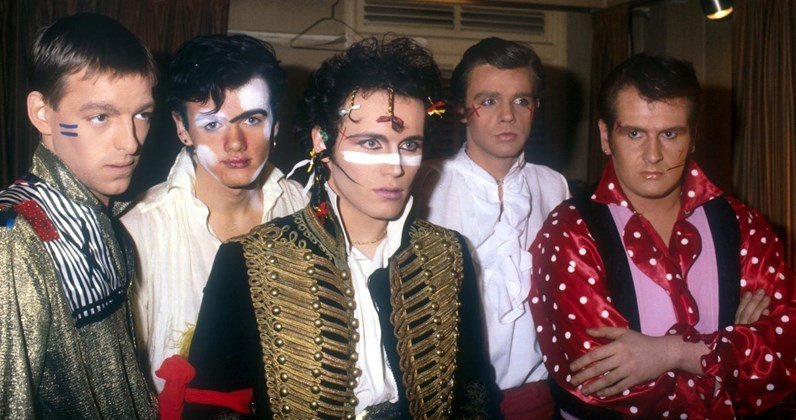
Exactly a year ago I compared inflation to Voldemort - the evil that dare not be spoken about. Something that had been vanquished back when Reagan and Thatcher were in office and we were all into Adam and the Ants and driving Mini Metros.
But with current inflation rates of 7% in the UK and 8.5% in the US, here we are again. Again. Learning economic truths anew. One almost wants to get Biblical on the ass of those in power who wilfully, stupidly, created this mess. The standards of public life - I’m afraid have declined. Or perhaps they were never that high. But this goof seems akin to a blindfolded man throwing darts at a dartboard framed by balloons and getting shocked by the the resulting bangs.
"Inflation is cause by prior expansion of the money supply." This dictum was drummed into us during mid 80's economics classes.
What about another old favourite from the dusty book of forgotten economic laws? "Inflation is caused by too much money chasing too few goods."
(There is another contributory cast of characters in this 70's revival; the knock-on effects of hysterical Government COVID measures which shut the economy down for nearly two years, the concomitant increase in the prices of commodities, oil price rises (COP26 & ESG), sanctions against Russia and the disruption in the world economy caused by the war with Ukraine. These latter two however just exacerbated an existing trend. Any politician who tells you otherwise is lying.)
"Why did no one see this coming?" the Queen famously asked professors at the London School of Economics in 2008 after the credit crunch - so obvious retrospectively - was completely missed by the world's financial authorities. Perverse incentive structures, complicated instruments and misdirected regulations would be the answer. And venality.
This time though, what were they thinking - printing money and then being surprised when this debasement did its destructive thing on the currency?
Inflation is a tax we all pay as I have pointed out previously. Currently this tax is - officially - 7% in the UK. Real rates of inflation - ie, what you and me actually pay, run to double digits. This is before - of course - any tax hikes our governing classes are belated throwing at their whipped populations. The answer to the errors of too much government is never, ‘more government’.
So, to return to the Queen's question, why did no one see this inflation coming? Some did (me! me!) but the dominant riff from central bankers, until recently, is that the return to inflation was transitory. How’s that working out for ya? That rhetorical construction seems wilfully, and conveniently, blind. My contempt for those in power grows.
Printing money is a very dry subject made all the more so by its modern nomenclature - Quantitative Easing. The sums involved are too high for most of us to imagine. The monetary authorities all have impressive credentials behind their names, and occupy the high places of financial respectability. If they say that Quantitive Easing is really okay, and we’re not going to get screwed, who are we - the poor population - to disagree?
Inflation and cost of living are becoming the next grand conversation and perhaps already are - if we can absorb more than one meta-narrative at a time. There’s a cynical edge to the media I realise more and more as I get older. The MSM push one meta narrative at a time and everything is seen through this distorted - and temporary - lens. Brexit. Trump. Covid. Ukraine. Everything is about this one issue. Until it’s not. Meanwhile, central banks roll the printing presses and none of us wonder how the hell anything is paid for.
Interests rates must rise to curb inflation. Similarly treasury bond yields must, and are, rising. The alternative - more QE - beyond the craziness of the ECB - must surely out of the question this time. Even in the thickest skulls. You can't fight a fire by dousing it with £1.62 a litre petrol. Weimar Germany, 70’s Britain or Mugabe’s Zimbabwe are not to be aspirational models of good stewardship.
And if someone - whether politician or central banker - suggests in the future that printing money is a good thing we'll know, perhaps - and again - that inflating a currency is a quick fix that carries long term, and destructive, consequences.
Won't we?
However, the cycle time it takes to forget stupidity in our society is diminishing. So, at the present rate of forgetfulness, I’d give it five years before some highly remunerated moron will suggest, pompously - like they know what they’re saying - that increasing liquidity in the economy by QE to stimulate investment is the way to go.
And they’ll be wrong but we’ll do it anyway.
Is QE the New OPEC: A Return to 70's inflation?

Heath, Thorpe, Wilson. Two 70’s PM’s and a dog lover.
Were the 70’s Crap?
Opinions of decades change over time. I remember back in the 80’s the 1970’s were regarded as, well, a bit shit really. People wore flares, brown suits and spent most of the time on strike or huddled around a candle burning five pound notes to keep warm. The 70’s reputation was one of strife and bad clothes.
Punk, disco, glam, these were antiquated things to be laughed at. I remember Abba being so out of fashion in the 80’s it was an actual crime to own one of their records. Hard to believe that now. But I continued playing them. Yes, I was the person who made Mama Mia possible. Thank you.
The 80’s were shiny and the 70’s were dull. The 80’s were a time of renewal, the 70’s a time of decline. And so went popular opinion.
But as time passes, an inevitable reassessment takes place; distance really does add depth. The 70’s were also the decade when the spirit of the 60’s was democratised into the population as a whole, not just the illuminati. 1976 was a blisteringly hot summer. There are some great films (Dirty Harry, Star Wars, Grease) and some classic music. And the styles themselves, once so derided, seem more in tune with now than the shoulder pads and mullets of the 80’s.
Which is all a long way around to introduce the topic of inflation. Because, one thing that the 70’s really own, really can claim as their ‘thing’, is inflation. And with our government(s) creating money like Robert Mugabe spinning the printing presses of the Weimar Republic, inflation is back on the agenda.
We seem to have forgotten about inflation. Since the early 1980’s when Thatcher’s government set out to conquer it, we’ve not really experienced its effects. This may have bred some complacency - or simple ignorance - amongst our central bankers and politicians. “Inflation?” they might intoned using ill merited superiority, “That’s not going to be a problem. We’ve printed money for more than a decade with no inflation. Theres no inflation around here.”
But, like Voldemort, is it ever really dead? *
Tim flips to the serious bit
What is inflation? Inflation is the rate of price increase in goods and services over a defined period of time. So, if a pen costs £1 in Year 1 and £1.10 in Year 2, the inflation rate (for pens) is 10%. Add in everything else in an economy and you get the aggregate rate. We all know this. But what causes prices to rise?
“Too much money chasing too few goods” - Demand Pull Inflation
If you are a monetarist - Milton Friedman being the most prominent here - inflation is caused by a prior expansion of the money supply. This was a lesson that was drummed into all of us in the 80’s who studied economics (I did). Too much money causes inflation. Why is this? Well, if you you increase the supply of something, the price will fall; the falling price of money being inflation. The obvious landmark event in the 70’s was Nixon coming off the gold standard in 1971 and tearing up Bretton Woods. This de-anchored currencies allowing governments to dabble where angels had previously feared to tread.
Further to this, if there is more demand than the supply of goods, the price of those goods will tend to rise. This is evidenced in the long -form economic seminar we call Jingle All The Way where the lack of supply of the kids’ toy jacks up the price discomforting Arnie’s character.**
Other Causes of Inflation
True, perhaps. But what about other causes? Some (Binder et al) argue that there were two types of inflation in the 70’s - underlying inflation and price shock inflation. The argument goes that the 70’s was a period of price shocks - oil, of course, but also food and the perverse affects of prices and incomes controls in the Western World. If you hold something back you not only suppress supply but create pent up demand for when those controls are released, creating a surge in inflation. Hello 1974 and, perhaps, rebonjour 2021 as lockdowns are finally lifted.
Yes, 1974 was the big year of inflation. The mother of all inflated years (though inflation peaked in the UK at 24% in 1975). So, the big question on everyone’s lips is; is QE the new OPEC? Or is QE the new decoupling from the gold standard? In other words, are we heading for a short and bracing bout of one time inflation or several years of systemic inflation?
Beyond my pay grade, I’m afraid to say. It’s interesting to note wage pressures. The 70’s were a time of powerful unions, industrial actions and wage increases (which, in turn, led to further inflation). Through Thatcher’s reforms, this seems to have gone away in the UK though the nurses’ recent 12.5% wage increase is perhaps the first salvo in the inflation battle to come. I don’t get the sense of labour shortages (yet).
However, as we all know, although inflation is a bitch to the common, working, person it’s much kinder to those with large debts. The biggest of these debtors is, of course, the government borrowing like crazy at the moment. Talk about a fox being in charge of the hen house!
But what can we do?
How can we adopt some defensive strategies? Well, here’s some I pulled out of my arse:-
Real assets tend to increase in value as a currency devalues. My numismatic hobby might just turn golden, if you get my drift.***
Other real assets, land, property tend to do well. When the currency is being flushed down the toilet, possession of tangible stuff is key.
Is this finally the time for digital currencies?
if you’re on a variable interest rate mortgage, perhaps this is the moment to consider (or increase) overpayments. Go long in fixing your mortgage payments.
Savings. Savings. WTF can we do about savings? One would assume that if inflation starts to take off the BoE will need to raise interest rates. It will be interesting to see if this finally triggers a commensurate rise in the savings rates banks offer. It’s been so long since there was a decent rate. Would any potential rise in deposit rates keep pace with inflation however?
Equities. I’ve not been able to discern much sensible information about stocks and inflation. The twin crashes of the 70’s had different outcomes for the FTSE - 1973/4 a massive crash, 1979/80 a modest increase. There is a theory that value stocks do better in periods of high inflation whereas growth stocks do not. But there’s too much noise to discern any clear pattern. As ever, playing the stock market is a matter of judgement, experience and timing. And luck. But on average, and over time, it tends to increase despite periods of inflation. ****
A parting thought. We’ve never really lived in a time when a government has deliberately crashed an economy and then used massive money printing to foot the inevitable bills. How much supply has been eroded in the last year, to soak up the QE, will soon be put to the test. Inflation is perhaps one outcome. When furlough finishes, unemployment will be another. My discredited Phillips Curve used to suggest there was an inverse relationship between these two evils. I fear we’ll get both again.
And on that sombre note, let’s play Rod and Faces, one of the better memories of the 70’s. It merits a longer entry - which I’ll get around to - but they were sloppy, they were loud, they were drunk but the Faces had swagger and were one of the best live bands ever! Ronnie’s guitar tone. Wow!
Read On:
QE in Roman Times? The Crash of 33AD
NOTES (How pretentious, I am!)
*I know, I know. Harry Potter references now. I’ve slipped. Must up the quotient of better references.
** I’m really going for it now - an Arnie reference no less!
*** Numismatics - collecting coins. UK gold sovereigns are a good - and tax free - way of wealth protection, I’m told. But there again, the guy who told me this was Gordon Brown.
**** The FTSE was 289 in 1970 and 620 in 1980. Go figure.