
Oskar Schindler's Factory: Thoughts
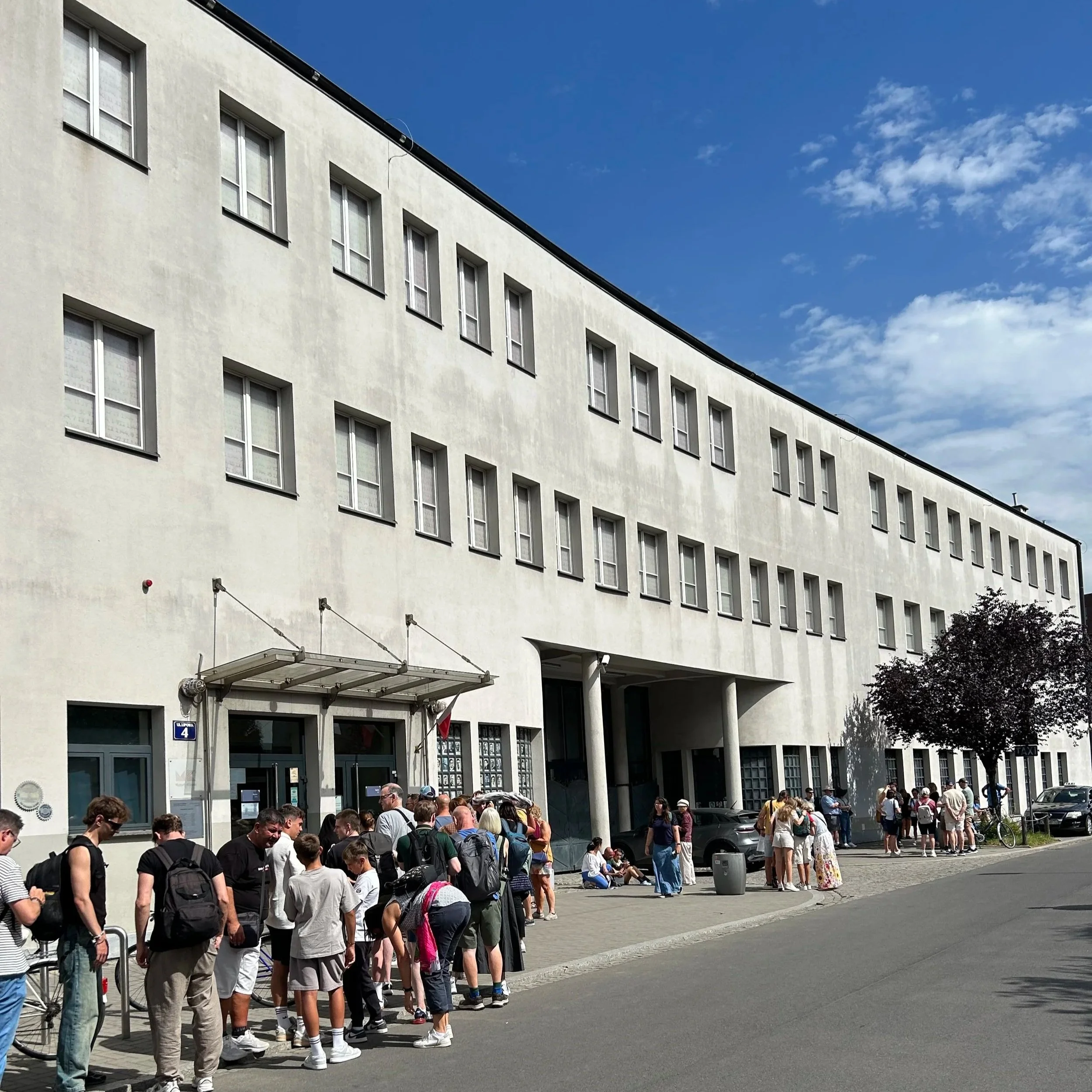
Schindler’s Factory. Krakow
We all saw Schindler’s List
Like many in the 90’s I saw Spielberg’s Schindler's List. Whilst an undoubtedly moving film, it’s probably not one you’d want to watch twice. A tale of one man’s redemption through good works as he battles the Nazi occupiers’ cruelty in their persecution of the Jews in Poland.
I’m in Krakow this week.
This morning I got up early and walked across the Vistula River and onto the Oskar Schindler Museum situated in the same factory buildings where he protected hundreds of Jews from the Nazi authorities and death.
I didn't know what I expected. A worthy museum perhaps, with exhibitions about metallurgy and a dry retracing through the themes of the movie. That’s not what I found.
I would say three quarters of the museum concentrates - through photographs, movies and artefacts - on the history of Krakow during the build up to the Nazi invasion and occupation of Poland.
1939 / 1945 - The Nazi Era
You start at the top of the building and work down as the exhibitions take you through life in Krakow through summer 1939 to 1945 and the inhumanity and savagery - even pettiness - of the Nazi occupation. The tragedy of the Polish people generally, and the sizeable Jewish population in particular, is laid out through well chosen and contemporaneous displays.
Aside: It’s quite shocking to see displays of original Nazi regalia, from banners to machine guns, right through to branded tableware. These days the swastika is so verboten it’s quite a reality check to see the real deal that, instead of some lazy reference point, was actually - not so long ago - a living symbol of real evil.
Swastikas aside, there are many other pointed reminders of the executions, restrictions and even the Germanification of Krakow (language, education, housing; even street names). (1) We in Britain, through the English Channel, Spitfires, the Royal Navy, Churchill and good luck (the free Poles too!), avoided having to face this calamity. (2)
Unlike other museums I’ve been to, the fact that this one is sited in the actual location of so much history, is somewhat humbling. (3) A couple of times, I will admit, I was holding back tears. History weighs heavy in the location, in the subject matter. And it wasn’t so very long ago. And, if history is any guide and the human condition doesn’t change - and it won’t - this could be a path we go down again.
It ends with the Soviet occupation in 1945. The Poles gained a country but lost their freedom.
So, what do I conclude about the Schindler Factory?
1) Definitely go to this museum. It’s well worth it and any museum that provokes thought, reflection and a sense of an individual’s heroism against a harsh world is worth the (low) admission price.
2) A renewed hatred of the Nazis. There’s a reason they’re viewed in such disgust. I would caution though that they weren’t the only ones in history with a bad reputation (all countries, peoples and cultures are guilty). They might not be the last.
3) There is hope. I walked back through Kazimierz - the historical Jewish district of Krakow. I sensed no animus but instead saw Jewish shops and restaurants (and even an Israeli flag). Many tourists. History is long with many winding roads shaded from view. Perhaps, sometimes, they lead from a dark place into the light. It’s never perfect though.
Further Notes
1) Ignorant buffoon that I am, a cursory reading of history reveals the Germanification of the Polish language and culture isn’t confined to 1939-45. The whole 19th Century after the Partitions of Poland (1772/95), for example. In the interest of balance, the forced deportations of ethnic Germans from Poland after 1945 shouldn’t be ignored. Which all goes to show, with history, the more you know, the less you really know. Always be alert to simplification, in both broad culture and -most particularly - in the narrow interests of politicians who use collective ignorance to drive a nefarious agenda.
2) The semi satirical American put down of Brits: “You’d all be speaking German if it wasn’t for us,” never felt so chillingly real.
3) A similar sensation you get in the Anne Frank House in Amsterdam or The Monument to the Heroes of the Heydrich Terror, Prague. Different countries, same tragedy.
Continue reading about Krakow
For a more light-hearted look at Krakow, what to see and do and where to drink and observe, take a look at the rest of my Krakow trilogy!
What to see, do and avoid in Krakow - local knowledge from a guy who’s been there. Well, once, briefly.
Thoughts from the BOHO Bar - day drinking, locals and the woman in the red dress.
I’m not just in Krakow. Try my review of Prague Art Galleries and a Baroque Concert in St Giles Church Prague.
Or just press the big button below.
Thoughts from a Bar in Antwerp
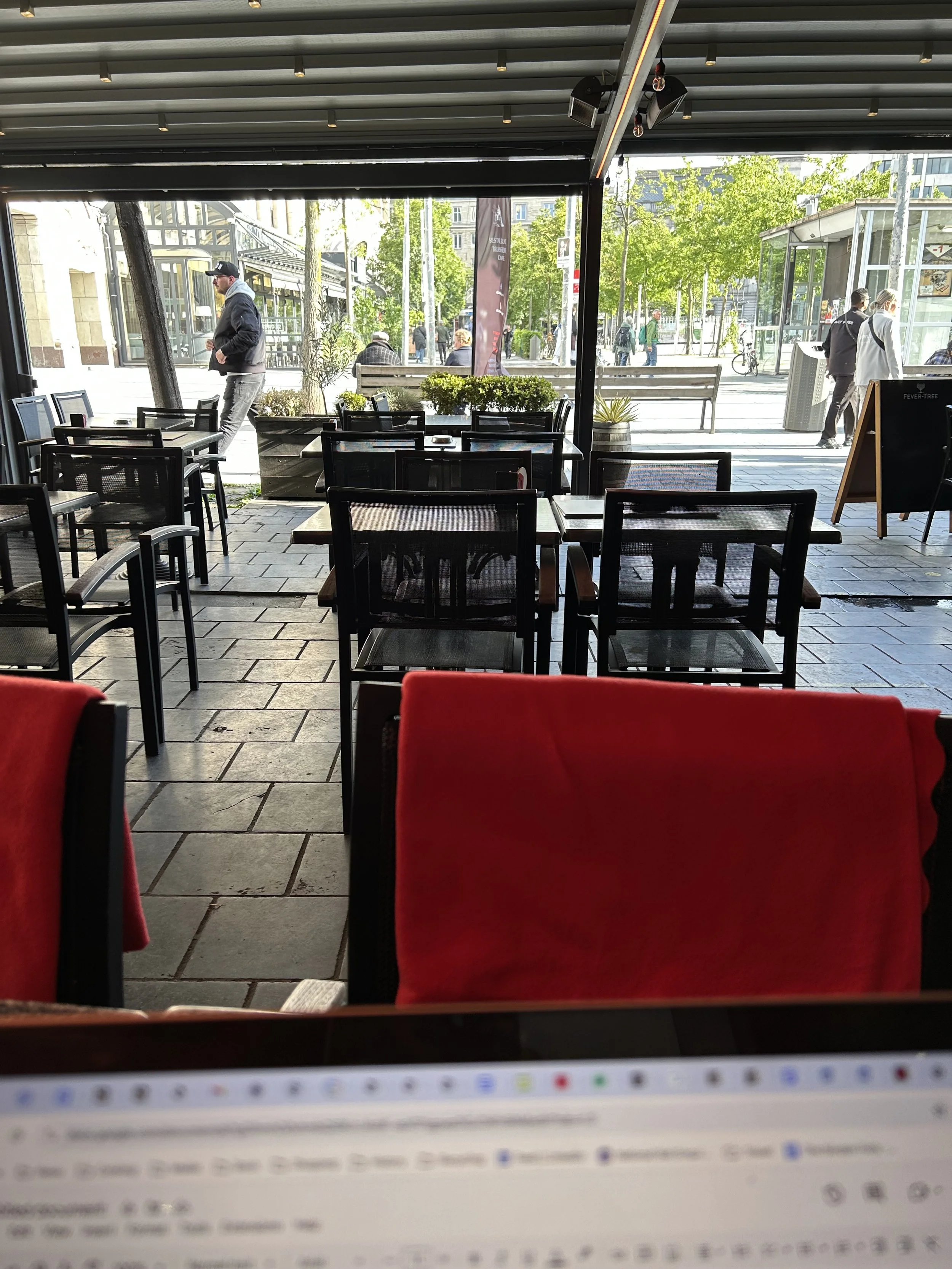
A Tired Seduction in Antwerp
He sits back, laidback, all crotch display, leather jacket and quaffed hair. She’s not the first, the last, or the most important but she is in front of him right now sipping - through a straw - a double gin and tonic though I’m sure she only asked for a single. They smoke. They’re hip, seemingly equal, but this lopsided negotiation has but one outcome.
So, that’s right in front of me. A tired seduction above 40.
What else? What else?
Family, older father, younger mother watching his beer intake, hunched teenage son. I predict quick sex after some drunken pleading. In a Novotel or Ibis Budget, hopefully not with the child in the same room.
We have Mr Buff, all tight black tee shirt, beard, tattoos and razored hair with obligatory blonde to my left. She’s sat almost on top of him so they must be new or asymmetrical. She rests her face on an elbow in his direction. He leans back; power move. Later, not much later, I suspect he’ll be shaming her into acts that her mother never told her about. Bad boy. Forgotten when she meets the corporate guy with a good income and pension. He’ll not be a bad boy.
Old guy sits on my right in a puffa jacket and a whiskey cocktail. He has his hair but no life, no future. He’s delaying going home to his little flat and a warmed up dinner. He stares into the mid distance, defeat in his eyes. Nothing will happen. Nothing has happened since his wife died ten years ago.
But wait! Family has allowed the mulleted teenage son to leave and I just saw the older father place his hand on the younger mother’s hand. ‘Yeah, go and look around, sonny. We’ll be here.’ Guy wants to get pissed, she wants a relationship talk. I’m now predicting a long unsurfaced argument will get in the way of that perfunctory sex. Talk is dangerous.
Over to my far right are two older ladies drinking coca cola. As the bottles stand on the table, they discuss their menfolk or lack of and seem very engrossed. Too far away. Too… Yeah.
The family have left together. She looked me in the eye - once, twice - sphinx like in her appraisal as the older husband pays the bill unaware his wife and I shared a moment. A moment she shares a thousand times a day. Does he know, it just takes a brief lowering of his wife’s guard (or regard) and he’s a cuckold risking his pension rights and denied seeing sulky teenager on a regular basis?
I order another Kriek. The waiter’s aftershave arrives before the drink. No peanuts this time.
And apart from an odd guy in a camouflage baseball hat looking at his phone, beyond the too close couple, that’s it? No one else for me to critique on this rainy Wednesday afternoon in Antwerp?
And your author, who is he?
Indeterminate forties / fifties (probably the latter) in a black gilet, Hackett shirt, tapping away at his laptop. Running from life, writing about real life wishing someone - Her? Her? Her? - would see him as a F.Scott Fitzgerald, a Hemingway, an exiled Oscar Wilde (without the gayness, obviously).
Watching the girls go by. Imagining a story within each. Not their worst story. An above average time bar hopping and chatting about history, literature, consensual politics. But, maybe not the best evening ever.
But probably mine. The laptop would disappear and the story would be unwritten. A Secret. Until recalled years later on a blog, as a short story. Names changed, obviously.
A Blonde Beauty
And then a blonde beauty walks in wearing a tight sweater and smiles at me innocently. The world is in that smile. A world of possibility, of redemption, of long overdue new beginnings. Of course, a taller, equally blonde male follows her in tow. Of course. But that smile. That smile, now looking at a glass of Rose as her immature boyfriend makes a show of pouring a Duvet. He plays her a TicToK video and she rests her head on his shoulder.
Young love, eh? Whatever happened to young love? That older couple from earlier on; there was no pretence at world changing romance in their dialogue, within their cocoon. It was, sex or no sex. It was do this or I’m not bothered and I’ve got 20 other women who will. The cracked makeup smudged on a pillow and no follow up the next day. It’s how it is now, yeah?
I hope the young couple next to me make it. Within age lies corruption. They may last. They probably won’t. Then it’s just another - what? - another sad story, unspoken. A failed domesticity only remembered by the two and then asymmetrically as some future partner witlessly blunders into “So, you? How many?”
Each day brings the possibility of immortality. But each day is just, everyday. And everyday is just like the last.
Carpe Diem, motherfuckers.
Postscript
Later. Another bar in Antwerp. International group speaking English as their Linga Franca. Unfortunately I therefore overhear as they overshare. The women talk excitedly about their facial treatments - what they’ve had, what they will have. The eldest is 35. The 28 year old agrees and swaps her needle around the forehead stories. Silently, I’m appalled. When they move onto STDs and their ‘it was just sex’ anecdotes, I clutch my pearls, pick up my skirts and run. Fun times in Belgium.
The first bar was Castellino - I enjoyed it. Clearly.
There’s More?
Antwerp was a diamond of a place. If you want to read more scabrous stories from bars in Europe - Delft, Bruges, Krakow etc, click below!
F. Scott Fitzgerald - What A Bitch: A Review of Babylon Revisited
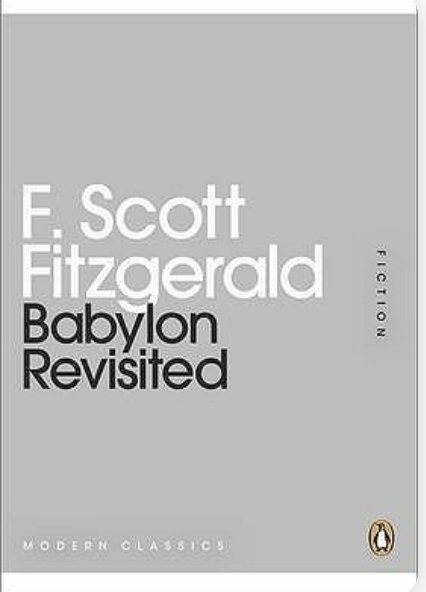
“He greeted Marion with his voice pitched carefully to avoid either feigned enthusiasm or dislike...”
(In which Tim feigns false modesty as an interesting new way to flex. Reads anew F. Scott Fitzgerald and genuflects before a superior writing talent. There’s gonna be some pretension. There’s gonna be some bullshit. Long blurred bar session profundity! From a bar in Delft.)
Thoughts from Cafe de V, Delft.
I used to think - fleetingly - that my words would stand out in the crowded square of imposters and rivals. That my too personal stories, barely disguised from real life, replete with humorous bon mots were of a durable and sagacious vintage that would elevate my prospects in both the literary and material world.
And, do you know, occasionally - very occasionally - like transient icebergs poking through a storm tossed sea, I felt they did. But each emerging peak, each success, just allowed me a new vantage point upon yet greater heights. Ascending upward, I realised I’d scaled only the foothills, unflattered by the comparisons far above. (1)
On a trip to The Hague recently I took a small, pocket sized copy of F. Scott Fitzgerald’s Babylon Revisted. Reading through, I became aware that I’m (once again) a poor man’s Salieri to Mozart. I’m a good enough writer to recognise I’m a hack writer by comparison. But how? What are those authorial ‘tells’, those embedded hallmarks that shine through flashing greatness?
I would suggest that there are three signs of obvious literary talent. (There’s probably many more, and if I wasn’t in a bar in Delft sampling beers strong and stronger, I’d enumerate them all. But a narrow focus - a well formed list of three - is the consequential benefit one derives from a slow descent into drunkenness, don’t you think?)
1. Prose - I like a well turned phrase
Firstly, concerning the nuts and bolts of writing itself: Is the prose any damn good? In Fitzgerald’s case, yes, very much so. When reading, certain phrases and constructions sing out to elevate the experience above the quotidian, the commonplace, the hackery. All good writers employ stylistic devices, those elegant phrases and tricks that artfully chime like a beautiful bell to the soul. But not all ‘greats’ are the same. To me, slip sliding away into fuzzy numbness here in The Netherlands, there are three types of prose that elevate:
Beautiful or lyrical prose (F.Scott. Balzac. Martin Amis, sometimes.)
Stripped back writing (Hemingway being an obvious exemplar)
Experimental - for example Clockwork Orange, On the Road Again or Last Exit to Brooklyn
Of the three, I value the first most of all. I can almost feel it when a well turned phrase hits home. It almost hurts. Why didn’t I coin this, think of this, work harder on my own flabby prose? Was it lack of work or lack of creativity? Each chiming phrase is a rebuke. I envy. But I recognise the brilliance.
“But the stillness in the Ritz bar was strange and portentous. It was not an American bar anymore - he felt polite in it, and not as if he owned it. It had gone back to France.”
2. Characterisation - The Austen / Dickens Example
Secondly, characterisation. Are the characters well drawn? Are their motivations believable? Is their place in the story apposite, their character sketched sufficiently deeply to avoid becoming cut outs or cyphers, mere third spear carriers from the left wheeled embarrassingly onto the page to mumble a line or two before shuffling off forgotten like a drunken burger after midnight?
As a writer, I find characterisation one of the hardest things to get right. There are some authors who write just for men with the result that their female characters are pale facsimiles of real life women. Similarly, some female writers struggle with male characters and so resort to a stereotypic landscape populated by bastards or wimps. Speaking personally, I don’t have an issue with the sex of my characters. My problem is more fundamental than that. Essentially, any character that isn’t me suffers from that very fact; they are not me meaning they are ill-drawn and one dimensional - pathetic straight men made to suffer my character’s one liners, inner monologue, whilst facilitating tendencious plot development.
But read someone who does it well - an Austen or Dickens, for example - and you roll yourself in a fleshy world of believability. You can imagine the characters in real life, understand why they do what they do, how they drive the plot forward naturally. I’ve always been intrigued how this is done. Do the authors sit down and plan their characters (as suggested by numerous colour-by-numbers writing schools) or do they just carry them in their head and understand each line, each interaction, each movement as they write?
Don’t know. Not a great writer. Ask them.
3. Plot - Not that Important
Thirdly (and lastly) - plot. Writing is telling stories. Is the plot engaging, does it draw you in, want to turn the page, speed read to get to the next chapter akin to binge watching a gripping series on Netflix? Mmmm. There’s many a writer who plots like a mathematician, algorithmically making sure each chapter ends on a cliffhanger, pacing the reader so that the denouement is both satisfactory and surprising. This is where I have my biggest reservation. Although I love a good ending, the symmetry of a three act play or movie or book, part of me loves the realism of unsatisfactory endings. For example, I loved Brett Easton Ellis’ Rules of Attraction that both started and ended in mid sentence, breaking in and then checking out of the narrative. (2) Like life. Unresolved. Messy. Not cute.
Of course, certain genres demand neat plots, crime and thrillers for example, romantic books. And so whilst I respect good plots - no I really do - to me they’re not a deal breaker. But let me interpret plot somewhat more loosely. Let me replace ‘plot’ with ‘narrative’. Does the narrative hold together, does it make you want to stay the course and follow the authorial voice, the characters, the worldview described? Yes? Then you has you a decent narrative.
I don’t necessarily need to know that it was the butler who did it with a candlestick in the library. But I may want to know about the characters’ actions leading up to, and after, during. Not all murders end up with Colonel Mustard buggering Professional Plum in the Hallway. Er, neither does Cluedo Tim.
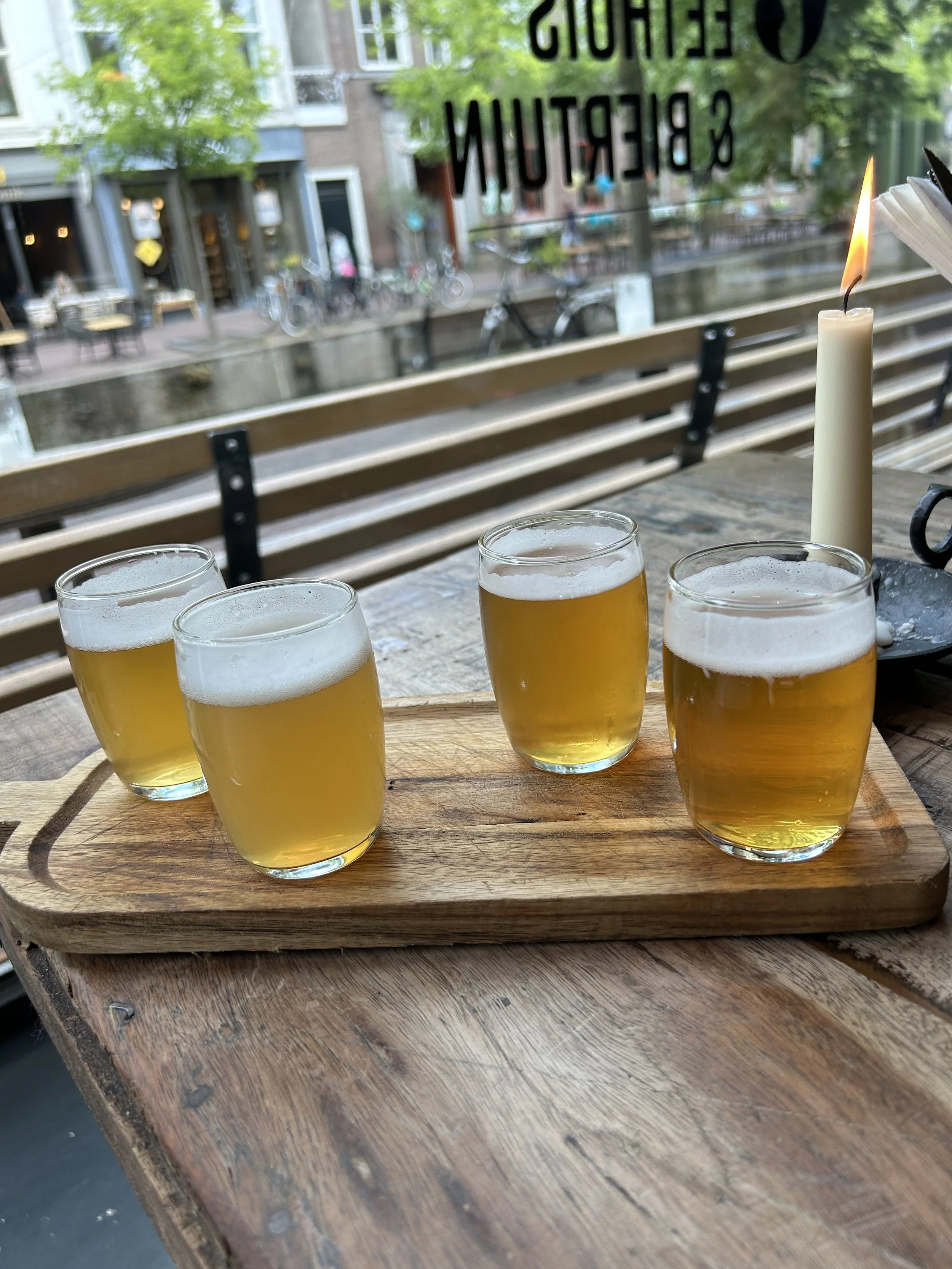
Yeah. Losing it. Affligem Dubbel kicking in. Bar by a canal somewhere in Delft. (Where? Cafe de V I think, according to the menu) filling up with Dutch people eating, drinking, speaking English when asked. Nice place. You should go there and maybe you too can be weird laptop guy snaffling beers and bitterballen.
So, plot and narrative. Losing the plot. Maintaining a narrative. I’m a real life example of that. Now. But my central point is, tying it all together; I was shocked into wonder, annoyance and competitiveness as to how bloody good Babylon Revisited is.
F. Scott Fitzgerald. What a bitch!
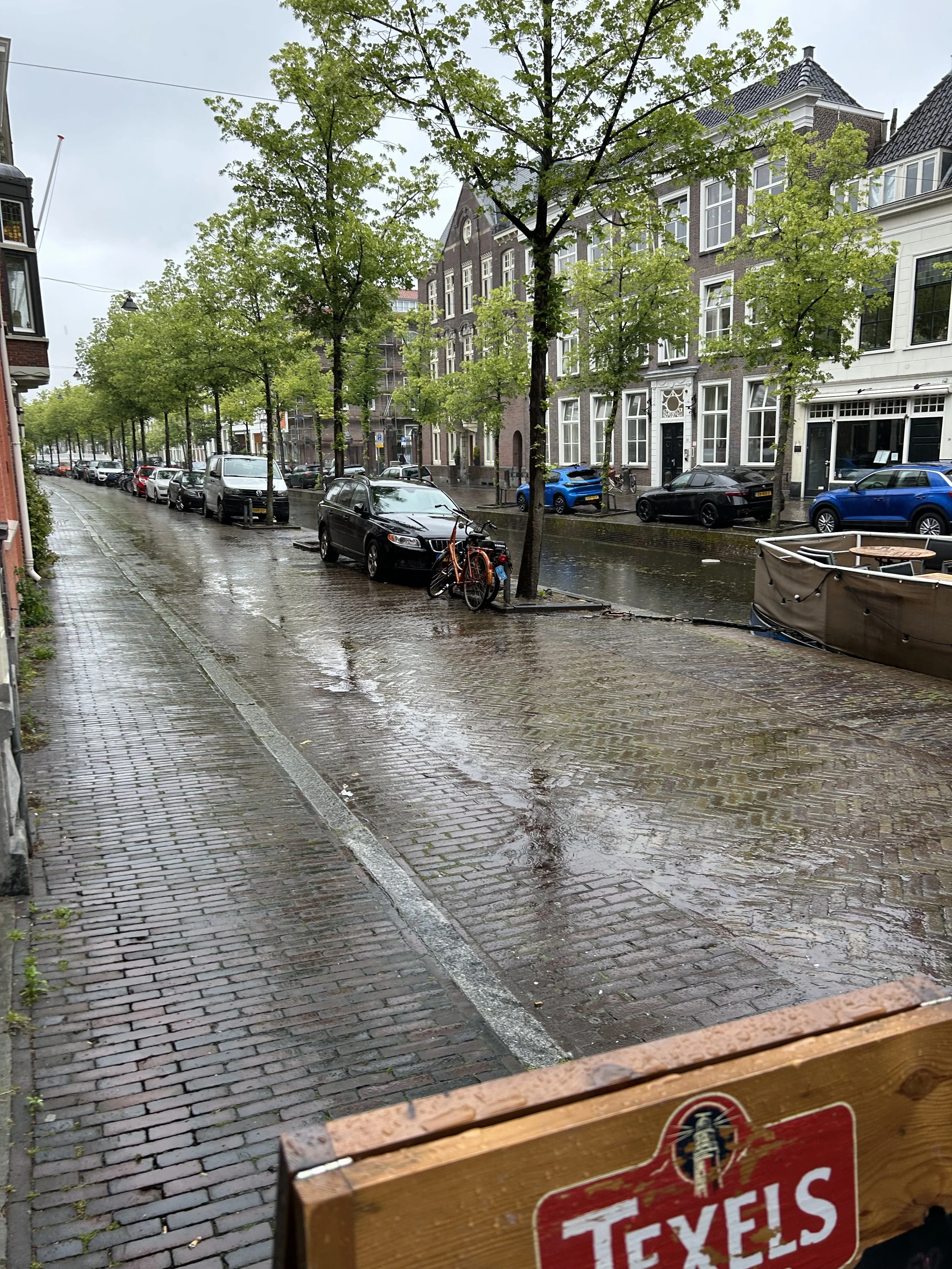
Some Pictures of the beers that helped me write this post. And a Delft canal.
Pretentious Notes
1) Notice how I eschewed the Titanic reference? Eschew the obvious. It’s what separates us from AI. The human brain is - when engaged - synaptically more creative than the AI. That’s what annoys me when people revert through laziness or foolishness to using AI in place of thinking.
2) I now know this starting in the middle thing is called In Medias Res. I warned you at the start of this article I was going to be pretentious but not as annoying I will be next time I find the opportunity to use this Latin phrase. Wanker.
3) Want more? New cities? New rants? Some tourist guides (not much, many from a barstool)? The whole lot of my Scabrous City Tours? Or maybe just Breda where I rocked?
4) An appreciation of Martin Amis is a good place to see why I liked his style. Click away!
5) Delft anyone? Oh fuck it, I forgot to talk about Delft except that I went to a bar (probably two or three) ate fried snacks, drank lots of beer and wrote randomly about ‘writing’. Delft was okay. Would I go again? Probably not. It rained.
Mary Chain, Mascara, Morrissey and Me: SUSSEX University in the 80’s
“Fifteen minutes with you.
Well I wouldn’t say no.”

Nathalie. Or Brigitte? My next door neighbour but briefly - East Slope, Sussex University
East Slope’s Bardot
Nathalie lived next door to me. She was years older - at least four. That was an unbridgeable gap in those days. She appeared experienced and sophisticated in a way that I wasn’t then and probably am not now. And she was also French; dark haired, beautiful, sexy. I’d only gone to university and got Brigitte Bardot living next door to me!
And then, mid-term, she moved out. Our juvenile antics must have irked her. Oh - the bottomless pain of separation! The exquisite misery of emptiness! Surrounded by hundreds of eighteen year olds I was alone, so alone.
I played Hatful of Hollow endlessly. Morrissey incongruously spoke to me. ‘Please, please, please let me get what I want’ he sang through my cheap speakers. There was silence from the empty room next door.
East Slope, Sussex University, autumn term 1986.
Revisiting Sussex University
I was driving my daughter around ‘my’ Brighton last weekend. We were stopping off and photographing all my previous addresses throughout Brighton and Hove. Some I stayed at for a matter of weeks, others for several years. Many looked decrepit, a handful were grand, very grand. I had situational memories of all of them. Job. Girlfriend. How cold they were (it was always cold in Brighton flats). My post, Brighton Beach Scumbag, covers memories of Brighton in more depth.
On the way back to Burgess Hill we stopped off at Sussex University. I’d lived in three campus apartments over two years - East Slope, Kent House and Park Village. Let’s see if I could retrace once familiar steps and show my daughter, well what? Where Natalie left me bereft all those years ago? Mmm, maybe not. But where I lived certainly.
But like most universities since the 80’s, Sussex has got bigger - ‘welcoming’ more and more students in order to meet Tony Blair’s ridiculous 50% target. Add to this the maniacal drive to recruit loads of fee paying foreign students and you have a university with near four times the number of ‘clients’ it had when I went there.*
So although we drove past many familiar buildings, there was a new feeling about the campus. It seemed very closed in whereas it always seemed spacious when I was there. Tricks of time, perhaps. Sussex was a relatively small university in the 80’s and the student body was split fairly evenly between public school tossers and the brightest and best of the comprehensive system. 4500 students in all - one third living on campus. It felt like a village. A village out in the Downs, ten minutes train ride from Brighton. It sported Sussex red brick and the architect - Basil Spence - had designed the layout so that it nodded vaguely in the direction of a classical Roman forum. (I know this stuff because I used to do campus tours for prospective parents and students in my third year. £3 a pop, I remember.)

Shades at night! TR in his Kent House student room 1988 - alas the call from the Jesus & Mary Chain never came.
Campus Bars: Julie’s Jinx
There were the bars of course. East Slope bar was notorious because of the cheap drinks, the scrum to get those cheap drinks and the sticky floor caused by said drinks being too difficult for students to navigate the plastic glass of Kronenberg from glass to mouth without spilling. (Pints were 60-70p). Park Village Bar rates a mention as it was the home of the Julie’s Jinx - a pint of every spirit going starting from a base of half a cider. These cocktails never lasted long in your stomach.
Sussex has changed since the 80’s. New high rise accommodation blocks bestride and dominate the northern end of campus. All those extra fee paying students have to live somewhere I suppose. Inside, these alien structures are probably very nice with all the mod cons our current flock of students demand. But the village feeling, the uniqueness of the first red brick university, has gone. And so has East Slope, so named because all the student accommodation was in single story flats rising gently up a hill. All gone. And yes, that flat where I met and then mourned the beautiful Nathalie, now gone completely.
To be fair the other buildings from then to now, looked tired. Park Village looked in particular on its last legs with rotting woodwork, overgrown green spaces, windswept rubbish piled up in corners. Not how I remembered it at all. But then what I truly remember is the spirit, the ephemeral feeling and not just the concrete. I remember the summer of 87, and every window being open and blasting out the newly released Joshua Tree. I remember late night parties and lying on the grass in the warm June air, talking bollocks about politics and music and gossiping over plastic glasses of cheap red wine. I remember reading Wuthering Heights for the first time out on the fields next to Park Village; fields now covered with blocks of flats and car parks.
It’s the people and the time; the young people interacting, doing stuff, each other, laughing and joking that defines a place, an era. I guess I always knew that.

Park Village party, June 1988. TR lying down in white (with hair!)
Then to Now. Gone.
So even before further buildings are torn down, as East Slope has been, the transient spirit my cohort possessed has gone. Each successive intake make their own memories, their own version of what a university community means. But that time is heartbreakingly brief and we’re left - if we ever venture to go back - with the mere bones slowly rotting away. The flesh has long gone. The spirit died the very moment we walked out that last day Summer Term ‘88. And maybe that’s correct.
And Nathalie? Fuck knows. She shacked up with some professor, moved into a flat behind the station in Brighton and - for all I know - got married, had kids and never thinks about me. But if she does I hope she plays The Smiths.

Tim Robson 17B East Slope 1986.
Read on
I don’t just do nostalgia. Oh no. You probably should skip to my Urban Noir collection. Off you go. Read about Bruges, Krakow, Paris, Delft, Antwerp. All over the place, mate, and that’s just the writing.
What about Music? Well, yes Tim, what about music? Glad you asked as I have a large Music Section. 80’s pop, Taylor Swift, Indie Bands, underground 60’s recommendations, the history of my own crap band Shambolic. It’s all there.
Quotidian Notes
1) I like live versions of songs. This solo version from Morrissey - years later, different lyrics - captures the wistfulness of time passed. Hence me selecting it. You’re welcome.
2) You can always recognise my writings by the use of self correcting Notes. The real action, my friends, is down here at the bottom of each article. The use of the word ‘ quotidian’ is a steal from some ex Amex colleague who used it once. Good find. He was a dickhead though.
3) My degree. A Desmond in History. Sussex in the 80’s didn’t allow you to do any degree without interminable sub courses on Marx. Marx’s view on this, Marx’s view on that. All is remember is; it was all bollocks. And that is my definite statement on political economy.
4) Quote at the start “Fifteen Minutes with You…” From Reel Around The Fountain, The Smiths
5) Foreign student income. Perhaps that why the British universities whined like bitches when the uneducated population voted for Brexit? Call me old fashioned (puts down pint) but shouldn’t the primary function of UK universities be to educate the children of this land first?
6) This piece was revised, optimised for clicks in May 2026.
Fifteen Minutes with You… From Reel Around The Fountain, The Smiths
Foreign student income. Perhaps that why the British universities whined like bitches when the uneducated population voted for Brexit? Call me old fashioned (puts down pint) but shouldn’t the primary function of UK universities be to educate the children of this land first?