Oasis: Twenty Minute Setlist

The first - and best - album.
This is a 20 minute set list I’d love to see!
When Oasis were emerging in 1994 / 95, they could take on any other band live. Loud overdriven guitars, pulsing beat, great songs, sing-a-long choruses and a singer who had both charisma and talent. They continued and concluded the Holy Trinity of Manchester bands (Smiths, Stone Roses, Oasis).
I was a Blur fan but even I was swept away in the winter of 1994 as the band appeared on an Xmas show and played their new single ‘Whatever’ in all its Beatle-esque glory before tearing into a full scale toe to toe with the Fab Four, delivering a supreme I Am Walrus. Audacious bastards! They just went for the balls and powered out Lennon’s anthem with maximum swagger and sneering. (see video below)
I never saw Oasis live though I remember them coming to the Brighton Centre December 1994. Looking at the setlist that night is feels like it was a massive night, a first album homage. And I think, in retrospect, looking at YouTube videos, Oasis were at their best when they were climbing the mountain, not when they were on top and definitely not on their way down. Although the crowds kept coming, they weren’t as hungry, as urgent and - like most Oasis fans - I think the 1994 line up was the best.
So here it is, my fantasy Oasis playlist delivered by them as they were in 1994!
Rock n Roll Star
Fade Away
Bring it on Down
Slide Away
I Am Walrus
The Wisdom of Neil Diamond

Oh no! Tim’s written another LinkedIn article
So, I’ll be welcoming some of you here from LinkedIn. Your first visit probably. Welcome.
Pat yourself on the back; you are the curious, the trendsetters, the pressers of random hyperlinks. Well, enter of your own choice, hand in your prejudices along with your coats, disrobe yourself of received wisdom and take a glass of my Voltaire cocktail (a little rum, a little vermouth, a dash of old fashioned free speech). There’s space down there on the carpet at the front.
So, history… Again. Maybe I have delighted you long enough? I should let some of the other ladies have a go? No? Okay, history it is then.
In my LinkedIn article I distilled the whole of human history down to seven life lessons. As you do. Like some fucking middle management Yoda with a penchant for Suetonius, I draw my unwilling readers in like that goddamn tractor beam in Star Wars. Yeah, from the first movie, in the original trilogy. The good ones. And now, like the Millennium Falcon, you are held captive on my Death Star along with the regular crowd of ardent readers; potential girlfriends checking me out, Mick Taylor fans, Indonesians, ex-girlfriends stalking me, that sad nutter from some basement in Didcot.
Let me quote from the article to give those of you who didn’t read it a flavour. Life lesson number six which - I think anyway - is one of the best:-
We are the stories we tell.
For several years I’ve been working on a riff about people being the stories that they tell. Of course, I probably stole the idea from a hundred different places. But I believe it. Nothing summarises a person (a nation, a culture) more than the stories they tell about themselves. Think about it. When you tell a story about yourself to friends or colleagues, how do you cast yourself? Hero? Villain? Put upon martyr? Joker? It doesn’t take a Freud to notice this.
Socrates does not sleep easy tonight because I think I gave the old pederast an intellectual kicking. Yeah.
But how pretentious was the article? Let me just consult my digital meter. OMG! The needle is pointing to ‘head firmly up arse and modelling it as a rather fashionable hat’ pretentious. That’s how much. With a feather.
Of course I quoted Ecclesiastes and Marcus Aurelius’ Meditations. What again? Regular readers here will know they are the only two books I’ve ever pretended to have read. I’m a poor man’s philosophe. But in the kingdom of the blind, the man with two trip wires tends to come out on top.
But all the same, I’m kind of liking the feeling of being some sort of urban philosopher with jokes. The cap fits and I’m snapping that brim smartly. I mean, hasn’t everything I’ve been writing here on this website been comedic philosophy? Bon mots, bon-bons, bonfire of the vanities?
Yes, yes it has Tim.
Well anyway, welcome, bookmark the page. It’s a journey we’re all on children, a little wisdom and humility and ridiculousness will go a long way.
“I am, I said.” says Neil Diamond. “And no one heard. Not even the chair.”
All about that. Thank you Neil.
Goodbye Tash.

Less Errol Flynn, more Crazy Little Thing Called Love. Tim Robson models a Freddie
I’ve made a momentous decision…
Like all momentous decisions, the actual decision itself was only taken after heavy consultation with my good friends Mr Whisky and Mr Not-Bad-Red-For-About-Five-Pounds. The latter friend sets the framework, discusses options, maps out different scenarios. The former (Mr Whisky) is the closer of the group. The decision maker. He shoots. He scores. He can’t help but decide. He cannot - and will not - sit on the fence.
Yesterday, my aforementioned good friends and I, decided that we’d had enough of moustaches. That they were ridiculous and unsuitable. But we went further than that. We were done with facial hair in its entirety.
That is a momentous decision.
For the last four years I’ve been constantly with a beard. See Tim. See facial hair. Close cropped beard. Full beard. Scruffy beard. Tidy beard. Goatee beard. I’ve distrusted clean shavenness. I’m dubious about soft pink skin on my face. To shave is like, so 2004. Or something.
But last night the razor came out. The shaving cream was applied. Bold strokes and nimble blade work swept from ear to ear. The moustache was no more. The last stand of facial hair had been wiped out and sent down the plug hole.
And so I braved the Lake District weather today, naked of face. The slings and arrows of outrageous weather whacked my newly shorn visage as I mounted Cat Bells. Didn’t feel a thing.
So we’re left with; does it suit me? Does the clean shaven look knock years off me? Make me look younger and more vital?
Perhaps. Perhaps not.
Makes me look fatter though and my bottled friends are agreeing with me on this point right now.
What do you think?

Clean shaven in front of Lodore Falls. Cheeks sucked in. Allegedly.
Deleted scenes

“Censorship, Fawlty?”
I was watching Friends with my daughter over the weekend. It’s the one where Monica and Rachel have a cat fight and Phoebe breaks this up by pulling the other two’s hair. Her mastery assured, I remembered that Phoebe allows herself a little trash talk: “If we were in prison, you guys would be my bitches!”
It’s a funny line and as the action progressed I was pleasantly looking forward to watching it. But then the scene ended abruptly without the anticipated payoff. The line had been cut. Chopped. Lying unscreened on the censor’s floor.
Maybe my memory was faulty? What to do? Well, Youtube is very good for these sort of nerdy fact checks. I’ve read that it is a very male dominated medium and so can believe it is often used to settle many an annoying pub argument. So, I found the scene, played it and no, I wasn’t wrong, the line was most definitely part of the original episode. The censors (who are they?) had judged the line inappropriate.
Now, this isn’t in the same category as the famous Major scene in Fawlty Towers that is always snipped from BBC reruns these days. Nor was this the day time pruning of some of the - admittedly - filthy lines in the film Grease.* So what was it?
The word ‘bitch’? Come on - kids these days hear worse than this every day. In the classroom. Probably from their teachers.
Is it perhaps the suggestion that in prison a ‘bitch’ is the dominant person’s unwilling same sex, sex slave? Yeah, that’s probably a bit rapey for day time TV.**
Or maybe, it was just a funny line. Cut that. Fuck it, humour is passé these - we just harangue our audience with our hard left politics.
Dunno. But a piece of my soul was snipped away along with those few seconds of celluloid and, although I’ve deliberately picked an asinine example, we’re becoming worryingly more censorious as a society even as our means of being free (the internet, social media) explodes.
There’s something sinister, Orwellian, about official sources and memory diverging. Like a picture of the revolution that progressively ‘disappears’ the original heroes as they fall from favour, does real or official memory take precedence? Instinctively I’m against censorship. One draws the line very, very narrowly.
I’ll return to this subject. But first, enjoy the scene as it was intended.
NOTES
I saw Grease when it came out in 1978. The songs and dialogue and - indeed - the subject matter is pretty filthy. Sailed right over my head though. Didn’t get any of the many sexual references. Until I watched it years later. Should it be censored? Or should movie makers self censor? TBC
“A bit rapey” - this term, is a strange one that I’ve only come across in the last year or so. It is ALWAYS said by a woman. There’s probably an article in male / female relations that explores the meaning behind the words. Not today.
The Sage of Sussex dissects Interchange Regulation

Like a stadium filling rockstar playing an after-hours gig in a small club, here I am again, writing the freeform and loosed-jam version of my recent LinkedIn article on the EU’s Interchange Regulations.
I know. I know. I spoil you. Bring back the 4th century Roman history, I hear you cry. No, today we must discuss interchange caps, the power of loyalty and where the money goes after you purchase something. I’ll maybe throw in some ill-researched but heartfelt swipes at the unintended consequences of legislation. Literary donuts of wisdom, sweet, moreish but empty, so empty.
I should declare an interest here…. I work in the finance industry. A hall of fame type position of veneration and respect in the world of payments. When middle managers get together at industry shindigs, delegates hang onto my every word, analysts attempt to interpret my utterances, stock markets fall or rise on the twitch of my eyebrows and my thoughts on the future of payments are listened to with hushed awe, due reverence and appropriate levels of obeisance and fawning.
Yeah; back to the narrative, Tim.
So, three years ago the EU lowered the amount of money card issuers can carve out of each transaction you make with a debit or credit card. This doesn’t apply to Amex who, like a greased otter, managed to slip the grasp of the regulations.
What this meant - dear readers - was that notional prices should have come down as retailers weren’t getting stung so much by deductions in the amount of money they paid for accepting cards.
Has this happened?
What do you think? The retailers passed on Jack. Of course. The card issuers facing a huge loss of revenue, hiked up card prices, interest rates and - this one hurts - reduced rewards and loyalty points.
So lose:lose for consumers. Well done legislators, another theoretical victory.
Naturally, my LinkedIn article is more nuanced, tempered as it is with ‘on the one hand and on the other’ corporate equivocation.
But I’ve lost my fucking Tesco Clubcard points! Bastards. Yes, they’re baubles paid for by a permanent rise in general prices but dammit! - where’s my points? I like choice and I like being savvy and I liked going to Chessington theme park courtesy of my Clubcard redemptions. Has anyone seen the prices these places charge using, like, real money?
I should point out here that the issue is more nuanced and involves many actors and the adoption of new technology to increase competition and choice in the medium term but, where’s my fucking points?
More sober financial analysis next week when I explain why running an economy on debt is both morally wrong and annoys my cat who’s a strict feline of the Austrian school.
The Master of Social Media

This website’s intern taking a break.
Connecting a website to Facebook. Or visa versa. Wow - how hard can it be? And I’ve got a qualification in computing… Did a website coding course at night-school last year.
But can I connect Squarespace to Facebook?
No. No I can’t.
Pressing buttons like monkey on a typewriter on a deadline to recreate Shakespeare and all I get is, well nothing. Dead air, missed connections, severed logic.
There’s a metaphor in all this, I’m sure of it.
Trier - Roman Imperial Capital

The Porta Nigra, the Roman Gate at Trier
Augusta Treverorum (Trier) was one of the principal cities of the later Roman Empire. During and following the period of the Tetrarchy (284 AD onwards) - when the Empire was often divided between various Augustii and their Caesars - the need for an imperial capital close to the German border was of strategic importance. Constantius I, Constantine the Great, Constantius II, Julian, Valentinian I all lived in in Trier at some point. The city has some of the best preserved Roman architecture outside Rome. I was there recently.
My hotel overlooked the Porta Nigra, one of the original 2nd Century Roman gates into the fortified city of Trier. It's a massive stone structure that guarded one of the entrances to the ancient capital. Unlike many other Roman buildings, it was saved from medieval scavengers harvesting its stone by the expedient of being converted into a church in the 11th Century. This protected it for 800 years until Napoleon ordered that it be stripped of its religious overtones and revert back to being a gate in 1804. So we still have a standing stone structure that is 1800 years old looking almost as it did when the Romans used it.

Inside the Porta Nigra
“There are many forms of defence. Sometimes it is best to allow your opponent to take the initiative, wait for an opportunity, and then lay them out with a devastating counter-punch.
The later Roman Empire was a prime example of this. Struggling to manage the repeated waves of barbarian invasions, Rome adopted a strength-in-depth defensive strategy. The marauding hordes could pass through the lightly protected borders of the empire but, once inside, they would be trapped between frontier units and fortified cities. There they would remain until crushed by the overwhelming might of the emperor’s hastily summoned mobile field army.” (@Tim Robson - The Betrayal of Aurelian)

A 4th century legionary - notice the mail coat, round shield, longer sword and thrusting spear. Much different from the ‘classic’ image of a Roman legionary with segmented armour, short sword and large curved shield*.
The Roman army of the 4th century was very different to the classic images of lorica segmentata wearing legionaries depicted on Trajan's column in Rome (or the movie Gladiator). It was much larger in number due to conscription, divided into frontier troops and imperial mobile armies, contained more cavalry, and the legions themselves, made up of conscripted barbarians, were reduced in size and used different equipment - longer swords and round shields for example. The Empire had switched from offence to defence. However, the army could still be a fearsome beast when commanded by a Constantine, Aurelian or Julian. But Rome was not what it once was and so other factors - other than crushing force - came into play to prevent the overrunning of the frontiers.
The cities and buildings and civic amenities (churches, ampitheatres, heating, sewers, bath houses, bridges, aqueducts) - 4th Century soft power - also played a part in subduing those who wished to enter. Trier has fine examples of all of these. Rome was not only superior in arms but look at the levels of civilisation and richness of our cities! Who but the Romans could build and live like this? Shock and awe.

Constantine's Basilica, Trier
The sheer scale of the ancient city of Augusta Treverorum astounds - Trier was an imperial city built to garrison soldiers and protect the citizenry but also house Emperors and instil awe and compliance from the local mud-hut dwelling, forest-hiding barbarians. One could only imagine their shock and astonishment as they were summoned to meet with - say - Valentinian I - and shepherded through the Porta Nigra, past bustling streets of commerce and finally into the great Emperor's presence in the Aula Palatina (now Constantine's Basilica). This palace, built around 310, is impressive even now. What must the Barbarians have thought as they shuffled uneasily, gazing up at the God-like Emperor in front of them, clad in the finest robes sat impassive on a raised dias in the apse at the far end of this mighty building? This was an Empire indeed to be revered and feared, was it not?

On your knees, barbarian, you are in the presence of the God-Emperor himself!
Wherever the Romans went you found amphitheatres and bath houses. Trier has both. Although suffering the ravages of time more than the gatehouse, they are still today impressive structures, made more interesting by the fact that both have complete underground corridors showing the inner workings of both.

Underground tunnels - for heating, for maintenance, in the Imperial Baths Trier
The Imperial baths are a MASSIVE complex (never finished). Underpinned by tunnels which provided the water - hot and cold - to the citizens as they washed, socialised and exercised. The sheer engineering feat - in the heating, the building, staggers the mind even now. It’s a large site and well worth the ridiculously low entrance fee the City of Trier charges you. My 14 year old got into everything for free. Danke!
“For those about to die, we salute you.”
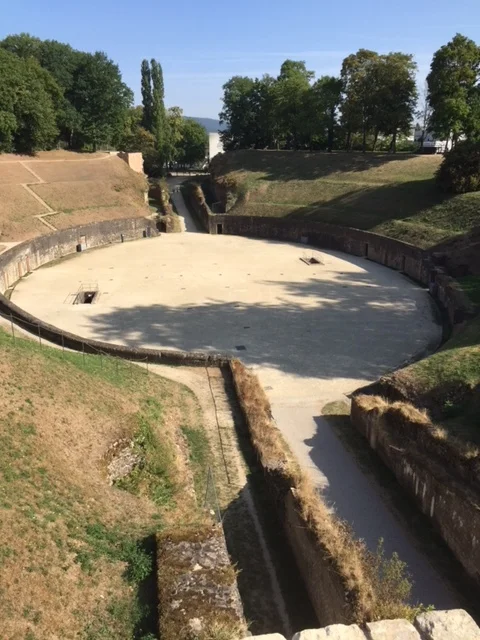
But no Roman city is worthy of its name without its own colosseum. Trier’s is impressive, still bowl shaped with ruins on all sides and several underground chambers cages (for wild animals, gladiators, actors). I went on a gloriously warm day, the Mosel wine vine-yards shimmering in the distance - as they did in Roman times - but no-one can ignore the fact that although the Romans were civilised in many ways, in others, well not so much! Walking around the lower halls, underneath the arena, you get some sense of what it was like to be amongst the condemned waiting for your time as a lion’s snack or sword thrusting practice for a gladiator.

Note the vines in the background!
There’s more, much more (2nd century bridge across the Moselle anyone?), churches, squares, German architecture, food and drink (Bitburger being the local beer) but, for those of you who love seeing Roman ruins, Trier is a great place to go. Maybe try the local Mosel wine from the open air standing wine bar in the main square! Hot dogs, cakes and pretzels of course. Yum!
As JFK said: Ich bin ein Augusta Trevororumer. And that is possibly the worst pun, joke or piece of writing on this website ever. I apologise meine volk or Leute (Google translate ain’t specific here).

“Bitte ein Bit!” says Tim Robson. Reading his beer mat.
Image of 4th century legionary courtesy of : http://www.u3ahadrianswall.co.uk/wordpress/the-roman-army-in-britain/
In Praise of the USA

The American Flag flying high, Omaha Beach 2018
“O God the Lord, the strength of my salvation, thou hast covered my head in the day of battle.”
There's a strain of European opinion that looks down on the USA. They assume superiority in a sneering de haut en bas manner which never fails to infuriate me. With Donald Trump legitimately elected to the White House they can now indulge this awful vice even more vociferously (witness the pathetic demonstrations against Trump in London this summer as real dictators and thugs get the red carpet treatment with no protestations).
How short is the memory...
It was only 1989 that the Berlin Wall came down and that shred by shred the Iron Curtain was ripped away, an iron curtain, lest we forget that had held half of Europe in terror and prison camps for forty years (2018 is the 50th anniversary of the brutal suppression of the Prague Spring and the 70th anniversary of the communist take over of Czechoslovakia.) Does anyone know this? Or care?
But what forced the eventual emancipation of Eastern Europe? Sure, Western Europe banded together into NATO, and one mustn't forget our own Iron Lady, Margaret Thatcher, but it was the muscle and power and success of capitalism of the US that won the Cold War. Ultimately it was Truman, Eisenhower, Kennedy, Johnson, Nixon, Ford, Carter, Reagan, Bush and the resolve of all Americans, Democrat or Republican - people and Congress - that defeated this evil cult, communism and freed Eastern Europe. We should thank them more for this salvation from evil.

Omaha Beach, May 2018. Many Americans died here for the freedom of Europe from Nazis
So this year, I went to Normandy around the start of June as I always do. The residents of Normandy remember the mighty battle here in 1944 every year with a solemn punctiliousness that is moving. It's here, and maybe nowhere else in France, they remember the sacrifices of the US (and the UK and Canada) in liberating Europe. Driving down the Contentin peninsula in late May, I called in at Omaha Beach, scene of the most bloody fighting on D-Day (as graphically dramatised in Saving Private Ryan). It was here that American boys stormed the beach under heavy fire. Between 2000 and 5000 never got off the beach. It was a slaughter. But American grit and numbers got them through, eventually. Nazi Europe had been breached.
I took photos. My daughter asked me why I was taking pictures of the lone American flag fluttering above the beach as all around coach parties of solemn Americans wandered silently. I turned my face away, tears probably more than glistening.
What could I say? That 74 years before, thousands of Americans (and their Canadian and British counterparts) stormed these very tranquil sands of this coastline to liberate Europe - the Europe now occupied by the smug EU - from fascism. Real fascism. Real Nazis. Killing people in gas chambers fascism. Torture and death of political opponents fascism. The killing of dissidents Nazis.
Yes, the real bad guys (with the communists) of recent history.
And we now get people on the streets in the UK (and the USA regrettably) - ignorant of the sacrifice of young American boys on the beaches of France or the resolve of the US against the horror of communism - shouting that their current US political opponents in democratic elections are fascists. Or Nazis.
Fucking idiots. Learn some history.
Things I Will Never Do*

One for the ladies. Tim Robson smoulders.
At fifty you start to realise that you are what you are and start not to care overly about how you are viewed by others. This is both a strength but also a weakness. But, as you no longer give a fuck, the opprobrium doesn't matter. But with acceptance of character comes realisation of its flaws. Perhaps there are things I'll never do. The list might go something like this.
1) Play golf. Sport of wankers, poxy rules, dickheads, sportsmen. 19th holes. No desire, no interest, I won't accept any club that will have me and petty rules just irk me.
2) Hold dinner parties. Used to. I think you need a wife and boring mates. Don't have either.
3) Go to Glastonbury. Posh twats who chant some nonsense in support of a terrorist supporting, anti British communist and then go home to their flats in Chelsea.
4) Do drugs. Never appealed to be honest. Yeah smoked some weed at university but nothing else. No interest. Sorry. Booze is my lady one glass at a time. I can't betray her.
5) See Elvis, The Beatles, Oasis, Queen (shit I had a ticket for Maine Rd 1986 and didn't go), and hundreds of others. You look back and go... why didn't I?**
6) Live up to my own high expectations.
See note ** below.
Here's a link to Lisa Stansfield's 1st single - Your Alibis. This came out in 1982 when we were in the school play together back in Rochdale. The B Side was Springsteen's 'Because The Night' which I remember Lisa saying she wished was the A side. But the A side was my favourite. Sounds very French! I remember playing her - in return - one of my songs on the piano in a break during rehearsals. She liked it. If only I was more pushy!
* Things I'll Never Do. Isn't that the title of that pretty decent song by Stockhard Channing in Grease.
** But I did see, in no order and forgetting loads - Blur, Meat Loaf, Suzanne Vega, The Pretenders, The Milltown Brothers, Captain Sensible, New Model Army (God, they were shit), Black Grape, Alexander O'Neil, Liam Gallagher, Taylor Swift, Rod Stewart, The Charlatans, Lisa Stansfield (up close and personal), Squeeze, Julian Cope, Sleeper, Alvin Stardust, Cast, Stormzie, Shambolic, The Pinter Boys, Tim Robson
Dating in Battersea Right Wing Style

Battersea Arts Centre, Lavender Hill
A Crap Date in Battersea Arts Centre
(A Star on Lavender Hill excerpt @Tim Robson 2018)
One of the problems of dating in Battersea, if you hold right-wing views, and I do - mildly and quietly - is that your potential date will be - by habit, by convention – culturally of the left. They’ve never met anyone like me, most are appalled I even exist. Therefore, I have a dilemma - to stay quiet and fail gracefully to progress the relationship, or to reveal my politics and be damn certain not to. I mostly choose the shorter path.
I’m also a bit of a nob. That doesn’t help.
Chloe and I met via some online dating agency. We agreed to meet for a drink in the bar at Battersea Arts Centre. So far, so Guardian Soulmates.
“Well Chloe, digital marketing, what does that actually mean?” I said with more bravado than tact.
Chloe looked disgusted, as though I’d demanded her best mate’s number. But the lure of being condescending proved too much. “I run word-of-mouth campaigns to organically connect brands with sympathetic networks and communities.”
“Yeah, all of that, love it - gets me a little stiff frankly - but what about digital marketing?” I laughed to underline that this was a joke. A slightly risqué joke perhaps, but still a joke between adults. On a date. Chloe though was a little younger than me and so treated life in an appropriately serious manner. Laughing at life’s absurdities is something the millennial generation appeared to have jettisoned. Shame; I used to like humour.
“Traditional marketing only concentrates on consumer relationships defined by the act of purchase. Digital marketing is about creating communities.”
“Communities that buy stuff?”
“That’s part of it.”
“So not very different!” I laughed, so alone.
“What do you do then?” Chloe asked somewhat perfunctorily. In my profile, I’d written some bullshit like skywriter or dream-maker. Basic pleasure model. I like to arouse curiosity even where none is merited.
“I manage accounts.”
“Who for?” she asked – interest momentarily piqued, itchy finger on a LinkedIn request.
“A small merchant acquirer.”
“What?”
“We sign up shops and restaurants to accept credit cards. Like this place. Means you can pay for my next drink with your Gold Amex!” Again, humour. Mistake. She heard the bit about her buying me a drink but missed the rest. Oh dear! No one gets me.
And then - how very quickly - Chloe’s participation in the conversation declined into monosyllabic disinterest. There was an overwhelming possibility of an early morning meeting. Or the unfortunate calamity of a sudden headache. Sadly, my dates often end with unexpected haste.
But I aim to please, to give a party bag to my departing ladies containing the full right-wing arsehole experience, to provide a cautionary tale to pass onto girlfriends over a bottle of Prosecco after a hard day creating organic, but brand-aware, communities.
“So, Brexit. Great result, eh? Finally, free from our European masters!”
Chloe was gone in less than a minute clutching her pearls. I think Wandsworth voted 98% in favour of remaining in the EU. If only a couple of boxes of postal votes hadn’t got lost, there would have been a ringing 110% endorsement.
I reflect on this date as I pass Battersea Arts Centre. My reflections are warm but never salutary. I repeat the same mistakes and fall too willingly into the same traps just as I walk the same route, encounter the same people, and have similar thoughts each and every day. On Lavender Hill.

Tim Robson warming up at Battersea Arts Centre
Lavender Hill - An Opening

Battersea Library, Lavender Hill
A Star on Lavender Hill (excerpt) - @Tim Robson 2018
It's approximately 2400 steps from one end of Lavender Hill to another. I walk one way in the morning, and the other in the evening. Typically I do this journey twice a day, five days a week.Through constant repetition, I can tell you the best places to cross the road, which coffee bars have the smallest queues, the most likely spots to encounter beautiful girls.
I can calibrate precisely the lateness of my train by the characters I meet as I begin my journey. If I’m early, for instance, I’ll pass a tall girl with the poise of a model striding through Clapham Junction Station concourse. Her long creamy hair is salon-perfect, clothes au courant, make-up professionally applied. She draws stares from those who see her for the first time, or those – like me – who hope to see her every day. Who she is and what she does is a mystery. My attempts to catch her eye and thereby swap a smile are coldly ignored. Being beautiful allows you to be dismissive with random strangers.
Often, as I walk up the right-hand pavement, I pass a young professional lady – twenty-five, twenty-six – who, in the glow of Debenhams’ window display, occasionally does return my smile. It’s a validation and I seek it out. But when I’m late, which thanks to my insufferable train, I often am, she’s gone already. I’ve observed that she catches a bus around the corner on St John’s Road at 8:45; anytime later than this means I miss her smile. What if we talked one of these days? Went for a drink? Became lovers?
These pleasant thoughts are driven from my mind though as I pass the Corner Stone Christian bookshop where some crazy Korean dances in the doorway. He’s there in all weathers, practising karate moves and raving in some weird English/Korean gibberish. Why this spot and why the elaborate performance is unclear but, all the same, I avoid the wild riddles of his eyes and instinctively move towards the curb.
Between the library and the police station, they’ll be two yummy mummies, thirsty for quarter-shot lattes, wearing tight fashionable leggings, slowly pushing their baby strollers in tandem towards the Social Pantry Cafe. If I’m late, I'll struggle to get past their pavement-blocking phalanx of buggies and bags. If I’m on time, I’ll slip into step behind them, listening to their unvarying stories - children, husbands, other women - until they cross at the lights on Latchmere Road.
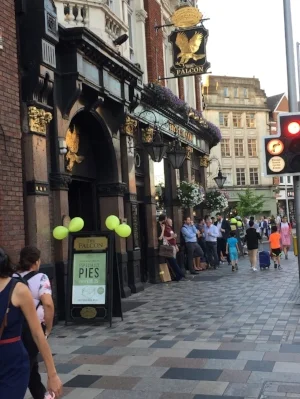
The Falcon, anchoring Lavender Hill
Harold Wilson and the Decline of the West

Harold Wilson
“The main essentials of a successful Prime Minister are sleep and a sense of history.”
I read history at university. I read history now.
What is the difference between the guided and autodidactic versions of myself? I guess specialism would be an obvious difference. Now, I tend to concentrate on Ancient Rome (both Republic and Imperial) whereas in the past I was more piecemeal in my choices.
As I write this, and think about my courses at university, I'm confused about what I actually studied - which periods of history were on my formal curriculum. In a way this haziness is a product of Sussex's convoluted degree structure which forced me to read Marx, Durkheim, Weber and Freud alongside my actual chosen subject. Actual history though, what do I remember? I know I studied American presidential history and wrote about Eisenhower and the Civil Rights Acts in the 1950's.
Looking through my personal reading record (yes I've kept note of every book I've read since 1982) I see that my reading whilst at university didn't support my actual degree. If I did specialise it was on recent UK and USA politics, the Wilson government of 1964-70 and maybe American post-war politics, Kennedy and Nixon being notable.
The Wilson government (Wilson, Callaghan, Healey, Jenkins, Crossman, Castle, Brown, Benn) seemed populated with giants. Giants who had served their country who meant well but were, ultimately, ineffectual. Though they did pass all the great liberalising measures - legalising divorce, homosexuality, abortion, Equal Pay - the country still seemed worse off in 1970 than it did in 1964.
So, why have I moved my locus from recent political history to the ancient world?
Tim of university days is different from Tim now. Then, I had worked in Parliament, I delivered political leaflets, supported campaigns, joined parties, engaged in politics. Now, whilst I keep up with the news, my expectations of personal involvement (apart from cryptic articles on this blog), is zero. My engagement in the political process is reduced to voting and cynicism.
I suppose we all become disillusioned at some point.
And Rome? It's remote but foundational to that much derided concept - western civilisation. I seek answers from the beginnings, not the ephemeral. Optimates v populists, Senate v people, dictators v Senate, a common law and trading bloc across Europe, paganism v Christianity, the over-running of the Empire, stoicism; these are ideas that one can study dryly but whose resonance reverberates even now. Who can read about the Goths being allowed to cross the Danube in 376 and fail to see any parallels with today? Does one learn from history, does it repeat itself, does it rhyme or is it different each time? I don't know but I do know we've been here before.
But..
Who cares, ultimately? Wish I'd have read Law instead.
The Seven Traits of Curious People (remix)
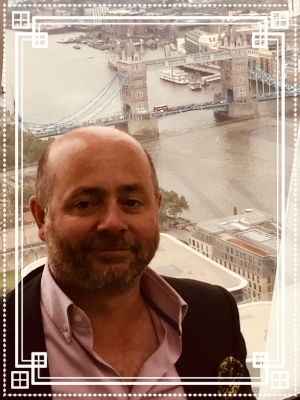
The sage of Clapham: Tim Robson preaching from his high places
Whoops! I did it again.
My Linkedin profile now proudly bears another article, another blind stumble through the dark alleys of wisdom. Yes, I recently posted The Seven Traits of Curious People. All very worthy and an exciting read, no doubt.
Why curiosity, Tim?
Why not, arsehole?
Seriously, why? Explain to us your thoughts in this windswept and ill-visited corner of the internet?
Okay. Let's lift the curtain behind the creative process this one time shall we?
At university I studied some evolutionary biology and psychology. Totem and Taboo, The Future of an Illusion, some bollocks by Marx (obligatory at Sussex), Durkheim's Protestant Work Ethic, Hobbes, Rousseau, Masters and Johnson and Shire Hite (for the more racy stuff). Recently, I've been reading my copy of Meditations by Marcus Aurelius, marvelling at Ecclesiastes and listening and purusing Jordan Peterson.
What interests me is the un-variability of the human condition. Again and again, Marcus Aurelius returns to this theme; how everything has been done before. Human emotions and dramas that is. Okay so we have a laptop and a mobile phone, Tinder and central heating but the pride, the wants, the seeking of status, the lies we tell others and ourselves; not changed.
And this interests me. Whilst we perfect the material side of life, the spiritual aspect remains the same. Marcus was, of course, a stoic who believed in the Pagan Gods. Solomon was a wise but over indulged King who sought meaning in life when none appeared to him (all is vexation and vanity). He moved away from his god (Jehovah).
Where rests truth and where lies meaning?
Fuck knows, to be honest. But let's be curious about everything, open our eyes and seek answers, however small, however insignificant.
Or maybe I've just turned fifty and so have tripped over the stone marked 'existentialist crisis'?
But I haven't the money for a red Ferrari, I don't seem able to attract women twenty five years younger than myself and I can't grow a ponytail. So, navel gazing philosophy and flimsy theories it is then.
As usual. Or as Danny Dyer - sage of our time says - Ter-wat!
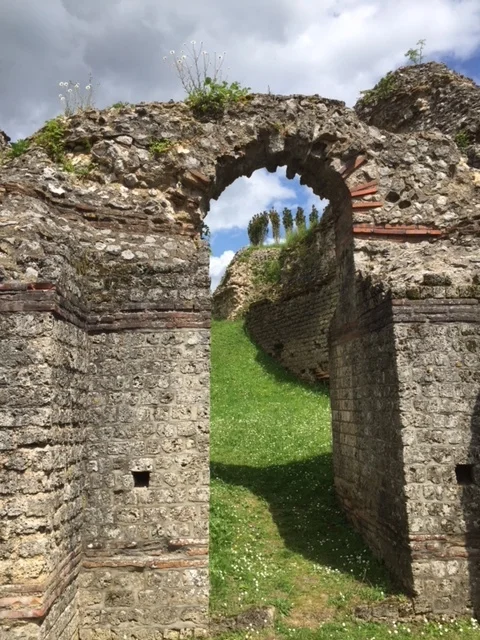
The Roman Theatre at Lillebonne

I was in France last week. In Normandy to be precise. I'll probably write later about the CItie de la Mer in Cherbourg or Omaha Beach or Etretat but today I want to quickly mention Lillebonne.
Lillebonne is a small town near the mouth of the Seine, about 30km from Le Havre. It has a pretty well preserved Roman theatre (one might also say amphitheatre). After Caesar subjugated the Gauls in the 50's BC, Juliobona - as Lillebonne then was - grew in importance in Roman northern Gaul.
As well as the usual forum and bath house, Juliobona sported a theatre that held an audience of around 5000. This was built by the Romans in the first century BC.

It was used for the next three centuries until the various waves of barbarian invaders gradually caused its ruin in the fifth century AD. The population by then were more concerned with fortifying the town against the marauding Goths, Huns and Franks than watching classic Greek plays or contempory satires (and yes, probably some cruelty).

So the town and the amusements declined and were left for ruins for 1500 years. And yet, here it is still! Rediscovered in the 19th century, partially standing, the theatre rises anew reminding us yet of the power of western civilisation. But also cautions us about it's decline. When I went last week it was beautiful day, hot, humid, a late spring day full of flowers and dappled sky. The grounds are immaculately kept, you can wander around at will and gaze at the Roman' architectural skill so many years later.

And - the cost is zero. If you are in the area pop in and take a look around. There's even a Norman castle hidden behind the oaks of the town's park. This - not the subterrainean theatre - was sketched by Turner on one of his forays into Europe:-

Turner's painting of the Norman Castle LIllebonne 1832 shows the hollow beneath where the Roman Theatre would later be excravated.
The castle still stands - a snag toothed ruin hidden from view but the star of the show now is its older cousin - the Roman Theatre.
“Every calamity is to be overcome by endurance.”
Elvis: 20 Minute Setlist

Good job Elvis had a great voice, cos he was slapped with the ugly stick!
Wow! This is a hard one (said the actress to the bishop).
How can you even try to condense Elvis into 20 minutes? I'm lost, so lost on this quest. Rigorous editing, and tough internal fights, have led me - reluctantly and with many regrets of lost songs - to this Elvis 20 minute set list.
As I've said many times before, if I could have seen anyone live, it would be Elvis. From the fanfare of The 2001 Theme to the end of 'Can't Help Falling in Love' an Elvis concert was a ritual; a carefully calibrated event to whip the audience into a frenzy.
He reinvented himself you know...
By 1968 he was a joke. A has been rock n roller starring in shite films.
By 1970 he was back, power-housing his way through some of the best performances ever. Jump suit. scarves, big belts, new hits, old hits, 50 piece back up, fuzz tone bass and wah-wah pedals. The King was back!!
Anyway, here it is, Elvis in 20 minutes...
1. 2001 Theme
2. That's All Right Mama
3. Never Been to Spain
4. Polk Salad Annie
5. Early Morning Rain
6. Suspicious Minds
7. Can't Help Falling in Love
Do you agree?

Passion's Puppet

Tim Robson and backing band (Tequlia and Miller Lite) Chicago December 1996
“Live not as though there were a thousand years ahead of you. Fate is at your elbow; make yourself good while life and power are still yours.”
Music.
Yes, to me music is the start and end and everything in between. It is the goodness, the evidence of the divine, the transportation from the banal the sublime. It's felt in the fragile wistfulness of Debussy's Claire du Lune, the raw power of the Pistol's God Save the Queen, in the once and future sound of Video Killed the Radio Star, right through to the aching nostalgia of Fairport Convention's 'Meet on The Ledge'.
It is the bounce of an 80's disco as - a then - unfamiliar Madonna's 'Holiday' hits you through a throbbing bass vibrating the floor, the smell of perfume and the heady mix of cheap lager and youthful camaraderie.
It is the soaring guitar riff of The Charlatan's 'Just Lookin'' cutting through the air at Brighton's Event.
It is Lisa Stansfield and Blue Zone at Rochdale Football Club in 1986 - all mullets and big glasses.
It is a drunken Tim standing onstage at a Chicago Blues Club in a long overcoat playing and singing 'Mannish Boy' with all the passion tequila and respectful homage can muster.
It is in the choral movement of Beethoven's Ninth and it's epic climax - power, grace, counter melody. This is the riff-heavy 5th to the max with God thrown in.
It is the feel and beauty of Vivaldi's Winter Largo from the Four Seasons, impossible not to believe that this is the greatest melody ever written
It is a fifteen year old boy listening through expensive headphones to Jumping Jack Flash for the first time and being blown away by the power of rock.
It is in the poignant sadness of The Winner Takes it All as it plays through a soon-to-be-empty Brighton flat, a too-painful soundtrack to a failed domesticity.
It's The Beatles going down fighting on a rooftop in central London January 1969 playing themselves out one last time with Get Back.
It's in the all-to-apt breathing rhythm and aching guitar solo of Savage - Annie and Dave's masterpiece.
And it's in the two seconds between the middle eight and the scatter-gun guitar solo where my Marshall Valvestate 8080 growls feedback in anticipation, a horse about to bolt, a future direction, an awesome power awaiting to be unleashed on 50 people in a Kennington pub as I kick off the best guitar solo I've ever played.
Fate was indeed at my elbow that night.
* Passion's puppet is, of course, a telling phrase from my go-to Roman Emperor and stoic philosopher Marcus Aurelius.
A Veneer of Civilisation - Tim Robson

Read it here online for the first time. My 2016 published dystopian epic - A Veneer of Civilisation.
Enjoy.
Tim
A Literary Girl On A Train.

Tim Robson opposite The Lady Writer.
So, I'm on the 8:23 from Clapham. A late night in the office as I wanted to send off 'Parallel Tracks' to a short story competition. Hard graft made easier by some Cava. I played Terry Hall, tweaked a few words, drank a glass and sent away this future winner.
Anyway, so I get to Clapham Junction and get on my train. Sit down at a four table. Only one bloke diagonal to me - great. Whip out the Mac. Stories to write. Websites to edit. Usual stuff that an under appreciated writer does. We work - ALL - the time. In silence and unobtrusively. And then - opposite me - sits down a writer - a 'real' writer.
Let me describe her shall I? Not unattractive. Slightly boho. Wild and wiry hair. Glasses pushed onto her forehead. Voluminous scarf wrapped around her neck (I believe this is obligatory if you are a 'writer'.) And now she gets out a couple of beaten up leather notebooks and an ink pen. She figits. She attitudialises. She makes faces and waves her fingers around directing the very air with her abundant creativity! She looks concentrated. She writes furiously. She gazes off into the mid-distance as though being filmed. She smiles outwardly so that everyone can see she's written a bon mot. She flicks pages quickly and noisily as she writes.
She is a stage version of a writer.
I am in the presence of greatness. Sat at the Brontes' table as they pen their classics. With Thomas Hardy as he tours Cornwall in 1912/3 researching the Emma Poems. With Oscar Wilde in Hove as he writes 'The Importance of Being Earnest'. Partying with Brett Easton Ellis in the 80's perhaps, or sharing a car with Jack Kerouac in the 50's. Someone good, anyway.
Literary greatness sits at my table!
Yeah... Me.
Some words on impermanence

Marcus Aurelius
The thing about repetitive, quotidian behaviour is the seeming sense of permanence, of things always remaining constant. You see this especially as a commuter where you get up at the same time, perform the same actions to get ready, make the same journey to the station, pass the same people, stand in the same place on the platform, sit in the same carriage with the same people, do the same things on the journey, get off at the same platform and pass the same people as you walk to work.
Example: I know as I leave my house around 7:36 I will pass at the intersection a group of four kids, two on scooters, as they head towards school. After twenty seconds, they will go one way and I another. This has been happening for months now. And yet I know, that this glad happy morning – for them – will end and end very abruptly in one, two years never to happen again. And although I may walk the same route, I will never come across this foursome again.
How many groups of happy, singing, shouting children have I passed in a work career going all the way back to pre-history? Thousands. Maybe I sit amongst them as I write this on my commuter train. Maybe some achieved their youthful dreams they carelessly chatted about on those mornings when they crossed my path. And maybe some didn’t. Maybe most didn’t.
So, it’s with sadness that I see school kids on my commute every day. It reminds me how very temporary everything is, even things that seem forever permanent. So very quickly it all ends and then never happens again. Like friendships. Or your children at various ages (Slipping Through My Fingers describes this perfectly).
I’ve also mentioned this in the past in relation to buildings. How the sense of permanence hides, in fact, a constantly changing landscape and bit by bit, brick and mortar, things set in stone crumble like the happy group of school children or the person next to you on the station, who you smile at for ten years and then, suddenly, is gone.
Impermanence.