Princess Diana, Margaret Thatcher & Madonna: These I have known

Tim Robson pictured round about the time these stories happened.
(In which Tim reveals the very secrets of his conversational success, stories to tell when on a date and adds a personal take on a trio of famous women. Some pretentious crap about tapestries and history)
Occasionally - carefully and trepidatiously - I may be on a date. If things are going well, yeah, I know, not often, Tim may kick back and pull out those killer stories that push the conversation from “Who’s this shallow buffoon?'‘ to “Get your coat Tim, you’ve pulled.”
Indulge me.
We all have those stories we whip out at the right occasion; those anecdotes that attempt to make you look better by association. I often say, we are the stories we tell. What we choose to share is who we are. Now, you’re probably thinking, that’s deep Tim. You’d be right; that lightweight humour I wear as an armour masks shadowy caverns of intellectuality. How is he still single, I hear you ask?
So, ladies, if you hear me mention the following, you know that it’s decision time. Decision time to leave early often but hey! despite repeated evidence to the contrary, we continually trace familiar arcs.
I’ll say; I’ve met some famous, even iconic women in the past, so take a choice between Princess Di, Margaret Thatcher or Madonna and I’ll tell you the story. It merits interest when the conversation is flagging, when I need an extra boost to up my bone fides with whosoever I’m with. But, like all great things in life, it’s the anticipation, the journey that matters, not the destination.
What I’m admitting is; ultimately they’re all crap anecdotes.
So, you have choice, lady with a white wine in front of her, who would like to hear about: Princess Diana, Madonna or Margaret Thatcher? Obviously the limiting choice is a false one because, like every egomaniac, I will, of course, tell all three stories anyway. As the cascading crapness of each anecdote tumbles forth, it becomes apparent that these shiny celebrity baubles are but flaming torches on a dark pathway to somewhere else.
Usually a solitary walk home in the rain, but, here we go; I’ve preambled and foreshadowed enough. On with the stories Tim!
Princess Diana
The connections between the Robsons and the Spencer family go back generations. No, my ancestors weren’t at high society balls nor swigging flasks whilst grouse shooting on some windy moor: my grandmother (RIP) was a servant at Althorp House when Diana’s father was young. Like many bright working class people of her generation, continued education was not an option and so young Dora Mason left school at 15, probably packed a solitary suitcase and left for domestic work in a grand house. All very Downtown Abbey.
Skip forward 70 or so years and the grandson of the servant and the daughter of the young lord were fated to meet. Not once, but twice. As a Rochdale boy studying at Sussex University, I’d often have to take the Brighton to Manchester train (sadly now axed). A long six-eight hour journey stopping everywhere. One of the stops was Kensington Olympia.
There I was, penning a letter - yes we used to do that, no, not with a quill - and a familiar figure wandered into view walking along the platform. None other than the Princess of Wales (as she then was), Diana Spencer. Now back then, in celeb terms, she was top of the heap. And here we were separated by less than a foot as she walked past gazing into my eyes for less than a second. She then knocked on the window and beckoned me to follow. (1) Before walking on. I’d like to say, into history but this story has a (crap) further episode.
Years later, I was working in a supermarket in Brighton in Kemptown. The staff restuarant was on the first floor and there I was, gazing out on to St James’ Street and noticed crowds gathering on both sides of the street. Who should drive by but my old friend from Kensington Olympia, Diana? Boy, was this girl persistent. No means no, yeah?
This time she drove on and I never saw her again.
Margaret Thatcher
Prime Minister 1979-1990, winner of three elections, first female PM, Falkland War victor and iconic leader of the West against communism. If she were here now, she would undoubtedly mention all these achievements en passant but, if pressed, she would probably mention the handful of times she locked eyes with young Tim Robson.
I briefly working for an MP at the House of Commons many years ago. It was here that I crossed paths with Thatcher, then at the height of her power. Whether from Strangers Gallery, at a House of Commons regetta, or, well, Strangers Gallery again, we shared moments did Margaret and I. How many alive can say they stared into those cold blue eyes, eyes that could sear through to your soul and assess if you were ‘One of Us’, friend or foe? Ultimately, she never said what she thought of me. In retrospect, I think more of her now than I did then and I’m glad I saw her in the flesh.
And onto story three.
Madonna
And so we get to my Madonna story. Probably the best of the three. You know when people say they bumped into someone? Well, in this case, I actually did bump into Madonna. Might have exchanged words.
It was sometime in the mid 00’s and for some reason my boss - a high powered VP - decided I’d been suitably obsequious and so decreed on the spur of the moment to take me to Cipriani’s, then on Park Lane. Paparazzi lined the pavement, flash bulbs were going off left and right and the restaurant was packed. (2) We drank, we ate, we drank and eventually Tim needed the bathroom. The tables were close together so it took some weaving to navigate the journey to the gents.
A narrow corridor formed between tables and I walked quickly noticing, at the other end of this confined space, a short(ish) woman who looked liked Madonna coming in the opposite direction. I looked again; yes, it really was Madonna! There was only really space for one of us between the tables and she didn’t look like she was going to let me through. Too far on to go back, I pressed ahead and we kind of bumped into each other in the middle. And then she said the following words to me which I’ll always remember:
“Asshole.”
Now isn’t that a celeb story to treasure?
Conclusion
The stories themselves are lightweight and, in one way, inconsequential. Remember what I said to you about us being the stories we tell? But they serve two purposes. Firstly, they provoke discussion, they advance the conversation from quotidian ‘how are you’, ‘where do you work’, ‘how did you get here’ to a more interesting level. Everyone’s got a celeb story to tell. Usually just as crap as my own. It’s a bonding mechanism.
Secondly, what three remarkable women! All iconic, all remembered today (yeah, yeah, Madonna’s still alive, but you know what I mean). The stories and the women involved are a link to the past, and there’s nothing so obscure as the recent past. To be footsoldier at Austerlitz and see Napoleon riding close by must have been that soldier’s go-to yarn when refilling his cup in some provincial inn back home in France years later. How he looked, the uniform he wore, the weather. These are the touches of history that evade historians but just as each stitch makes a tapestry, so does each anecdote serve a wider purpose of preserving what is often lost.
Really Tim?
Oh all right. I tell them to create curiosity and as vehicle for a few jokes. We are the stories we tell.
Notes
1) Possibly that sentence, about knocking on the window, may just be my brain playing tricks on me. Time is a great deceiver.
2) Prince Andrew & Fergie were there with their kids also that night. No, me neither.
Cloud Cuckoo Land

The clouds above Sussex Downs. Barefoot Tim strumming Joni Mitchell not pictured
(In which Tim investigates Data Centres. Platitudes himself into a mild eco-frenzy and then talks remediation strategies like someone who has spent probably less than a couple of hours half reading articles on the subject. I like it that way, throwing punches in the dark, masking ignorance with blind certainty. Sorta GenZish..)
The Cloud Euphemism
Notice how our language can be subverted? Euphemisms abound. Real intent and actions are hidden by innocuous sounding words and phrases.
‘The Cloud’ for instance.
We all know have some shadowy idea that our data sits somewhere in this mysterious thing called The Cloud. TicToc. (what’s this?) Facebook (Hi Granddad!). Emails, pictures and texts. Banking, payments, networks, online shopping, they all flow seamlessly through this transcendental world.
Sounds sort of fluffy, no?
Bullshit, actually. Behind each online transaction lies a very physical, non cumulus world located in vast server factories all over the world and supported by a complex infrastructure of pipes and fibre optic cables, often underwater.
Clicks Equal Energy Usage
These data centres are vast consumers of energy. As the world becomes more interconnected, as we carelessly scroll through TicTocs of dance routines and cats doing funny things, those naughty websites with adult videos on them (not me), the data centres become inextricably larger and more numerous.
More data. More data centres. More energy needed. Vast energy use.
In these data centres, servers sit row upon row, storing our photos, remembering our transactions, facilitating our messages. This all takes energy. But just as we know that overuse of an iPhone can heat it up, likewise these servers generate heat as they whir away continuously. So they need cooling, lots of it.
More energy use. Much more energy use.
It’s estimated that data centres use upwards of 2% of all our worldwide energy and this is growing exponentially each year. Vast amounts of water are also necessary to keep the cooling systems functional so the servers don’t overheat.
So our picturesquely named ‘The Cloud’ is anything but our fluffy friend. Like steel production - which it is rapidly catching as a major energy user in the world - data centres are a necessary evil. Unavoidable.
Please note, I’m concerned about energy use, consumption and composition - not greenhouse gases. I’ve been concerned for some time that our ability to produce sustainable, secure and economic energy has been sidetracked and compromised by weak governments and strong green lobbyists. The failure to update our nuclear fleet has been a major failure of not just the UK.
The energy use of data centres is frightening as we expand what we put in The Cloud from photos, to scrolling social media videos to new AI applications. All sucking energy. How is this to be sustained? Will our ability to innovate as a species be constrained by our inability to produce enough energy?
Mitigation
Clearly, the major players from Apple, to Google, to Meta, to Amazon, know this. Whilst the visible end of the internet spectrum hides from the general population, governments and business know the dirty secret behind The Cloud.
Mitigation strategies are many and include, localised renewable energy sources, carbon neutral strategies, clever uses of geography (cold areas for cooling for example, or hot areas for solar energy), water based cooling (in the sea for example), optimal server redesign, converting surplus heat into energy.
Many strategies but the rise of connectivity, AI, videos, and businesses moving to Cloud based solutions - for security, cost reduction, future proofing, speed - all contribute to the snowball hurtling down the mountain that is data centres. Best intentions sometimes aren’t enough.
Knowledge is Power?
Knowledge is power. Power, judiciously exercised can lead to change. Peaceful, incremental, beneficial change. The first step is to realise that the internet, our phones, our social media, The Cloud itself, is not cost free. All our actions, cumulated together, are creating a monster of environmental impacts.
Reluctantly, I admit that governments probably have to play a part. Holding the ring, not swinging within. Businesses who use ‘The Cloud’ can play a part by lobbying for cleaner, more efficient data centres, and by informing their customers of the environmental impacts of their data policies. However, I’m wary of ceding power to self certified experts/third parties who often seem to push agendas in the guise of ‘measuring ESG’. Who guards the guardians is a great liberal principle.
Ultimately though, we - the consumers - are also jointly culpable and so individually we must ask, what can I do?
Practical tips for individuals and businesses
For a start, gluing yourself to the road or vandalising works of art are not an option. Grow up! Prison is where you should be and you have no place in rational discussion. GAFJ. *
So, here’s some practical tips to help steady the growth of data centres and reduce the power that they use. It’s interesting what we can do!
Delete emails, keep to inbox zero. It’s good practice anyway, isn’t it?
Don't send unnecessary emails, keep the cc’s low. Go 1980’s on everyone’s ass - be mysterious, untraceable.
Delete photos. Do you really need 28 selfies per night to get that one perfect shot. Bin the dross.
Use Google docs and share them rather than use email (also good for security - we’ve all sent docs to the wrong person!)
Type a website directly into the browser (or click on a URL). Searches use 4 times more energy
Websites: lighter colours are less ‘heavy’, simple pictures are easier to load and use less energy. As universally recognised fonts, Arial and Verdana load faster. Use simple code - don’t overcomplicate things. Check your website’s footprint at Websitecarbon.com
Videos and music on your phone. Download, don’t stream.
Video /social media - disable autoplay
If you’re listening to a song on Youtube, for example, but not watching it, stream or download the song from a music site.
Read books. Slow burn knowledge. Builds resilience and patience and is a good habit.
Quit social media. Conroversial but true. I did it years ago. From my off grid cabin in the wood, reading Appian, I don’t miss it.
It's an interesting list. Every individual plays a part. Each part adds to a whole. The internet is great advance for society, bringing benefits from access to knowledge, to instantaneous communication, fast payments, online shopping, and yes, videos of dogs playing the piano. But there is a downside. Nothing is cost free.
Knowledge of this should dictate behaviour. It won’t but it should. Otherwise demand of services will outstrip supply of energy. Our governments have been criminally negligent sleeping at the wheel whilst mouthing platitudes about solar energy. Yes, I’m back on the nuclear train again. Nuclear? Yes; the way we can safely add base load to meet increasing demand. One for another post !
Notes
GAFJ: Get a Fucking Job. @Tim Robson 2024. Fetch.
Keep Reading
Am I a Communist? A look at government Electric Arc Furnace Technology, regulation and my changing opinions
Songs we hate to love

Baccara - shockingly bad. But so Gooood!
Songs So Wrong They’re Right
Sometimes, in the dark, after a couple of drinks, you know you do something sooo wrong but it feels sooo right? A fumble. A stumble and well, whilst we're here - may as well?
But then you hear out the full Abba track...
See what I did there? Started all suggestive and then pulled out early and did some damage to your curtains. Anyway, the theme of today’s descent away from ancient Rome and Electric Arc Furnace steel production, is those songs that everyone affects to hate but then, secretly, love. Well, me anyway.
I’ll try and not make this a ‘Tim reminisces about watching Top of the Pops in the 70’s’ borefest. I’ll mix it up. A bit. Having said that, let’s start with:-
Devil Woman - Cliff Richard (1976)
Long car journeys, 70’s compilations, I can find all manner of excuses to whip this Cliff classic out. It’s disco, it’s guitar led. It’s slightly misogynist. Cliff warns us about women and their evil feminine ways (no sniggering at the back). Total classic and Cliff’s biggest hit in the States. This is the only Cliff song you can air guitar and head bang to. Well. you can, but you’d look a twat. Don’t ask how I know this.
Yes Sir I Can Boogie - Baccara (1977)
We’re all a product of our background. Our history. We fight it but, you know, nature / nuture and all that. So yes, I was around when this talent-free zone briefly burgled the UK charts in 1977 with this song (and it’s follow up - Sorry I’m a Lady). Objectively, it’s shite. A disco by numbers with two talentless singers giving it some fake Donna Summer’s orgasmic lift. I think they’re Spanish. Represented Luxembourg in the Eurovision… And yet, it’s one of my favourites. Play it. It’ll be one of yours too. You’re welcome.
Hannah Montana and The Jonas Brothers - We Got the Party (2008)
A deep cut, man. What do you do to improve a bonafide teen classic sung by a young Miley Cyrus in a crap blonde wig? Yes, add the Jonas Brothers (who the fuck are they? - editor). Miley / Hannah rocks out this surprisingly heavy tune with syncopated fuzz tone guitars. ANYWHERE WE ARE, ANYWHERE WE GO, EVERYBODY KNOWS; WE GOT THE PARTY WITH US! As Taylor Swift used to say - probably insincerely - on her Red Tour (yes, I was there too) when introducing some has-been guest - “this is my jam”.
Whigfield - Saturday Night (1994)
90’s dancehall classic by an Italian songwriting team fronted by a hot Danish singer. Catchy pop - bouncing bass, dancey keyboards, infectious tune and, did I mention, a hot blonde Danish singer? Some weird repetitive duck quacking. Simpler times children, simpler times. It’s not pretentious in the slightest but is dance gold… Wasn’t there a routine that goes with this?
Nellie The Elephant - The Toy Dolls (1984)
Wooooooooooooooooooooooooooo! Punk band flips a Disney classic and has rough sex with it. Aged badly but it was never that great. You had to be there, in a Rochdale disco swaying after too many snakebites. Then, and only then, was it a classic (so, why are you playing it now, Tim?).
Jilted John - Gordon is a Moron (1978)
The 70’s… Those were different times. The past was a different country, and all that. A song about John being dumped by Julie in favour of Gordon who, apparently, is a moron. And many others things too rude to mention on an ESG approved 2024 website. Sub-punk, witty lyrics, catchy chorus, bass solo, a long fade out with every insult under the sun for the afore mentioned Julie and Gordon. Did I really see this on BBC’s Top of the Pops? It all seems like a dream now.
Everyday - Troy (High School Musical 2) - 2007
It’s gotta be done! Tweeny-pop channeling ‘Oh Happy Day’ at the end when the cast, always faux sceptical of Troy & Gabrielle and their musical theatre ambitions, put aside their reservations and stand up, clap along and provide a rousing end to the film. Lightweight, derivative, cliched, but fuck it, tracing the arc of this slow builder is a pleasurable experience. Back when Disney knew their market, what the hell their purpose is; giving smiles to little ones and happy memories to those not so young (and now older still).
Hands Up - Ottowan (1981)
“La gard meurt et il ne se rend pas.” The stirring words of General Cambronne at Waterloo as The Old Guard went down fighting are echoed not at all by this French disco-pop duo 166 years later but the same indomitable Gallic spirit punched it’s way into this list. Happy to oblige. Memories of Costa holidays, warm evenings, light weight Europe pop and disco lights. Like the grand old general at Waterloo, this song takes no prisoners and fights to death to get you up and dancing with an irresistable mix of clap-clap beat, daft lyrics and an ear wormish tune. You start ironic. You end a convert.
****
There’s more. So many more. For those about to embarrass themselves, we salute you!
Read On / Rock On!
More listettes. More opinions. Blues in Chicago? Mick Taylor? Or read all music articles.
Where there's muck, there's Brass

Nope - me neither. Seems Squarespace has stopped me loading new images so, er, I selected this one.
(In which Tim opines about steel production, decarbonisation, scrap yards. It’s a good read and I’ll try to distinguish this version from the official LinkedIn version by adding some poor attempts at humour. Maybe some swearing. Who knows?)
In an unlikely alliance that unites the practical with the theoretical, UK scrap yards find themselves at the forefront of a movement that is potentially both virtuous and commercial.
We’ve long known that scrap yards are one of the best exemplars of the circular economy. They take what has been mined, produced, and become obsolete, strip it down and then return it to be used again.
Your old car, for instance.
Cars are full of various metals like steel or copper that can be reused once they go through the scrapping process. (1) Clearly recycling is infinitely better, not to say cheaper, than mining fresh iron and coal to create new steel and, crucially, much cleaner and better for the environment.
By volume, one of the world’s more polluting industries is traditional blast furnace steel production which - whilst necessary for a steel hungry world - also leaves a very heavy environmental footprint (approx 7% of all global greenhouse emissions). We all use steel. We all need steel. How we ‘create’ it though should be of interest.
Reducing the heavy environmental cost of primary steel production would be a clear win in cutting down pollution in our world. Luckily, there is however another steel making method which utilises electric arc furnace (EAF) technology. EAF has only one third of the environmental impact of blast steel production and - crucially - uses recycled steel as its major input.
EAF has been around for years. Centuries even. But as we always tended to worship the new; new steel, mined and belched out by blast furnaces, was the predominant method. And produced better steel than recycled steel which could have all sorts of other metals and oxides lurking within. But EAF tech has moved on and will continue to do so.
Earlier this year there was a blast furnace of publicity in the UK (see what I did there?) when Tata Steel in South Wales decided to close its last remaining blast furnace and move to Electric Arc Furnace technology. British Steel is also changing its processes to EAF technology at its plants in Teesside and Scunthorpe.
This will be a great step ahead for sustainability and one concomitant effect is that there will be a domestic market for UK recycled steel, 80% of which is currently exported to destinations such as Turkey, India and Egypt. (2)
If the UK can grow its EAF steel making capacity, then scrap yards will be at the forefront of providing the raw materials. Instead of exporting scrap steel, the impetus could switch to domestic sales which also reduces the overall carbon footprint of the industry as less is shipped abroad.
A few caveats thropwn in to provide a spurious balance to my advocacy.
Price
The price has to be right, of course. But with fresh demand being created locally, UK scrap yards are in the ideal place to take advantage of this new market. (3)
Quality
Previously there have been arguments about the quality of reclaimed steel and thus limitations on its usage. However, with more advanced processes to clean the scrapped metals, and the ability to vary the components within an electric arc furnace, this gap could potentially be closed.
Job Losses
EAF technology employs less people than traditional blast furnaces. Workers in the steel industry will be displaced. It’s always the way. ‘Learn to code’ doesn’t cover it (thanks Joe Biden) but old industries do die away as technology - or environmental imperatives - dictate changes. I heard somewhere thy’ll be millions of jobs in the green economy. Time to prove it.
So, the EAF conversion is a challenge to UK plc and both a challenge and opportunity for UK scrap yards. I’m interested to see how this plays out. Instinctively, it seems we have demand (EAF steel producers in the UK) and supply (10M tons of recycled steel). Surely the two can match up so we’re all a winner.
I like practical steps and realistic solutions. I like the way technology can improve lives and I desire the world to be less polluted. Those morons who destroy stuff, annoy others and bleat about climate change have no solutions other than living in a cave and keeping warm by burning dung. Not a great future. But incremental steps - new, less polluting processes, recycling and human ingenuity will win every time.
The big winner for the UK adopting EAF technology in steel production should be the environment. And that, is of course, a good thing.
Talking of good things… I’m working on my next century of Roman battles. This time it’s the 2nd century BC and so I’ll be discussing in the article the fall of Corinth and Carthage in 146BC as well as Marius handing the Teutones their ass with his new model legions in 101BC.
PRETENTIOUS NOTES
The car scrapping process is described here by Hill Metals
Value of UK iron scrap exports in 2022 was $3.9B equating to around 8M tonnes or 80% of the total scrap
Compulsory / legislative bans on exporting scrap metal should be avoided. The domestic market participation should be voluntary.
I like to use the word concomitant. It’s both big and clever.
FURTHER READING (yeah, go on, read up. It’s a fun ride)
Scrap Local - good summary of the pros and cons of the shift to EAF technology: https://www.linkedin.com/pulse/new-era-steel-recycling-tata-steels-eaf-green-transition-scraplocal-ylnae/
TATA announcement: https://eurometal.net/eaf-innovation-scrap-management-guarantee-steelmaking-uk-steel/
Good overview from ING : https://think.ing.com/articles/why-is-ferrous-scrap-a-strategic-raw-material/
BMRA on potential restrictions in recycled steel exports in the UK: https://www.mrw.co.uk/news/restricting-scrap-steel-exports-would-be-catastrophic-says-bmra-08-01-2024/
The internet, porn and the opiate of the masses : 2016 Repost

William Tyndale. Lover of the internet. Probably.
Repost: I was Right!
I thought I repost this article from August 2016. As you can see, I was aware of the underlying tensions in the Ukraine and, five and half years before Putin invaded, that there were EU/US inspired tensions from 2014. My salient point that regions with a rich and complex history are being used to push other agendas still stands. In fact, better now than in August 2016 when clearly I could see the lies and manipulation even then. Which doesn’t support one side or another but just cautions blindly being led by those who seek to profit or who have hidden motives. My points about the role of the media, the gatekeepers, the custodians of the current view have also aged well. This was written pre Covid.
I’ve lightly edited out aged references or irrelevant asides but left the piece as written.
My advocating of a person curating their own news agendas from multiple sources is still my viewpoint. Interesting that when people started to do this during the Covid era, it became yet another stick in which to beat those with opposing views. Condescension is never far away from the lips of those who accept agendas unquestionably.
TR March 2024
Original Article, August 2016
One of the major differences between my parents' generation and mine and probably between mine and my children's is the way we consume news. I literally cannot stand anymore to watch the BBC (or other channels) as they push their own news agenda. The prominence they give to stories. The stories they cover. The stories they don't cover. What angle the reporters choose to push. Who the guests are.
"Tonight we're discussing spending lots of taxes on some bullshit cause de jour. Supporting this we have Mother Theresa, Gandhi and Martin Luther King. Opposing is Adolf Hitler. "
Suddenly we're all supposed to be interested in The Ukraine, or Syria, or Iran, or wherever public school educated lefties in editorial positions decide we need to be lectured about next. And then - like magic - the issue disappears as the cameramen go onto the next story. Don't get me wrong. There are things that happen in these, and other places, that are newsworthy, but I don't necessarily agree on the broadcasters' news agenda, nor their selective editing or timings. So in 2015, for instance, there was the migrant crisis and all those pictures of young men walking across Europe was on TV every night. This year the numbers flocking to Europe is up. But during the referendum period, did we see any pictures of this? It was happening but strangely, not on our TV screens. Funny that.
The Ukraine War 2014-2022
A couple of years back, The Ukraine was all over our screens. The toppling of democratically elected - but corrupt - president by the mob was shown in a sympathetic light. The fight back against this in the east of the country and Crimea, was presented as a bad thing. Especially when Russia joined in. If you supported the EU and approve of the demonising and provoking of Russia, you would push one angle. If you hated the EU, you would push another. Personally, the ignorance and propagandising of our TV coverage sickened me.
So I decided to do some reading on the history of The Ukraine. What I found was a region so rich with history, wars, pogroms, dirty dealings, hatreds going back centuries that any non specialist would hesitate to say anything, let alone push an agenda. So the attempt by our TV and newspapers to pickle this into a Russia - Bad, pro EU Ukraine - Good narrative just seemed wilfully ignorant. Or deliberate.
Be Your Own Curator!
The good news is that today there's no excuse to not to be your own news editor and set your own agenda. There's a big, vast internet out there. With a few clicks you can watch videos, read articles from many sources, check facts, go into depth and make your mind up. This democratisation of knowledge is one of the greatest advances in human history. Everything available at just a few seconds notice!
But surely we need gatekeepers - shout the statists, the control freaks. The people who were in charge or those who seek to control basically despise, forever and a day, their fellow humans. We're allowed our vote but god forbid we start to challenge received wisdom, start to push back, start to baulk at the titular binary choices we're offered that actually are just two cheeks of the same arse...
Well - getting rid of de haute en bas tossers who love control, is a good thing and actively to be encouraged. As I get older - as faith in my own certainty diminishes - my faith in the collective wisdom of people grows.
But, and it's a big BUT, if we are to be our own editors, if we are to determine our own news agendas, there comes responsibility too. It's the other side of the coin of freedom or liberty. The sentient person has to be aware of their own biases, their own agendas, their own ability to think the best of their own side and do down the other. It's human nature but the zealot, with eyes in the mid distance, ears shutted, is always to avoided.
So - what to do? Read widely. Read across the divide. Engage with arguments. Test out your own. Push your understanding. Improve yourself.
Yeah, it's a bitch, I get that. But ignorance swirls around us, waiting for victims. Bad people await at the gate waiting to be let in. Ambitious people will try to manipulate you.
"Libraries gave us power" sang the Manic Street Preachers, in another era about an even earlier era. And so they did. And their modern day equivalent - the internet - still does. Use them. Or lose them. There are people who'd rather you consumed the opiate of celebrity gossip and porn whilst real power was being curtailed.
Let me leave you with The Beatles semi live on The David Frost show pissing on absolutely everyone (as per usual)...
Read On
Read more features on Music, History, and reviews Cities.
The Jewish War Josephus: Book Review

In which Tim discusses this detailed record of one of Rome’s most hard fought campaigns in the first century AD. 21st Century relevance alert!
The destruction of the second temple in Jerusalem in AD70 was the climax of a bitter siege by the Romans under Titus as they sought to end the Jewish rebellion. It is a seminal episode in history that started the process of scattering the Jews away from their own homeland. This had a mournful effect throughout the following two millennia. Those echoes still reverberate today.
The author, Josephus, was a Jewish priest who turned rebel general in the uprising against the Romans in the AD60’s before switching sides, eventually working with the Romans against the Zealots holed up in Jerusalem.
The Jewish War is a detailed book which traces the origins of the first century Jewish rebellion against their Roman masters. The first part deals with the history of the Jews from the second century BC. Lots of Antipaters and Herods (there seem to be about only three names in Judea!) back stabbing each other. On top of the palace intrigues, overlay Roman general Pompey who conquers Judea as a side hustle in his battle to defeat Mithridates in the 60’s BC. The Romans impose their own dynasty onto the Jews and now we have Herod the Great and his family added to the mix. Over the next hundred years or so, there’s more backstabbing, incompetent and venal Roman governors, lots of Jewish in-fighting - both political and religious - until we hit the mid 60’s AD and the whole thing kicks off.
Rome had a major rebellion on its hands.
Nero appointed Vespasian to command the Roman forces to put down the insurrection. His force consisted of four regular legions supplemented by local levies from the allied kingdoms around Judea. Vespasian was supported by his son Titus. When Nero was overthrown in 68AD, Vespasian left the conflict to pursue his own imperial ambitions (he became emperor in 69AD) and it was Titus that conducted the final stages of the war including the climatic siege of Jerusalem.
Like Caesar in his Gallic Commentaries and Civil War books, Josephus is a participant in the events but - in the main - prefers to write about himself in the third person. It’s a literary device that tends to obscure bias but, that aside, the narrative is gripping as the Romans slowly, slowly, bring the province to heel. There’s sieges and battles, ambushes and massacres on both sides. It’s brutal. There’s zealotry (yes, the religious fanatics are indeed called Zealots!) there’s stupidity, venality amidst the chaos as well as great feats of organised warfare from the Roman legions as they close in on the Temple.
The Temple is burnt - according to Josephus - by accident, by the stubbornness of the zealots, against the wishes of Titus and the Romans moving in for the kill as the siege gradually comes to an end. The people of Jerusalem are main victims; hemmed in between the Zealots who won’t let them leave and the Romans who have to take the city. Innocents always suffer when the dogs of war are let loose.
For anyone interested in Roman history, I would recommend this book. You will be immersed into a small corner of the empire, how the army operated as well as constantly being reminded that the cities and provinces where the action takes place so long ago are still very much part of an evolving history.
What do I conclude?
The over-riding feeling I got from reading this book, is the unchanging aspect of human nature. The Jews and Romans of 2000 years ago are no different from ourselves. These days we blithely tend to follow the maxim that the past is a foreign country and that they do things differently there. However, I’m tempted to disagree; the actors may change but the play remains the same. The people who inhabited the Roman world are all too recognisable.
So my takeaway from this detailed book - which gives really useful information about the two hundred years around the birth of Christ (and yes, Jesus seems to be a common Jewish name too!) - is that for all our progress materially since the first century AD, we are just one small step away from brutality always.
It’s a sobering thought.
Read On
More Roman Tales and Reviews - battles, screen critiques and Roman economics.
Macro Trends: Picnicking on the Precipice

Cliffs at Étretat, photo Tim Robson
I have learnt that economists have the consistency of a stopped clock; the occasions when they are right tend to be overwhelmed by those where they are not.
Sometimes they make the right call but get the timing wrong. That’s the fate of theorists and those preaching underlying value; but being theoretically correct is no substitute for being actually right. Sometimes however, an economist's prognosis is so weak and equivocal that any temporary blip or slight statistical tilt can result in an undeserved victory lap. (1)
Obviously, a year spent working through macro economic equations at Sussex University does not qualify me to be a fully fledged economist. It did however train me in humility and fallibility. So, clown feet to the fore, here I go again, treading into the world of macro economic predictions.
Energy
The Ukrainian War brought into focus the fragility of supply chains but especially energy security. Previously, all conversations around energy concerned the rather lofty goal of eliminating fossil fuels and decarbonisation. Keeping the lights on through security of supply is now the new rock n’ roll for western governments. The Just Stop Oil morons are appearing not only wrong but passé.
The limitations of solar and wind power (intermittency, costly rare metals, storage) needs to be bolstered by a base load provider. I’ve written before about the emerging consensus that nuclear is the way to go. As nuclear has a predictable base load and - uranium aside - is domestically secure, there is an increasing trend towards building new generation IV reactors, increase use of small modular reactors whilst also extending the existing fleet.
Of course, thorium reactors and molten salt processes could (should) be way forward but as with everything concerning nuclear, politics and inertia will get in the way. Reusing nuclear waste also suffers from underinvestment but, with investment, nuclear could go nuclear in a big way in the next few years. (2)
Fossil fuels are not the way of the future but they are the bridge. Prematurely hacking at the supports of this bridge and shutting off financing is a poor policy as new oil fields are becoming harder to find, and harder to exploit. Let’s hope sense prevails as we transition from one energy paradigm to another.
How we pay for energy might however be at an inflection point.
De-dollarisation / Blockchain
The status of the dollar as the world’s reserve currency is under attack. The recent moves of the BRICS nations to explore global payments (especially oil) in currencies other than the dollar is a major development in the last couple of years and was on the agenda of their annual meeting in South Africa recently. (2)
Put simply, if demand for dollars - and inter alia dollar debt - wanes then this will have a major impact on both the system of world trade but particularly the US’s ability to print its way out of trouble. However, there is no agreed alternative medium in sight, for example, none of the BRICS currencies are able to play this role. (3)
The eventual alternative to the dollar will, I’m sure, involve blockchain technology. Potentially the solution could be an exciting amalgamation of both old and new, blockchain technology linked to physical gold. Back to the future indeed!
Could the dollar make a comeback? Let’s look at debt and bond yields.
Debt and Bond Yields
Congress recently raised the debt ceiling and US debt now stands at $33T with no clear path to lower this inexorable rise. Taxes won’t be raised, spending won’t be cut, and so the only solution will be the further issuing of debt to a market increasingly backing away from dollars (see above). Therefore bond yields are rising, forcing the contribution of debt interest to the federal budget to rise concomitantly (currently on a clear and short path to $1T per annum). And those cheap COVID era bonds are having to be refinanced at much higher rates.
The Fed has been trying, weakly, to shrink its balance sheet in 2023. But if demand for USD bonds declines it will have to pivot and start firing up those printing presses again to monetise a growing debt that is both hard to sell and expensive to service. (4)
But QE - as we now know, and should always have known, leads to inflation.
Inflation
The entirely predictable spike in inflation rates over the last couple of years has been lowering over the last few months. This lays bare the real underlying question; what proportion of the increase was due to supply side shocks caused by COVID and what proportion was caused by QE?
So whilst global supply chains have been - to some extent - normalised, what is the residual after effect of printing money? It could be that inflation has been secularised within our system regardless of the price shocks and that higher base levels will be the norm for some time.
And so, to fight inflation, interest rates will remain high, cutting off investment and freezing the housing market. Could this lead to a recession?
Recession?
The primary question over the last year is whether we are heading into a recession and, if we are, will it be a deep recession or a mild one? Most economists thought there would be a recession in the second half of 2023. That seems unlikely but the signals are mixed. Employment numbers remain high, inflation is dropping but above target and COVID hysteria has - mostly - stopped. China opened up this year and supply chains have re-orientated despite the shock of the Ukrainian War and the concomitant sanctions imposed by the West on Russia.
But, inflation remains high, real estate in the US and China is looking precarious (5), western government debt keeps rising along with yields, the banking system has been rocked by the banking collapses, oil prices are rising once more…
I predict a mild recession in 2024. But my longer term view is that unless western governments get to grip with the twin issues of debt and energy, recessions will appear more frequently with lower lows and lower highs.
Coda - Are You Not Entertained? AKA - what do I really think?
I circle around and but finally come out punching. Yes recession next year. Yes, more recessions to come, maybe not huge but more frequent and tracing a downward path unless we sort out energy supply and our governments stop spending money they do not have. I understand Keynesian counter cyclical pump priming but why do our governments always spend more than they have even in good times and either monetise the debt and so cause inflation, or borrow and pass on the liability to future generations?
Well Tim, they do it because they can. What stops them? Fiat currencies have no earthly bounds beyond market tolerance. And that market is broken. We have the current perversity of US analysts right now living in a topsy-turvy world where good news is bad news and bad news is good news. So if employment figures are healthy then markets are depressed because analysts think that tight labour markets mean that the Fed will not lower interest rates. They want BAD news so the Fed will pivot and lower rates and maybe print more money. But QE, as we know, tends to inflate asset prices and so apart from being wrong in so many others ways, also tends towards pushing money to those that have at the expense of those who do not. You don’t have to be a redistributive socialist to be angry about that.
Was it always like this? Did everything depend on central banks and whether funds rates are a half point up or a quarter point down? I suspect not. Maybe, maybe, in the past we produced products of value and investments were made on real value and not cheap money. Maybe.
The answer seems to take away the punch bowel from politicians. Every crisis is met by spending someone else’s money and if that isn’t available, just conjuring it up anyway and causing inflation. But perhaps that’s too easy an answer. Maybe the fault lies in the mirror - our politicians only bribe us with our own money because we let them, want to be convinced they have the answers.
Maybe economics is like salvation; true grace starts from within. And that, my friends, is a much harder journey.
NOTES
1) Which prompts me to relate the old joke about the economist who predicted 15 of the last 2 recessions. Maybe Keynes had it right when asked about what will happen in the long run - “In the long run we are all dead.”
2) I feel a little smug that my (tiny) investments in uranium companies have shown decent growth in 2023. If only all my stock picks were as prescient. More seriously, the 1970’s decision to drop the thorium programme in favour of uranium, seems increasingly dumb. Maybe I’ll explore this further at some future time.
3) The loud discussions in the macro community about de-dollarisation obscures the reality (so far). Whilst central bank reserves of USD have dropped 7% to 59% over the past 7 years, worldwide trade in dollars - according to ING, has hardly moved in that same period. The BRICS conference recently tasked the countries to investigate local and alternative currencies by next year. A related but out of scope issue for rivals to the dollar, is the huge Euro Dollar market which facilitates dollar trades outside the US.
4) Remember the BoE was forced to buy bonds last autumn to prop up the UK pension market.
5) Evergrand crashing and the Chinese real estate market, built on debt and speculation, may cause a large crash of the Chinese market (30% of all activity is real estate related). US real estate may get hit by mortgage rate inertia where people with a low existing mortgage decide it’s not worth moving when the incremental cost of a more expensive mortgage is factored in.
Divine Discontent
Divine Discontent

(In which Tim strays semi-cluelessly into the realms of philosophy, ham fistedly applies it to business and then reverses himself at the end of the article inelegantly. Situation normal then!)
Linkedin is an unusual place to find philosophical insights laced with religious undertones.
Posts tend to celebrate being at an exhibition stand in a conference hall somewhere, are thrilled at coming third place in an obscure sectoral awards ceremony or enthusiastically virtue signal support for some fashionable cause.
All well and good, it is a business network after-all. Quotidian posts are gonna do what they’re gonna do. We all play the game.
So my interest was piqued when I saw a video featuring an old boss of mine - now head of a multinational organisation - in which he used the phrase ‘divine discontent’ to describe grappling with a large business problem.
Interesting phrase that - divine discontent. And not just because of the alliterative quality of the phrase, though poetry in written and spoken discourse always attracts being so rare.
An otherworldly dissatisfaction… An innate restlessness with the status quo... I can certainly picture a divine discontent driving a Weber-esque worldly asceticism, powering a Protestant work ethic of ceaseless productivity to be nearer the divine. (1)
But I can think of two other applications of divine discontent which eschew any religiosity; personal journeys and, more prosaically, business problems. Indulge me.
Firstly, and briefly, the personal. A divine discontent implies an uncomfortable gap between ‘what we are in comparison to what we have the power to become’. (2) Put simply, you could be achieving more in all the normal vectors of life - family, relationships, work, personal growth. The discontent drives change in your habits and aspirations. It propels you forward into being more engaged and, presumably, happy.
And Business? I believe this is the context where my ex boss was using the phrase. (3) Here a divine discontent suggests a discomfort with a process, a strategy or product. A feeling that those processes, strategies, and products could be better; that there is a gap between what is offered and what could be offered.
I’m sure we all have this feeling from time to time. Everybody knows that a camel is a horse designed by a committee, and that a fuzzy purpose results in an unsatisfactory result. Or that by constantly narrowing a scope results in timid innovation and lost opportunities.
So, maybe we should engage our divine discontent. Perhaps, as humans, we weren’t designed to be comfortable. Comfort suggests complacency and inertia neither of which are admirable qualities in business life.
Pearls are created by grit. Irritation can develop into beauty. Likewise divine discontent can transform that adequate, mediocre widget into a world beating semiconductor!
There is a potential downside of us all following our instincts though. Imagine everyone obeying their inner voices, articulating their inner discontent! Business life would become a constant and vexatious battle of self righteous bores convinced that God was telling them that the widget has been designed wrong.
Mmmm. maybe then, let me revise myself. Divine discontent is probably best in the religious field. How can I become closer to God, serve him better by good deeds, by engaging in my community? Second, the personal. Why am I unhappy? What can I do to reboot my life so it is purposeful and fulfilling? And then, in the business world, we should have leaders that are always uncomfortable with current successes, products and strategies and are looking for new horizons. Top down.
Or - if you have a divine discontent at work - get the hell out and follow your own dream. Your instincts are often right but are flattened by compromise. Be the pearl, not the mud!
Notes
1) Max Weber - The Protestant Ethic and the Spirit of Capitalism (1905)
2) Neal A Maxwell
3) I remember a time, was it 15 years ago?, when all senior managers at a certain multi national, started using the word ‘maniacal’ as if being paid to do so. Every project had to have a ‘maniacal focus’. We all had to be ‘maniacal’ in signing customers. In retrospect, and at the time, the herd like mentality of a certain type corporate animal appals me. Bellends.
David Crosby - RIP

The Crosby Legacy
There was a time, different place, different era, when I played The Byrds obsessively. The twinkling 12 string Rickenbacker, the three part harmonies, Gene Clark’s brooding magnificence, McGuinn’s granny glasses and Crosby’s cheeky grin, cape and high harmony.
I think my induction to the Byrds proper was the Original Singles Album (1965/67) which featured their first eight singles both A and B sides. Amongst the obvious Clark originals and Dylan covers - Mr Tambourine Man, Feel A Whole Lot Better for example, I discerned another quite different voice creeping in on the later cuts, all B sides. David Crosby.
On that album he is featured solo on three self penned classics - Why, What’s Happening?!?! and Everybody’s Been Burned. Within these three you have the quintessential Crosby vibe - laid back, melodic, whilst employing an almost conversational approach to lyrics.
Interestingly enough, it wasn’t until the third album, after Clark left, that Crosby starting putting forward his own songs. He had written previously - The Airport Song from Preflyte, the years later collection of early Bryds demos, is one of my favourites - but for the next couple of years until he was kicked out, Crosby was the Byrds main man.
Classics from this time - the groove of I See You, the sexual freedom of Triad - and the unreleased madness of Psychodrama City. The standout song though was released as a single in 1967; Lady Friend. It’s pretty obscure as the single failed and didn’t even make it onto an album. But it’s a classic - rollicking, brass led, great harmonies, usual Crosby sideways lyrics. A lost masterpiece in plain sight.
After the Byrds Career
And then he was booted out of the Byrds and formed Crosby, Stills and Nash and went onto write other classics of which Genevieve is the most outstanding and up with anything he wrote for the Byrds. Haunting, beautiful lyrics with some great guitar from the man himself. See video below. Deja Vu is also a decent song. There are occasional gems both in this configuration and on his solo album but I have to say, I prefer my Crosby in the Byrds period.
Crosby. A one off. RIP.
Read On / Rock On
Want to read about the death of Gene Clark? Or The Best Underground 60’s songs? To see all music articles click the button and - with the swirl of cape - you shall have them!
Sustaining the unsustainable

Tim Robson in Costa Rica - what an eco hero, nightly debating sustainability in his eco friendly, coffee plant byproduct notebook (seen in the background here where I’d not so artfully sellotaped the photo into the book).
Years ago, I went on a tour of Costa Rica. Coast to coast. San Jose, Arenal, Quepos, Tortuguero; the Caribbean & Pacific. Rain forests, cloud forests, sandy beaches, tropical rain storms, volcanos and turtles.
I bought a rough-hewn notebook made from the byproduct of the coffee harvesting process complete with a turtle pictured on the front. Nightly, as I traversed this wonderful country, I would muse, at length, on the nature of eco tourism, sustainability, mass tourism, how to protect the rainforests from encroaching farmland and the dangers of indigenous poverty.
I was drawn to Costa Rica because of their advanced rainforest protection policies, reforestation, eco-friendly tourism and their lack of a standing army. An all round good place!
I suspect by this time in my life I’d stopped reading The Guardian and drifted to the slightly more centralist - though Blair supporting - Times (that’s the London Times to you Americans). However, my notebook was still redolent with ‘on the one hand, but on the other’ equivocations beloved of Guardian editorials of old. Basically, I wanted my cake but I also wanted to lecture people about obesity.
My arguments, written from rain drenched huts high in the hills or under siege from ferocious armies of ants, went something like this (I’m summarising a more nuanced argument, but not by much):
Eco tourism good, mass tourism bad. There needs to be some infrastructure in order to shepherd tourists to certain places, to bring in the money to enable the other, more untouched areas to be protected and remain untouched. The tourism paradox.
Noble thoughts. Very 90’s third way. A practical solution to a growing problem. This was before Al Gore started jetting around the world telling us not to fly and before global warming was relabelled to the more research grant friendly catch all, ‘climate change’. However, environmentalism and sustainability (dare one use the word conservation?), is something that should rise above partisan agendas so I’ll not mention the climate lobby again.
Some Early Thoughts
An interesting aside from the 70’s… There was no domestic recycling bin in those days and only cranks and weirdy-beardies out in Hebdon Bridge used to fill up the sparse bottle banks. Not so the Robson household. We’d store all the empty wine bottles in the garage until there were so many we couldn’t access the chest freezer at the back to get out the Sunday roast. At that point we’d pack them all up into the boot of the Lada and drive them down to - seemingly - Rochdale’s only bottle bank and guiltily plop them in one by one (such alcoholics). Ben Shaws pop bottles I used to return to the local shop myself for the 1p fee. The 1p was quickly handed back for 4 Black Jacks or Fruit Salads. (1)
Small example number two: I was taught never to litter and still don’t and neither do my children. There’s nothing so dispiriting than the environment being strewn with rubbish. It ruins urban communities and beauty spots alike. Some preventions are easy to do and so - it seems - as easy to ignore. Throw your rubbish away properly, eh?
As regular readers of this blog will know (hi Tim!) I’ve long been interested in the interplay between the environment, incentives and regulation. It will not surprise anyone that I come down, often - though not exclusively - on the side of enlightened incentives (see Costa Rica example above).
Corporate… Keep it Local
But back to supporting the environment… We’re all aware of green washing, aren’t we? Where corporates extol how very green they are in order to attract investors and customers. It seems very cynical. There’s an element of Danegeld about it; adopt these policies or face the wrath of the social media vikings or ESG hunting mega-funds. But, if there’s a positive impact, then do the ends justify the means?
In a word, no. Or, at least, not to virtue signal.
So, here’s some environmental ideas.
Keep it local and tangible. Benefit the community you work in.
Keep it non political. If it’s perceived to be political you will lose goodwill but you probably won’t know it.
Keep your goals realistic
Involve the stakeholders
The staff should buy in. Local. Tangible. (2)
The company should think through the ends - what objective are they trying to achieve? It shouldn’t be abstract nor a box ticking exercise. (3)
Customers should understand what the company is doing.
Combining these… I believe once a goal, project is adopted, the staff should be involve with their time, talent and treasure. If a voluntary way of customers also helping can be found, then this should be adopted. Regular website updates can be shown to promote the enterprise and the practical nature of the project.
But what about sustainability? Well, let’s start with Reuse, Recycle, Reduce. More to come on this…
Some Notes
1) We may have gained many things over the last few decades but we’ve also lost some. Walking. Kids being responsible. A fully functional system to return glass from whence it came.
2) Every man according as he purposeth in his heart, so let him give; not grudgingly, or of necessity: for God loveth a cheerful giver.. – 2 Corinthians 9:7
3) Therefore when thou doest thine alms, do not sound a trumpet before thee, as the hypocrites do in the synagogues and in the streets, that they may have glory of men. Verily I say unto you, They have their reward.– Matthew 6:2
Martin Amis - A Personal Recollection

There was a time in the 90’s, pre-Oasis, when, unencumbered by an Epiphone guitar nor deafened by a Marshall valvestate amp, my cultural dalliances were more literary than musical. It was that brief period when I felt being a failed writer was way cooler than being an unsuccessful rock star.
Stepping into this long-lost world where Kerouac played John the Baptist, a wordy messiah inspired my creative bursts. Martin Amis.
As I was then (the unpaid) editor of the in-house Amex magazine, a bibliophilic colleague thought I’d appreciate a book he’d just finished – Amis’ bedazzling Money. How very right this perspicacious telephone customer service rep was! A fresh and exciting world opened out to me like a welcoming but insatiable lover; time became meaningless if denied the tap, tap, tap of fingers on keyboard, without the blissful agony of creation. Suddenly – briefly but oh so vividly – my writings switched abruptly from vengeful fictions of my own life – full of dead prose, funereal plots – to sharply drawn vignettes of urban life; violent, acutely observed, colourfully rendered into long phrases heavy with pretentiousness.
I’d become an Amis clone.
This feverish phase lasted probably no more than three years and two girlfriends – perhaps just the time between Nirvana and Oasis’ Reading Festival appearances and no more than that. But, as with all youthful experiences, what is now merely a glancing blow, then cut oh so deep.
My conceit was flattered early, I won a literary competition with the first creation under my new guise, an arrogant would-be masterpiece, a short story set in Brighton. Reading it now, I can observe clearly the heavy Amis influence. But I was pleased to see my name in print, that my florid musings had been published to the wider world, and perhaps even more so – that in those broke post student times – I’d received a £500 cheque for my efforts. I was a paid writer!
Gradually though, my Amis imitation quietly exited stage left from my life. Long sentences full of masterful phrases were just that, all dislocated show with little overarching plot. I grew weary of my own pretensions, of etiolated constructions and moved my creative energies to a guitar led sub-Oasis wall of sound to bored South Coast pub audiences.
And my writings shifted promiscuously over to Irving Welsh homages (or at least that’s what discouraging editors would accuse me of in terse, to-the-point, three-line rejection slips).
I haven’t read an Amis book for over twenty years.
So, when he died recently, my initial thoughts were somewhat neutral; yeah, I knew Amis’ work, liked it once, but not for me now. And then, on walks, in the bath, cooking meals, on reflection, the memories came back about how deeply he’d affected my youthful life. Like a lover, forgot but achingly remembered years later through the passing scent of a stranger’s perfume, I began to reminisce, more felt than forced. Where I was when I read his books, who I was with, the stories I then wrote.
Let me say this simply; Martin Amis was an immensely talented writer. One of the best. He could turn a phrase like nobody else and certainly better than his pale copyists (step forward Will Self and, way, way down, Tim Robson). His masterpieces – London Fields, Money, The Rachel Papers, The Information, Time’s Arrow – defined an era in both the Anglosphere’s high literature & popular circles, but also in my own development. I now realise we respect the paths that lead nowhere because, certainly when young, they ultimately lead somewhere and not necessarily where we planned to be.
Thank you, Martin, for those short years of fevered writings when I ached to create, to be a better writer, to aspire to be an Amis. That time has long gone but the debt remains. And way more than five hundred quid’s worth of plagiarised success!
RIP Martin Amis.
“She reached me now. I stuck my foot out and tripped the bitch up. Boy you should have seen her fall! She was running so fast that when I nicked her ankle she sprawled and stumbled almost twenty yards before finally succumbing to that knee-to-pavement feeling in a bone crunching kerfuffle of angry pedestrians, despoiled prams and outraged grannies. I grinned and walked on.”
** BTW. I’m too lazy to sift through his books pulling out quotes to demonstrate my point. If you’re curious, read them yourself - start, as I did, with Money.
Some thoughts on the Travel Industry 2023

(A version of this article first appeared on LinkedIn which is contrary to my usual practise where I pen some fiery hot take on events and then water it down for polite society. Website was down, you know, sorry)
2023 is set to be a big year for the travel industry.
Consumers may fear the future, be impacted by the cost-of-living crisis, forced to cut back on essentials, sacred of WW3, but – it appears – travel is the one item that is sacrosanct on their shopping list. Yep, people love to travel!
Professionally, I speak with travel companies all the time and the consistent message I’m getting is that people are partying like it’s 2019 again. But with a twist.
Figures seem to back this up. Heathrow’s YTD passenger numbers this year are nearly 100% up on 2022. They are only a few percentage points and a few hundred baggage handlers off 2019’s peak.
The UN’s World Travel Organisation predicted in January that travel will – with some caveats – be back to pre-pandemic levels in 2023. Particularly as China and other Asian countries finally eschew COVID era restrictions, the asymmetrical recovery of 2022 will now spread globally. Prior to the pandemic, Chinese tourists accounted for one tenth of all departures. A recovery here will boost numbers rapidly.
Psychologically, being locked down for two years has, I suspect, had an impact on the population. Pent up demand, ‘revenge travel’ has – I think – led to a wider shift in attitudes that values vacation experiences over – what? – ceaseless DIY, banana bread making, even prudence itself.
In a way, this determination to be open to new experiences, to embrace different cultures, to take time out, is a triumph of the human spirit. Brought low, we aim high.
But there is a twist.
The years of COVID took many of the workers out of the industry. From pilots, to hotel receptionists, to cooks, there is a widespread shortage of human capital behind travel infrastructure. People will have to be recruited and trained to bring levels of service back to pre-pandemic levels.
But this should also be a time for technology to drive structural efficiencies in the industry that could ameliorate the missing workers. For example, the check in process at most hotels is time consuming and frustrating where weary travellers often have to repeat information that has already been provided online previously. (This happened to me this week. I got an email from the hotel the night before my stay asking me to pre-register online to cut check in time. When I arrived, yes, of course, there was a blank form awaiting me. I fall for it every time!)
Digital check in – where travellers check themselves in and prove their ID using technology and receive their keys automatically could help both hotels and the passenger experience. It could help drive down fraud and chargebacks whilst freeing up (fewer) staff to concentrate on the customer experience. More prosaically, perhaps the consolidators could pass on more info along with booking and cash. Just a thought.
Blockchain technology has many potential applications in the travel industry from traveller ID to room management and yields and – here’s a good one! – luggage tracking.
One of the strides forward – perhaps – we experienced during the COVID years was the rapid spread of ordering by App in pubs and restaurants. You could order from the comfort of your own table and have stuff brought to you. Payment was easy too. Obviously, the premise of stopping people moving around a venue has gone thankfully but – unfortunately it seems – so has the technology. Bring it back!
One trend that I’m not sure will take off in 2023 but will in future years, is eco travel. There’s always been a tension between mass market travel and the environment. The time element is key; to do things quickly to fit in with time off from work often means sacrificing slower means of travel and can rule out destinations off the beaten track. Bleisure is gonna be big where consumers piggy back off corporate travel. Speaking personally, I always did this!
People are prioritising travel. They will make sacrifices elsewhere to have a holiday but with the economic environment looking uncertain at best and bleak at worst, I predict that whilst numbers may hold up in 2023 – and even increase – spend may not rise as much. Trading down, shorter haul destinations, cheaper hotels, all-inclusive offers, shorter durations might be order of the day. A lot will depend on whether we hit a recession later in the year.
So, travel is back in 2023, picnicking on the precipice perhaps and wondering whether the dark clouds in the distance will block the sun or float away.
FOOTNOTES
Chinese travellers set to double to 59M - Economist EIU – Tourism Outlook in 2023. This was written prior to the relaxing of COVID restrictions and so the numbers in 2023 will probably be much higher. Visa’s March 2023 Global Travel Insight suggests as much.
Read about travel and blockchain here.
Some travel trends for 2023 can be explored in this article at Phocus Wire.
Digital hotel checkout is further explored in Hospitality Tech here.
So I'm Back

Who knew? Apparently my credit card details expired and my website has been down for a couple of weeks. The world yawned, scratched its collective arse and went back to sleep.
But I’ve coughed up and I’m back up. And so are my Mick Taylor articles.
So what’s next? More economics. Some stuff about music in the 70’s / 80’s. Roman battles in the second century AD. Same old but, new.
Yeah. Worth the $200+ Square space rips me off for to get my back catalogue back.
I TOLD YA! THE ECONOMY 22 / 23 REVIEW

So printing money leads to inflation? I never knew. Doh!
Summary - It’s not good and it’s been that way for a while.
I’m not exactly doing a victory lap - after-all real problems hit real people’s lives - but I did kinda predict the current economic mess for some time now. But my overriding feeling is one of anger rather than anything else. How could the nexus of central bankers / politicians (and media - they were cheerleaders in all this) have pushed us, deliberately, into the brink of a recession?
How did we get here? Briefly:
Lax and dumb regulation combined with complex financial products which led to the financial crisis of 2008/2009.
Central bank printing money (QE) in response to the crisis and lovin’ it! Who doesn’t like free money?
Ridiculously low interest rates. Even negative rates because deflation’s baaaaad. Leading to mal-investment, because who needs profit when you can invest in this nice shiny techie thing which will monetise in Autumn 2052? It’s groovy granddad!
Inflation in asset prices.
2010-2020: More QE er, because, we can? And we don’t like taxing or cutting expenditure.
Hysterical over-reaction to COVID. Close the economy of the world for two years, send people home and print baby print more money and helicopter that into people’s pockets.
Stand back and watch that inflation roar. Grrrrr!
Stand back and watch as the world’s supply side mismatches with demand.
War in Ukraine. Western sanctions. Higher prices.
The result: Technical recessions, high inflation, raising interest rates leading to - in 2023 - a real recession and real unemployment.
That’s my summary of 2008-2022 with a little forecast thrown in at the end. Of course I could be wrong, and hope I am, but I don’t have faith in our political / financial masters anymore to do the right thing.
It’s an easy equation: politicians have a desire, bankers are their pimps to scratch that want and we, the general public, well you know our role in this scenario.
Tim - like the BoE in September - pivots. To a more serious article.
Inflation
I’ve been sounding the alarm about inflation for a couple of years now. The hysterical reaction to COVID where policy makers deliberately closed down much of the world economy and then borrowed and printed money on an industrial scale could only end one way; inflation. The one aspect of this that should be transitional is the jobs of central bankers and politicians who wilfully caused double digit inflation to happen.
And no, the war in Ukraine isn’t the (primary) cause of inflation. Of course, it does have a second tier impact. Just like the sanctions imposed as a result of the war also do. I predict - despite the lamentable absence of any push for peace - we will finally get some kind of settlement in 2023. It won’t be perfect. These things never are but at least the world can move on.
Central banks belatedly turned off the printing presses in 2022. Too late. They then started raising interest rates to dampen down the consequent inflation. Too late. They then started to unwind their bloated balance sheets. Too late. Timidly. Real interest rates are still inflationary (ie, interest rates - despite several rises - are less than the actual rate of inflation).
Where will this go in 2023? China opening up will help with some supply issues. As would the end of the Ukrainian War. The interest rate rises may start to pull back some of the mal-investments made in the era of cheap money. But I think the biggest driver in reducing inflation will be - regrettably - the oncoming recession which will destroy demand.
Of course, bankers and politicians are just people. And so fallible. And so they could ‘pivot’ and start up the printing presses again. It’s an addiction that’s hard to kick. Governments seem obsessed with spending way in advance of their tax raising abilities so the temptation is always there to monetise the debt rather than sell it (or cut spending). I can’t call this one.
My prediction? Inflation will decline over the year but will remain stubbornly above the 2% guidance. I suspect central banks, with the connivance of their political masters, will start fiddling their targets upwards (or use ‘ranges’ to hide their incompetence).
Interest rates will rise - at a slower pace - in Q1. And then stop. There’s always a lag with these macro interventions and the danger is to overdo things. I think the bankers will wait until Q4 to see what happens. I’m backing the consensus view here but it seems to be a sensible prediction.
The Crypto Winter & the decline of Tech Stocks
The air came out of the crypto bubble in 2022 as the year ended with the destruction in value of the various tokens and the end of many associated companies. Fraud didn’t help the sector. I’ve often thought crypto was a technology in search of a role. The first - and purest reason - was the distrust of fiat currencies. Very noble. This is actually the real reason why they will become increasingly regulated in 2023 and not necessarily the ostensible reason given; to ensure against fraud and money laundering. The speculative aspect will hopefully die away and then - pace Bitcoin - we might be left with distributed technology that could be used in many useful ways (conditional contracts, FX hedges, even the buying and selling of gold).
The decline in the FAANG stock value was bound to happen (throw TESLA onto this pile). I think this was just a correction and not something more substantial. I mean, much as we might not like to, we all use Amazon and Google don’t we? They’re not going anywhere. And I’ll probably upgrade my Apple phone this year. However, as the recession bites, some of the more subscription model dependants - Netflix, Disney - might continue to get a (well deserved) kicking. Reading is better for you anyway.
What’s Facebook by the way? Wasn’t that big a few years ago?
Equities
I was never really into the ‘latest thing’ type of tech stock financed by cheap money that was poured into companies that never paid dividends. So my own portfolio of solid performers did okay in 2022 but also a hell of lot better than, say, my various (managed) pension pots which seem to be composed solely of FAANG stocks (and so got hammered during the year). Thanks arrogant, overpaid fund managers. Here, have a £150 bonus. You’ve earned it guys.
The FTSE 100 was broadly flat from beginning to end of 2022 (up 0.66%). The usual reason given is that the index of the UK’s largest registered companies is a) broad based across various sectors and b) it is a flag of convenience for many non UK companies and so not massively reflective of the narrow UK economy. This compares favourably to the more domestic focused FTSE 250 which lost 21%.
Comparables: DAX: -13%, CAC - 9.2%, S&P 500 -19%, Nasdaq -33%, DOW -8.7%, Nikkei -11%. Gold: broadly flat in USD but up 13% in GBP (disparity due to the 10% drop in the sterling / USD rate during 2022), Bitcoin -60%
Equities: 2023 outlook
Here are my tips for 2023. Clearly I’m throwing darts at board with a blindfold. Don’t take anything I say as investment advice.
Miners. Whether you are an eco warrior or not, the world runs off the precious stuff we extract from the earth. China opening up will inevitably create more demand for raw materials. Also, miners typically pay good dividends. A subset of this is the gold mining companies. Gold has stealthily been making a comeback in 2022. I imagine this will continue in 2023 as money flies from the fool’s gold of Crypto. Continual high inflation will also support this flight to gold in 2023.
I’m also cautiously watching nuclear. The world urgently needs a secure and clean source of base load energy that doesn’t pollute. Modern nuclear fits the bill - whether large scale reactors utilising molten salt Gen IV reactors with potential waste eating technology or small modular reactors (SMRs). So I’m watching Uranium mining companies in 2023 plus companies that are involved in the value chain of creating energy from the various chemical processes along the way.
Lastly, energy companies. We need traditional oil and gas as we transition to other forms of energy. The big energy companies are diversifying and I tend to look at them as part of the solution and not the problem. So whether from the perspective of the present day or the future, these companies are a good bet.
I’m basically saying buy value stocks with good dividends but take a flutter on nuclear if you can.
Robsonramblings - Top Articles 2022

Year end reviews suck. They’re a lazy way of creating an article out of nothing. A rehash of previous ideas, a quotidian summary of stuff already out there. The scene that celebrates itself.
Yeah, yeah. But still, you know… Here’s mine for 2022.
The good news is that my site traffic has gone up 20% year on year. Impressive, huh? Obviously the raw numbers matter here. I mean a jump from 5 to 6 readers is a 20% increase but not a leap that suggests I give up my day job anytime soon.
Luckily, my readership is in the thousands so that doesn’t apply to me. And not all of the views are Tim Robson of Burgess Hill. 50% perhaps. So where are my readers tapping in from? Well, the Anglosphere mainly with the USA number 1 (47%) and the UK number 2 (24%). Zimbabwe and Taiwan slug it out to be the most unengaged.
And what do my readers like to see? Which topics show a bit of ankle to titillate the casual - or returning reader? Unfortunately, economics doesn’t seem to be very popular which is a shame as it’s what I write about mostly. And history coupled with economics seems to mine a whole new seam of indifference.
Which is a slow way of saying, it’s the cultural, music articles that grab the most views.
1) Mick Taylor and that guitar solo yet again tops the charts. People really want to read about Mick Taylor and his guitar solo on the live version of Sympathy for the Devil. It’s a good article and great version of the song. Read it. Or re-read it.
2) Mick Taylor’s top studio tracks. That Taylor boy drags readers to the site. I guess I need to write more about the 69-74 Stones.
3) Rome: The 4th Century in 5 Battles. Part of my series of discussing each Roman century using the spine of 5 battles. Constantine, Julian, Theodosius… What’s not to like?
4) Domina - Series Review. Sky’s dramatisation of the Livia and Augustus’ relationship during the first part of Augustus’ time as emperor.
5) Face of Yesterday: The Curious Tale of Binky Cullom’s brief tenure in this prog rock post Yardbyrds band. A perennial fav (I’m playing Renaissance now).
6) Rome: the 1st Century in 5 Battles. Continuing the series. This time with the Teutonburg Forest massacre, The Invasion of Britain and the siege of Jerusalem.
7) Time Waits for No-One: Mick Taylor’s greatest Stones song… Yes, MT again!
And seven will do. I think you get the point. I should write about mid period Stones, TV reviews about Rome and perhaps, a little popular history too. Let me do some A/B testing over the coming months. But if you start seeing article about Megyn & Harry you know I’ve sold out.
Probably less - or more accessible - economics articles and certainly less about the pensions markets, derivatives and government bonds. However, these type of articles tend to be a copy from my LinkedIn persona. They bolster my gravitas.
And we all need that.
Why the UK Gilts Market is like the Schleswig–Holstein question
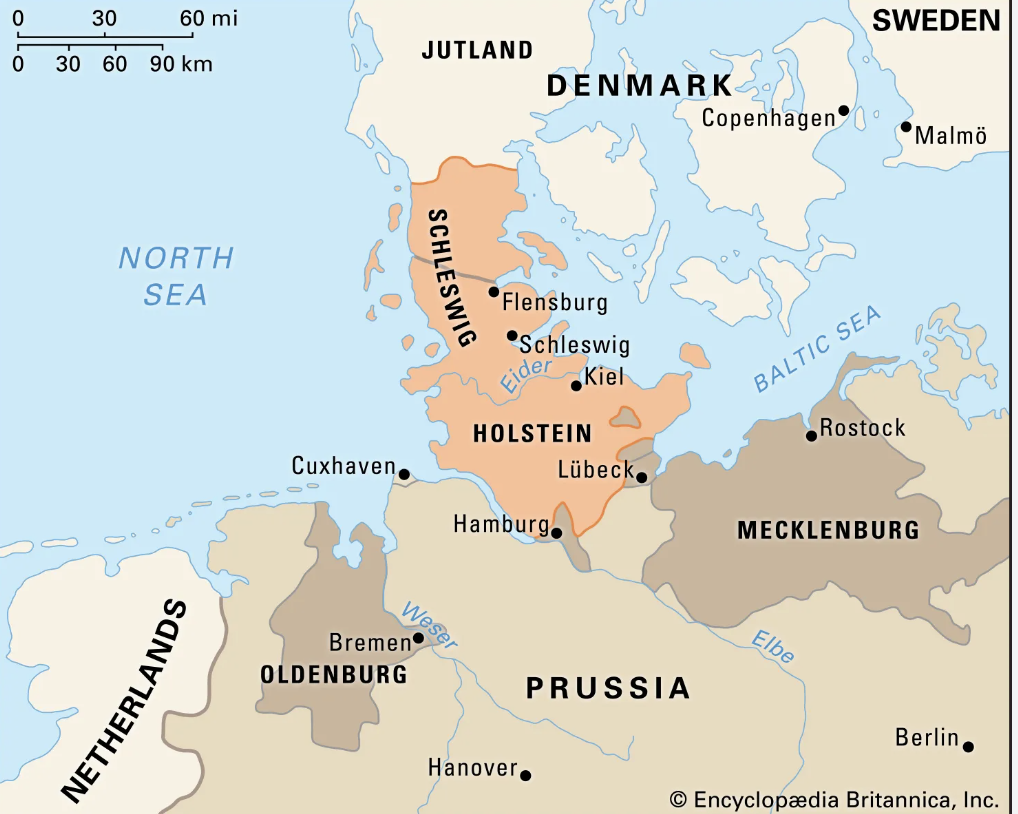
"Only three people have ever really understood the Schleswig-Holstein business – the Prince Consort, who is dead – a German professor, who has gone mad – and I, who have forgotten all about it." Lord Palmerston, British Prime Minister 1859-65
The machinations of the various Danish duchies, their relationship to the burgeoning German Confederation and wider nineteenth century European power politics was famously obtuse; no one beyond the three mentioned by Palmerston ever understood it.
The Schleswig-Holstein question has become synonymous with a situation too complex to understand. Which is an oblique lead into my main topic today; what on earth happened to the UK economy at the start of October?
We all know the story. On September 23rd the short-lived Truss government announced several tax cuts and increases in expenditure but neglected to explain how to pay for them. The markets went crazy, and the interest on British government borrowing (gilts) rose exponentially. The Bank of England stepped in to reassure the markets by announcing they would authorise up to £65B of gilt purchases over the next two weeks to stabilise the cost of British government debt.
Then the story kind of went away as other stuff intervened to entertain the media. There were background noises about Quantitive Tightening, pivots, and something Schleswig–Holstein ish about UK pension funds but, it was complicated and so not part of any mainstream narrative.
So, I decided to do a little research as I’m intrigued by the story behind the narrative. I’m going to use a list format below as the story is somewhat complicated, but I’ll try to simplify.
1) Pension funds take money in from members. They invest this money and, as pensions become due, they hope that the income from the investments will be sufficient to pay for those pensions. (1)
2) This is the ‘matching assets’ process where projected money out is matched by future revenue streams.
3) Obviously as we’re dealing with many variables and long periods of time, complicated assumptions are made by pension companies to ensure they have the funds to meet their pension obligations. A range of investment options are used (equities, cash in hand, government and private bonds, property investment and a type of derivative known as (LDIs – Liability Driven Investments).
4) Sorry Tim. You lost me on that last one. LDIs?
5) LDI’s are basically a hedge. As pension fund projections of income are heavily dependant on interest rates, the pension funds take out what is effectively an insurance policy against interest rate movements. The collateral for the hedge is often government gilts. If the value of these gilts goes down, more are needed (a margin call).
6) When interest rates go down – which could adversely affect a pension company’s revenue stream, the policy kicks in and provides funds to smooth the pension company’s revenue.
7) When interest rates go up – which should in theory be a good thing as more income will come in – the pension funds however need to pay the insurer (I want to use the word counterparty here, but it tends to confuse rather than illuminate). (2)
8) So, when in September / October the interest rates on UK government gilts dramatically shot up and the underlying value went down, UK pension funds found that their collateral was worth less and that they were suddenly liable to pay their counter-parties lots of money.
9) This forced pension companies to make fire sales of liquid assets – for example, UK Government gilts.
10) But, at the same time two other things were happening:
a. The Bank of England had finally started to unwind its balance sheet of the government gilts it had on its balance sheet (£450B of QE for COVID expenditure for example).
b. The UK government’s mini budget promised a lot of spend, less government income because of tax cuts and no plan how this was going to paid for. The assumption is that they would have to borrow more by issuing more gilts to finance the new commitments.
11) So, we have pension funds and the BoE both dumping UK Government gilts at the same time as the UK Government wanted to issue more.
12) Too many gilts. Not enough buyers. The UK state simultaneously selling off and issuing more gilts. Supply increased, the value went down, the interest rates went up. A doom loop crisis! (3)
13) Bank of England steps in and reverses itself in a week and goes from Quantitive Tightening (i.e., selling gilts and tightening the money to supply) to Quantitive Easing to prop up the bond market and protect the pension companies from going bust.
Are we all clear now? Yes, the proximate cause of the issue was the government being opaque about financing of their fiscal plans. But behind the scenes we had a derivative driven pension market (shades of 2008’s crash perhaps) and a Bank of England both restricting and then growing the money supply and being forced to do so by an unwelcome cash-call in the pensions market.
What is the takeaway?
- Governments need to publish their spending & borrowing plans at the same time. As they are subject to the markets themselves, they need to convince the markets of their plans.
- QE and loosening the money supply has long term effects. Interest rates have been so low for so long, LDI’s offered a (it seemed) low-cost way of hedging this whilst freeing up cash to invest in riskier assets with greater returns.
Extraordinary monetary policy should remain just that – only to be used in a crisis and not as an expedient to meet the spending plans of governments who won’t raise finance in more normal ways (tax, borrowing, spending cuts, efficiencies).
- Complex financial instruments can obscure risk. Until a risk happens. And then they unravel. Regulators need to be stress testing institutions more regularly and with greater supervision. Although the market movements following the 23rd Sept were large, they were not implausible and so needed to be stress tested
And - I hear you ask - what happened to the Schleswig–Holstein regions of Denmark and Germany in the end? Wars happened. The question of who owned the duchies was finally resolved by the macro forces of war and of peace treaties and, sometimes, plebiscites. The complexities resolved themselves by blunt instruments and rough solutions.
Is this how the gilts, QE & pensions markets will work out with market forces playing the role of war?
Notes
1) Historically the UK had Defined Benefit pensions organised through employers. What this meant was that employees put money into a pot during their working life and the company guaranteed that when the employee retired, they would get x% of their final salary. Therefore, the company & the pension fund employed to manage the funds have to always make sure the fund is adequate to meet obligations. This is the type of pension fund affected by the recent chaos in the UK gilt market.
As Defined Benefit pension funds are expensive and complicated to maintain, the UK has gradually been moving towards Defined Contribution pension schemes in the last twenty years. Here, employees and employers both contribute towards a pension fund with a pensions company. The pensions payable to the employees when they retire are based on the fund performance in future – i.e., the future benefit is not guaranteed.
2) “To mitigate the risk, of the bank counterparty defaulting on its payments when the contract matures, the bank would post additional collateral as surety against the contract. Typically collateral is posted by whichever party is ‘out of the money’. It is considered good practice and is becoming standard market practice to minimise risk by posting only cash or high-quality government bonds as collateral” An Introduction to Liability based investment. Can you see the last sentence? This is what happened in the UK Sept / Oct.
3) Like all equities, government bonds follow the same rules; the yield (interest payable) has an inverse relationship to the value. A doom loop happens when – in order to generate cash – institutions are forced to sell their assets thereby lowering the price of those assets. This lowering price degrades their existing assets making them sell more. Lowering the price again.
UK Economy: What the hell is going on?
(I wrote this on 3 Oct - nearly a month ago. Apart from a few edits it’s substantially the same as written.)
The more one studies macro economics - the way our financial institutes and government work - the more one becomes depressed.
On the surface, credentialed bankers and politicians, project a veneer of competence; that they know what is going on and that by pushing certain levers, dialling up or down certain controls, they can smooth our economic landscape.
My revelation - probably long overdue - over the last few years is that actually we have incompetents in charge at best, bad actors at worst.
Like the contemporary study of history, economics seems to take perverse delight in ignoring the received verities of the past and acting like everything is new. That there is only now. Now will be different from thousands of years of human history.
So, we - the general public, the uneducated masses - knew instinctively that printing money was bad. Printing money is a childish response that clearly provides a short term relief at the expense of long term stability. We used to look at the cautionary tales of the Weimar republic, Zimbabwe, Venezuela, Argentina, and be thankful we lived in Western democracies where such idiocy couldn’t happen here.
It happened here…
To focus in on the UK. The closing of the economy - needlessly, foolishly - in March 2020, prompted the Bank of England to print £450B of money. Money that was given to government via monetarisation of the government debt (gilts). “How much do you want?” asked the Bank of England. And they printed it and used these funds to finance the governments COVID policy. Money was flying around the stagnant economy not backed by productivity or activity.
So we’ve got inflation. This isn’t a surprise. I’ve been signalling this eventuality for the last couple of years and I’m not that bright. I’m not credentialed. I don’t tend to talk in bogus imperatives. The future is always unpredictable but, based on this writer’s experience and judgement, the fact that inflation was coming down the track seemed obvious.
I’m not a Johnny come lately. I’ve written publicly that inflation was on its way due to crazy policy ideas of the Government / central bank nexus both here in the UK and elsewhere. I went public with my fears. Privately, I re-mortagaged six months early in January of this year because I knew rates would soon go up. So I’m personally very smug about that and glad that I did. But not everyone studies macro economics like I do. The general public look to our governments and financial institutions to look after their interests.
They didn’t.
Proximately, the Conservative government did two things and forgot two other things.
What it did: One, it underwrote the energy costs for both consumers and businesses by introducing an average price cap. As energy is very expensive (due to many factors, some, all, due to actual government policy on fossil fuel withdrawal and elective sanctions on Russia), this policy is very expensive (£100B a year? More? Slightly less). The second decision the government made was to lower taxes or cancel recent tax rises.
I’m generally in favour of lower taxes. I spend my money better than any government. Corporation tax is paid for by everyone and the higher it is, the less companies wish to remain or relocate to the UK. So the cancellation of the corporate tax rise from 19p to 25p was a welcome, and sane move. Lowering income tax. Yes, sure, why not. Cancellation of the National Insurance Tax rise was also welcome. Give me more money to spend in what I deem essential (home, heating , kids, and yes, that dreadful word, savings).
The government also abolished the 45% tax rate for those on over £150K a year and did away with the EU inspired cap on bankers’ bonuses. These two I have a hard time defending. The less tax, the better, always but this is a moment of national crisis with energy costs going up and the cost of living getting out of control. There is an argument of trickle down and the Laffer curve (where lowering taxes brings in more revenue) but this was the wrong time to test this out. The government would have been better to increase tax thresholds and do away with the pernicious fiscal drag we’ve been suffering for years.
But onto the two things missing. Firstly, if the government is spending more via energy support but also simultaneously lowering the tax burden, where does the money come from? It was bloody unforgivable and amateur hour for the government not to address expenditure and financing in the mini Budget. Shocking in fact. Interest rates and bond prices were rising already - worldwide. The Bank of England had finally got around to unwinding their bloated QE inspired balance sheet by embarking on Quantitate Tightening (ie, selling government bonds back onto the market). And then the government announced a major leap in expenditure and tax cuts. These commitments would require MORE borrowing at exactly the wrong time.
The second thing the government forgot was not to get the finance world on its side. Finance works off certainty and the British government seemed to relish in surprise. Pulling in the opposite direction to the Bank of England was a foolish move. Not to engage the Office of Budget Responsibility was equally stupid. Also, the markets were surprised and reacted accordingly. Sell the UK! Inflation and the general rise in interest rates are a worldwide phenomenon. The Uk Government’s stupidity meant they became the poster child for a wider movement and got blamed for all the sins of the financial world.
And onto the final piece. It seems that the rise in the yields of gilts uncovered some murky creatures at the bottom of the swap; pension companies. To improve income flow our pension companies were borrowing money in order to buy more gilts. So not just investing their funds but using those funds to borrow money to make further investments. Shades of 2008 all over again. The fall in UK government bonds left the pension funds exposed and on the verge (it’s alleged) of defaulting on their obligations.
So what did the BoE do? It pivoted and moved from a position of selling government bonds to buying them again. Using printed money. Up to £65B more of QE. Yes, in a time of high inflation, the BoE used its firepower to blast itself in the foot. They blinked and chose (maybe rightly, maybe not) to prop up the nefarious pension companies and abandoned their fight against inflation.
To summarise. Too much QE. Stupid COVID policies. Dreadful energy policy. Out of control government spend with no plan to curtail it. Too much government borrowing. Dodgy financial practices of the pension companies unsupervised by a BoE asleep at the wheel. Resumption of QE leading to more inflation down the track. And finally - maybe the worse sin of all; weakness, U-turns, uncertainty at the top.
And who suffers from this shambolic mess? The public who put trust in short termist politicians (of all stripes, Labour have NOTHING to shout about - they would have spent more during COVID in particular and anyway, because that’s what they do). The public trusted our financial institutions who have, again, let us down. The culpability of our betters leads to recession. Lost jobs. Blighted lives.
I used to think money was amoral. I don’t anymore. It can be immoral.
The Siege of Jerusalem: A Review of Josephus’ The Jewish War
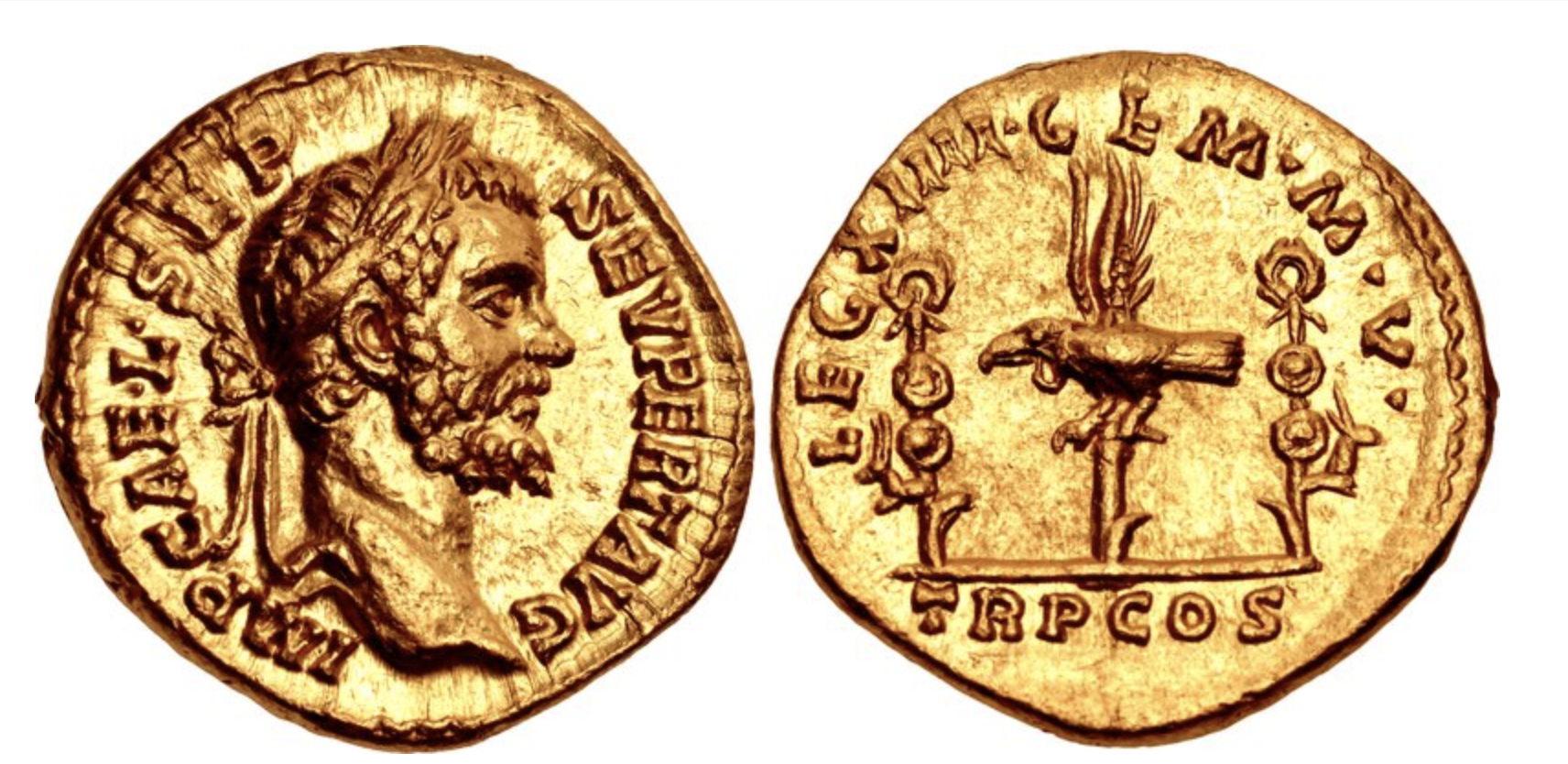
A gold Aureus struck by Septimius Severus in 193AD. Due to their rarity, gold coins were less debased.
On his deathbed in York, Roman Emperor Septimius Severus (193-211) gathered his two sons and co-heirs around him to give them some advice about running the vast empire when he was gone:
"Be harmonious, enrich the soldiers, scorn all others"
A bit harsh but Severus had been a successful Roman soldier/emperor – leading the imperial armies to defeat multiple foes both internally and externally whilst expanding the Empire in Africa, Persia and Scotland (1). He’d enlarged the army during his reign and given them a substantial pay rise. But where did the money come from to pay for this?
Answer: He debased the currency by reducing the silver content in the Roman coinage – the denarii – from 78.5% to 54%. This enabled him to cheaply expand the money supply to meet his priorities (pay the troops). In the years that followed his death, the Roman Empire was, predictably, racked with inflation.
Let’s pause here and ask a question…
What lessons can we learn from Roman Inflation for the present day?
Is there anything instructive to be learnt now - in 2022 - from the example set by Septimius back in 211? Something that perhaps addresses the issue of governments thoughtlessly expanding the money supply to meet some perceived emergency need?
My contention is, whether you wear a toga or a smartly tailored suit, the lessons of economics apply equally and always. The same rules apply. There is nothing new under the sun. And yet in our arrogance and ignorance, we forget. “Things are different now,” we bleat pathetically as the waves - commanded to cease - roll remorselessly past our gilded thrones. (2)
To meet increased expenditure all governments - ancient or modern - have the same list of choices to finance that expenditure. The options are as follows:
Don’t do it
Cut expenditure elsewhere
Raise taxes
Borrow the money
Debase the currency
The order I put these five options is - of course - often inverted by politicians. The first three are hard and have real time accountability. The latter two postpone the pain and push it into the future. Guess which options politicians increasingly favour? (3)
Crisis of the Third Century
Septimius unwittingly set in motion a series of disasters for the next seventy years as short-lived Roman emperors grappled with both inflation but also with invasions, plague, and endless civil wars. Whereas English historian Edward Gibbon might say the mid second century AD was the best time in history to be alive, the third century most certainly was not (4).
The 3rd century story is a depressingly familiar one.
Following Septimius’ death, his two sons didn’t live harmoniously together, quarrelled, and Caracalla killed Geta going on to become one of Rome’s worst emperors. His decision to expand citizenship to all peoples of the empire – sometimes painted as a noble and liberal move – was brought on by his excessive spending. More citizens equalled a larger tax base. (5)
And so, with wearying predictability, emperor followed emperor, crisis follow crisis, rebellions drew troops from frontier defences which, in turn, allowed multiple barbarians invasions through the gaps this created. At one point the empire even split into three. And all whilst inflation wrecked the economy.
The third century’s equivalent of a central bank was the Imperial Mint where the empire’s coins were created. Whereas modern day governments Quantitive Ease billions into existence at the touch of a button, their ancient predecessors debased the currency by adding increased amounts of base metals to the coinage. The consequence of this was the same as QE; lots of inflation caused by a prior expansion of the money supply. Same as now.
So how did the Romans deal with this issue? Badly, to be honest.
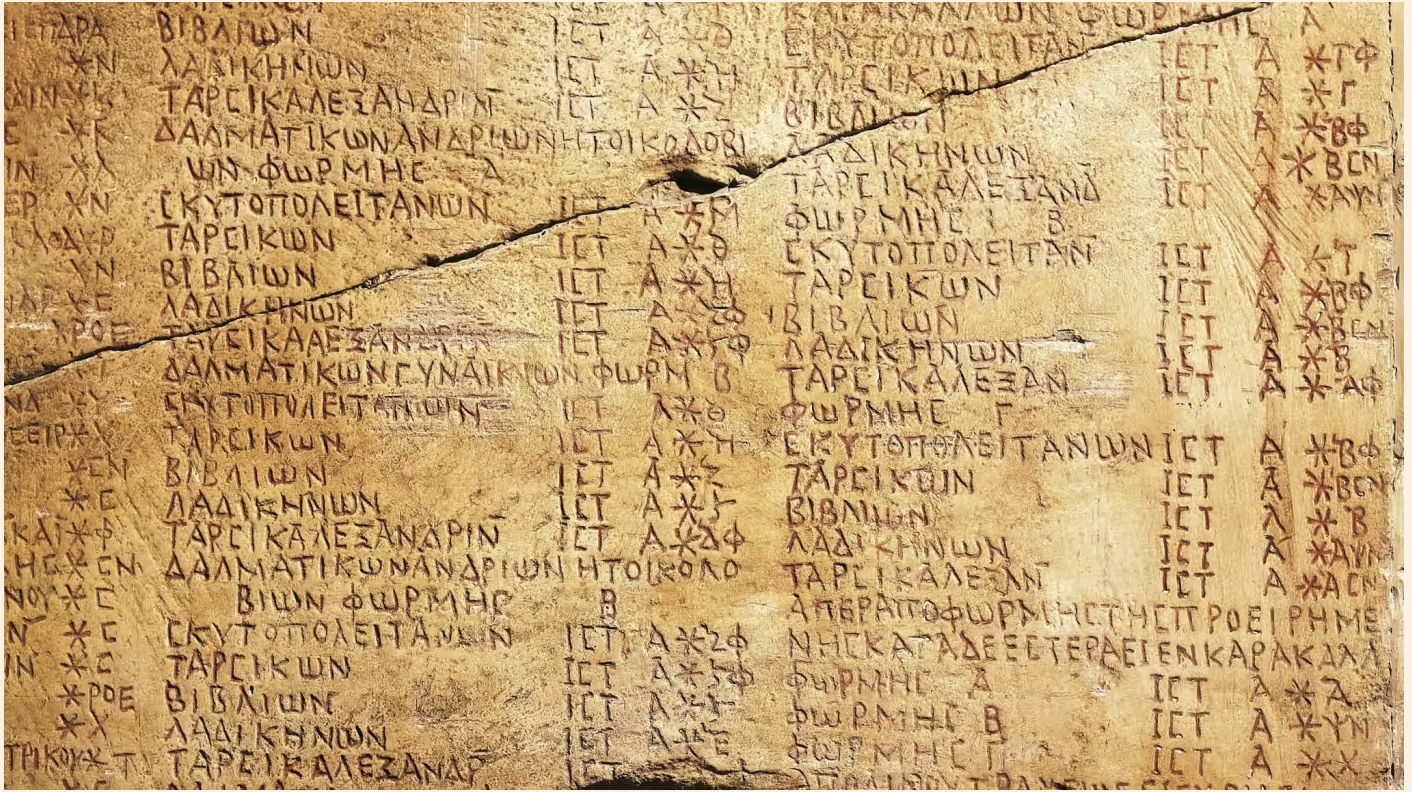
Extract from The Edict on Maximum Prices
Enter Diocletian (though hat tip to Aurelian)
Militarily, the Emperor Aurelian (270-75) put the empire back together with a series of lightening victories from East to West before he was tragically murdered (5). He started the process of dealing with inflation by producing higher value and higher worth coins not affected by debasement. However, it was his eventual successor Diocletian (284-305) who really tried to get to grips with inflation.
His most famous economic policy was the Edict on Maximum Prices of 301 where he laid down the maximum prices for over 1000 goods and services. However, like the Labour government’s Prices and Incomes policies of the 1970’s or the Tory government’s disastrous energy price cap from 2017 onwards, artificially holding down prices never works. As a wiser UK Prime Minster once said “you can’t buck the markets.”
Despite a harsh penalty for transgression (death), the price controls collapsed quickly into a heap of shut shops, food scarcity and rioting. How can businesses or agriculture survive if the input costs are higher than the costs of sale? There was also a strong element of misdirected blame in the Edicts’ preamble that labelled high prices immoral and unpatriotic and that people who sold at high prices were enemies of the Empire.
Obviously, Diocletian confused the causes of inflation with its results. The causes - debasement and a flooding of currency - were not addressed but the consequences - increased prices - were instead blamed. In the modern parlance, Diocletian claimed businesses were ‘gouging’ their customers. Yes, governments distancing themselves from the consequences of their own actions was alive and well back in ancient Rome.
But there was a second policy of Diocletian that is also relevant here; inherited jobs leading to forced labour immobility. The economic activity of the empire had reduced markedly over the dismal third century. If land was depopulated and unworked, not only did the food supplies decline but so did the tax yield. Tie people to the land and make them work in their father’s professions, then yields - both agriculturally and financially - would, in theory, go up. What was the loss of liberty for the individual if the greater good of the empire was served?
Practically speaking, the citizens of the Empire weren’t allowed to move and were compelled to follow in the footsteps of their parents for jobs. Thus if your father worked on the land, so you did too. If he was in the army, you also had to join. Ditto shopkeepers, tanners, blacksmiths, bankers etc. Arguably, this marked the beginnings of serfdom in Europe and the Middle Ages. (6) Michael Rostovtzeff, writing in 1926, put the tolerance of this loss of liberty down to a general weariness with the proceeding years of lawlessness and destruction, years where armies (internal & external) had taken crops forcefully and commerce had dried up as the Empire’s internal networks became dangerous to traverse.
“Force and violence were both the motto and the practice. Law and order were dreams. Besides, by a long evolution... the population of the Roman Empire had lost the habit of self-help and initiative, and had become accustomed to be ruled, and to be directed. It was no wonder then that in such conditions as these the residents of the Roman Empire had no force of resistance left and submitted blindly, though reluctantly, to the reforms of Diocletian and Constantine...”
So the liberty to move around and pursue one’s own course in life was severely curtailed. Life became smaller and meaner for the general population as Diocletian and his successors grappled with inflation & taxation using regressive and authoritarian means. Interestingly enough, as the population at large became less free, the fourth century emperors (though not Julian) became more remote, their courts more formal and the Emperor more unapproachable. This marked the moment when the empire switched from a Principate form of rule to what became known as The Dominate. The Emperor was no longer first among equals, he became a godlike figure. Naturally, the bureaucracy increased exponentially, as did the army. The wider elite solidified their position. Inflation didn’t affect them too much as they often managed to evade paying taxes. (7) Payment in kind - food for the army, services - was always an option in those inflated times.
Conclusion: Lessons to be learnt from Rome
So, what are the parallels - or warnings - from then to now, from the economic woes of the later Roman Empire to 2020’s style inflation?
The first point is an obvious one; don’t debase the currency. It doesn’t end well. Secondly, efforts to manipulate prices have a bad habit of failing and lead to supply issues. Thirdly, be aware of those who threaten to trade your liberty in order to meet some perceived emergency. Travel restrictions, a creeping control over freedoms and appeals to the collective over the individual are all potential signposts on the road to authoritarianism.
The Roman Crisis of the Third Century is traditionally dated 235-285. The Empire in the West lasted until 476. In the East 1453. But the Empire - of both East and West - was radically different following the crisis. It was still the Roman Empire but the compact between citizen and state had changed completely. Inflation hasten this change.
If you liked this article on Roman Inflation, why not read more on Rome where I investigate the pivotal battles in each century or review Mary Beard’s SPQR or Josephus’ Jewish War?
References
1) After his death, all of these gains were later lost.
2) This of course references King Canute - proving to his courtiers in the 11th century that nature will not bend to the will of kings. "Let all the world know that the power of kings is empty and worthless, and there is no king worthy of the name save Him by whose will heaven, earth and the sea obey eternal laws." One might also add the eternal laws of economics.
3) There is a sixth option which is plunder. To be fair, this was a more acceptable option back in Roman times. An equivalent today might be a special ‘one off’ tax on corporations (oil companies / pension funds / banks). Basically a fiscal raid.
4) Decline and Fall - Part One. I’m currently reading this epic tome.
4) More citizens also meant - in theory - more people to join the army, engage in civic activities sand share the responsibilities of the Empire. But taxes too. However, one of the perversities of universal citizenship was a decline in army recruitment. Previously citizenship was the reward for twenty years service in the auxiliaries. That inducement was now gone.
5) Aurelian’s achievements were legendary; all the more so due to the brief time period he achieved them. The Goths were repelled, Zenobia and the Palmyrian Empire were defeated and the East reabsorbed back into the Empire and the breakaway Gallic Empire was similarly demolished and reabsorbed. He also took the time to commission - yes you guessed it - the Aurelian walls in Rome.
6) These policies were reinforced and built on by Diocletian’s eventual successor Constantine.
7) Diocletian also reorganised the administration of the empire into more numerous but smaller districts. He split the control of taxes and administration from army command for the local governors. One consequence of this was that large local landowners were able to more easily evade taxes by bullying or ignoring these less important adminstrators.
The Third Century BC in Five Roman Battles
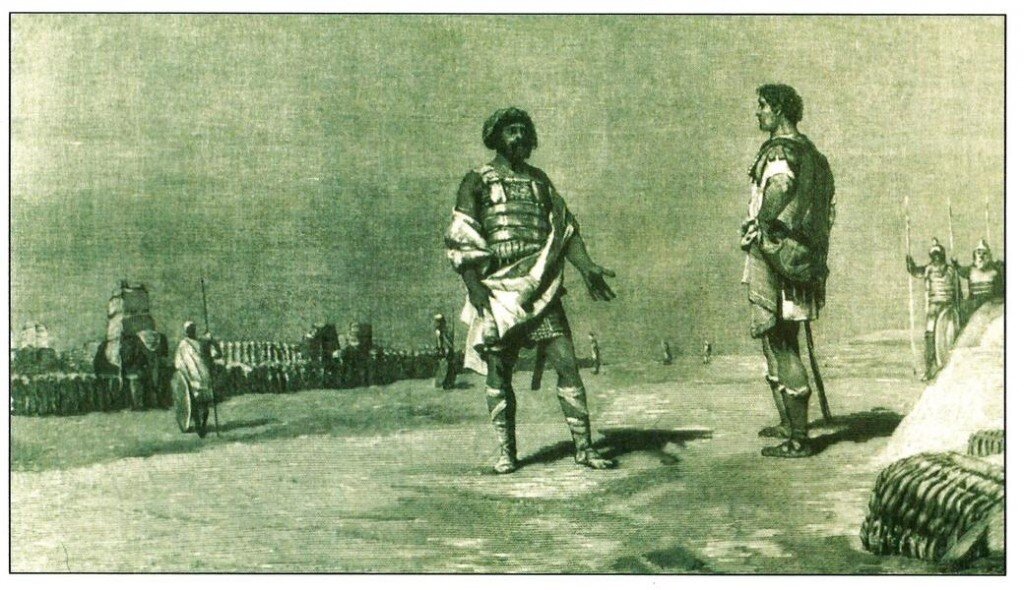
Hannibal and Scipio meet before the Battle of Zama. “After indulging in some mutual threats they departed,” Appian
The 3rd Century BC: Battles at a Glance
Battle of Sentinum (295 BC): Rome vs. The Samnites (The fight for Italy).
Battle of Asculum (279 BC): Rome vs. Pyrrhus (The original 'Pyrrhic Victory').
Battle of Drepana (249 BC): Rome vs. Carthage (The naval disaster of the Sacred Chickens).
Battle of Telemon (225 BC): Rome vs. The Gauls (Securing the North).
Battle of Cannae (216 BC): Rome vs. Hannibal (The masterpiece of encirclement, shocking loss)
Battle of Zama (202 BC) Rome vs Hannibal (Scipio’s Revenge)
(Part of the 5 Battles per century series. Read about previously explored centuries and their battles here.)
Overview of the 3rd Century BC
Hannibal, Scipio Africanus, Cannae, Fabius Maximus, war elephants, the crashing together of galleys in the Med, drowned chickens; the third century was a pivotal century in the development of Rome.
At the start of the century (299BC - to be clear!) Rome was a small, but growing, Italian power. By the end of the century it was a major Mediterranean player with an overseas empire and poised to get much larger. The common theory is that Rome never sought to be an empire, it just fought one defensive war after another, each success leading to a new enemy further and further from the actual city of Rome. Maybe that theory is true, maybe not (later date: Caesar & Pompey rather argue against it) but the 3rd century BC does demonstrate how each entanglement could lead to the next.
We all know about Hannibal and his crossing of the Alps with elephants. It’s one of those basic touch points from history - a bit mythical, a bit hazy, but we all sort of know the story. The 2nd Punic War was an epic conflict, a life and death struggle that could have caused the collapse of Rome. From this period (218 to 202) we’ll take two epic battles - Cannae 216 and Zama 202.
But the wars of Hannibal are but part of the tale of the third century BC. The Battle of Telemon 225 was a significant battle that ended one question only to open another. Plagued by the troublesome Celts on their northern border, Telemon (and it’s follow up victories), removed the immediate menace of the Celts. But it also made the Celts resentful and ripe for an alliance with a certain Carthaginian general as he passed through their territory seven years later. From the killing grounds of Telemon begat the massacres of Cannae and Lake Trasimene.
Skipping over the 1st Punic War, we go back a bit further and meet another historically well remembered figure - King Pyrrus of Epirus. From this earlier part of the century, we’ll take a look at The Battle of Asculum 279 where all those pyrrhic victories started to catch up with Pyrrhus.
And starting off the century, we have Rome clearing the way to Italian dominance with The Battle of Sentinum 295 which was the decisive battle in the Third Samnite War.
The Roman Army 3rd Century BC
A quick word on the Roman armies of this period. This was pre-Marian reforms and so the army was made up from levies of eligible citizens who put down their ploughs for the campaign season and went off to fight for the Roman state. Each year two consuls were elected and each consul had a consular army of roughly 20,000 men made up of two Roman legions and two allied legions. The legions themselves were made up of three classes of soldiers, divided by age and experience - the hastati, principes and, the veteran triarii. Light troops the verites and the cavalry made up the rest of the army.
1. The Battle of Sentinum (295 BC): Rome vs. The Samnites
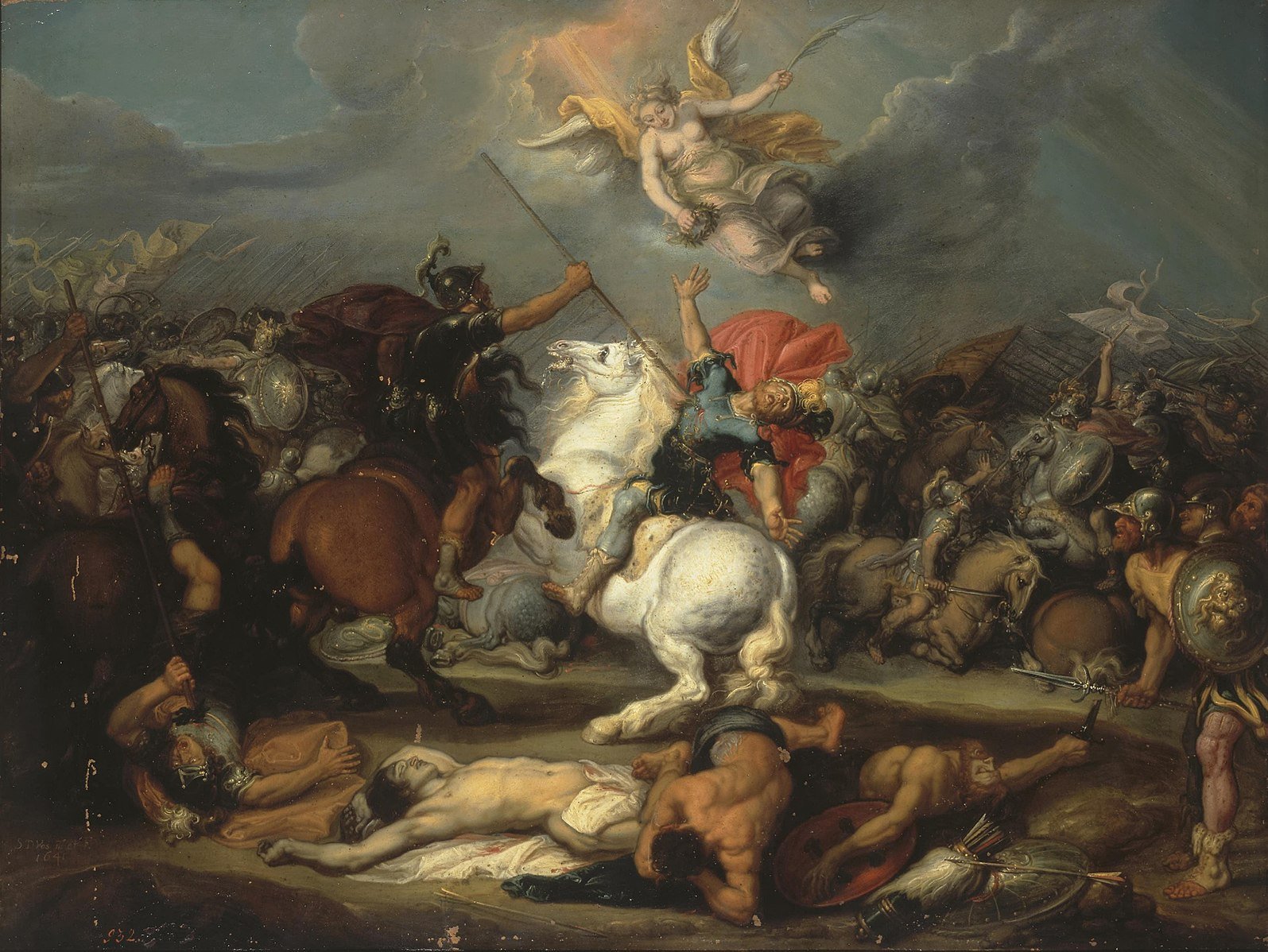
Simon de Vos - Death of Decius Mus. The Roman counsel pushes too far and is killed at The Battle of Sentinum
The Samnites were Italian rivals - a large confederation of tribes in middle Italy. As Rome grew, they tended to butt against their neighbours more and more. Three wars were fought agaionst the Samnites and Sentinum was the pivotal battle of the third and final war. Interestingly enough, although conquered, resentment continued between the two tribes which came to a head in the Social Wars two hundred years later and - following the battle of The Colline Gate - Sulla massacred 8000 Samnite prisoners as the Senate - next door but hearing the cries of the dead and dying - voted through his dictatorial powers.
Rome always prided itself that it only fought defensive wars but often acted as a provocateur - goading other states to declare war. Alarmingly, in the 290’s, they managed to provoke the Samnites into joining with three other tribes - the Etruscans, Umbrians and Senone Gauls - to take on the growing arrogance of their upstart neighbour. Consuls and proconsuls were dispatched to face this threat and two, Quintus Fabius and Publius Decius, squared up to a large army of Samnites and Gauls at Sentinum in 295.
The battle is remembered best for the sacrifice of one of the consuls - Publius Decius - seeking to rally his troops as their lines were broken by the Gauls following a failed cavalry charge. His sacrifice worked - or at least the reinforcements Quintus Fabius sent stiffened the resolve of the wavering troops - and the battle turned in Rome’s favour. Quintus outflanked the Samnites with his cavalry and they were routed leaving just the Senone who were now surrounded and destroyed.
The Samnite coalition broke up following this loss, leaving just the Samnites themselves to face the victorious Romans who prosecuted the war for a further five years before Samnite capitulation. The dominance of Italy pushed further down the peninsular.
2. The Battle of Asculum (279 BC): The Original 'Pyrrhic Victory'
"If we are victorious in one more battle with the Romans, we shall be utterly ruined."
And so King Pyrrhus of Epirus gave us the phrase ‘Pyrrhic Victory’ after his ‘victory’ against the Romans and allies at The Battle of Asculum 279BC. Pyrrhus is an interesting character from ancient history. He was king of Epirus, the border Greek state next to Macedonia and opposite the Italian peninsular. In the south of Italy at this time, there were many Greek cities. As we have seen, Roman power was extending down the peninsular and it was only a matter of time before the Romans and Greeks clashed.
This happened in 282BC. The cause is disputed. A Roman fleet was attacked by one such Greek city, Tarentum. Maybe. Or provoked into attacking. But it had the same effect; war between Rome and her allies and the Greek cities and their allies. One such ally came from Epirus back on the Greek mainland. The king of Epirus, Pyrrhus, crossed the narrow sea with an army organised around the phalanx, supported by war elephants and the dreams of creating an Italian empire.
Pyrrhus was a talented general - he beat the coalition of Roman led Italians at The Battle of Heraclea (280BC). He followed this up by marching on Rome itself but failed to take the city and so returned south for the winter. The two sides met again at Asculum the next year with around 40,000 troops each. Crucially, Pyrrhus’ elephants were to play a major part in the subsequent Greek victory (though the Greek coalition had now been joined by many Italians including the ever present Samnites).
The armies lined up and locked into an infantry melee whilst on the wings the elephants and cavalry fought it out. The Roman infantry was having the better of the day in the middle and all sides watched as some Daunians - Roman allies - sneaked up from behind and sacked the Greek camp. However, at this moment the elephants broke free of their blockers on either flank and started to roll up the Roman infantry from left and right.
The Roman army retreated from the field losing nearly twice as many troops as the Greeks. The Romans though could make up these losses whereas Pyrrhus and the Greeks could not. Therefore, Asculum became the archetypal Pyrrhic victory. Rome’s advance down the Italian peninsular continued.
Pyrrhus himself went off adventuring and losing in Sicily against the Carthaginians, losing to the Romans back in Italy and was finally went back to Greece itself where he was killed in some street fighting in the Peloponnese by a tile thrown on his head by a woman from her roof.
Aside: The Battle of Drepana (249 BC): Naval Disaster and Sacred Chickens
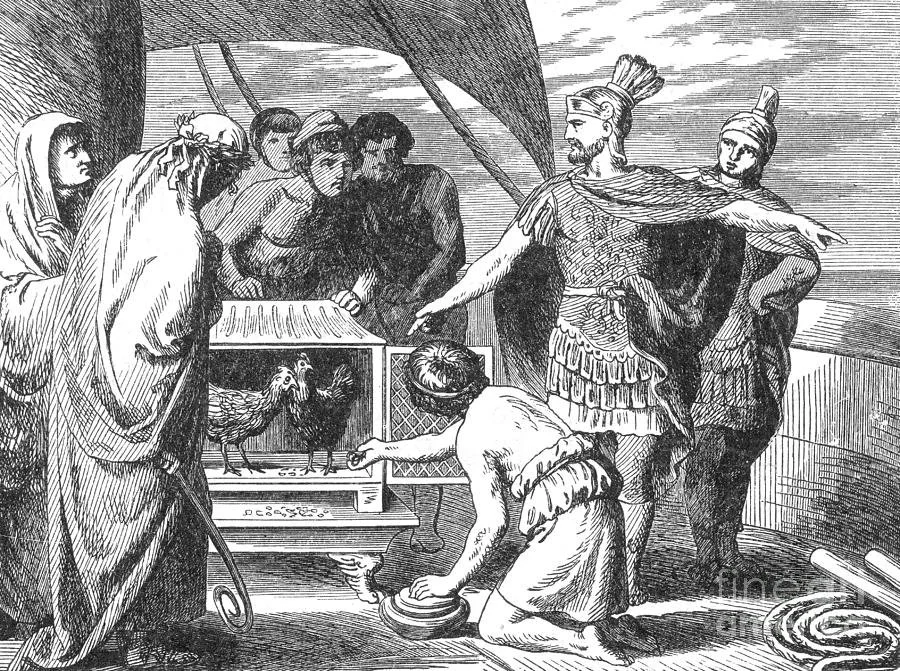
Claudius Pulcher orders the chickens over the side.
We shall skip the First Punic War (264-241) where Rome took on the might of the African Carthaginian Empire. Not that there weren’t battles a plenty with lots of noteworthy anecdotes but are limited to just five battles. The two powers fought for twenty years with battles centred around Sicily and - new for the Romans - the sea. Large sea battles were fought in the Med and Rome quickly got good at this form of warfare.
One anecdote about Publius Claudius Pulcher and the chickens needs to be told. Romans were a suspicious lot and always looking for signs of blessings from the divinities. One ritual involved examining the behaviour of the sacred chickens before a battle. Depending on how they ate the seeds laid out for them, the Romans could predict good fortune or not. Before the important naval battle of Drepana, Pulcher’s chickens refused to eat - a very bad omen. So he threw them overboard and into the sea: ‘Since they do not want to eat, let them drink!’ he apparently said - wit being important even back in ancient Rome. Obviously he then went onto catastrophically loose the oncoming battle with most of the Roman fleet annihilated. Lesson: Don’t mess with the chickens!
3. The Battle of Telemon (225 BC): Defeating the Gauls
Rome was sacked in 390 BC by an army of Gauls. Subsequent generations of Romans never forgot this humiliation and so harboured a long held resentment and fear of the Celtic tribes to the north. As Rome expanded over the next one hundred and fifty years with various tribal wars and alliances, the Gauls began to fear they would be next on the hit list, especially after Rome started sending settlers into nearby lands. Deciding that attack was the best form of defence, a large confederation of Gauls from both Cisalpine Italy and France got together and started heading towards Rome in search of plunder.
But this was not the Rome of 390. Having emerged stronger and more disciplined followed the first Punic War, Rome and her allies (who also feared the Gallic invasion) fielded three large armies. One army took the fight to the Gauls’ homelands whilst the other two - under consuls for the year Gaius Regulus and Lucius Papus created, in effect, a pincer movement with the marauding Gauls trapped in between. The site of the battle was Telemon (modern Telemone) about 70 miles from Rome.
The Romans and allies outnumbered the Gauls (something like 100,000 to 70,000) and were better organised and disciplined. Some of the Gauls - like the Gaesatae - fought naked which - with arrows and spears and sling shot flying around - didn’t help much in the ensuing battle. As is often the case in ancient battles, there were in fact, two engagements, an infantry crush and a separate cavalry battle nearby. At Telemon, the Romans won the cavalry battle and so returned to the infantry battle to tip the scales for their side.
The Gauls stood and fought but 40,000 - surrounded - were massacred and 10,000 captured. The consul Regulus died in the battle but his colleague Papus didn’t and led his victorious troops into the Gaulish territories to extract revenge, plunder and lands. Further victories followed in the next couple of years and more Roman settlers were given lands previously occupied by the Gauls.
So, when Hannibal was looking for allies soon after to support his invasion of Italy, guess which bunch of dispossessed and angry tribes he found favour with?
4. The Battle of Cannae (216 BC): Hannibal’s Masterpiece
“Such was the result of the battle between Hannibal and the Romans at Cannae, which was begun after the second hour of the day and ended within two hours of night-fall, and which is still famous among the Romans as a disaster, for in these few hours 50,000 of their soldiers were slain and a great many taken prisoners.” Appian - The Foreign Wars
Games of Thrones recreated Cannae as The Battle of The Bastards. Hannibal out thought and out fought two consular armies and eight legions and massacred them in this battle down in the south of the Italian peninsular. The way to Rome lay open but Hannibal inexplicably missed his opportunity being more concerned with ransoming captives than following up on his stunning victory (though it is true, Carthage perversely ignored Hannibal’s requests for more troops and money to win the war).
Hannibal had invaded Italy two years earlier by crossing the Alps with a Carthaginian army made up of many nations, many tribes. Early victories in 218 and 217 made the Romans wary of tackling Hannibal so, at Cannae, they gathered a huge army led by the two consuls to put an end to him once and for all. What happened next was that Hannibal used the sheer weight of Roman numbers against them by enveloping their army with his own troops providing no way out of the slaughter for the penned in legionaries. The Roman army was systematically annihilated with perhaps 50,000 deaths and around 20,000 taken prisoner.
Rome lost its Italian allies in the South and the majority of its fighting forces. The City mourned for 30 days, human sacrifices were reinstated to appease the gods but, ultimately, more armies were raised and Hannibal was pinned down in the bottom of Italy for the next ten years. He’d won the battle but lost the war. In fact, a young Roman survivor from Cannae, Scipio Africanus, would come back to avenge the losses on this day.
Young Scipio - bearer of a famous name - was also personally invested in the fight against the Carthaginians. Some might say that Punic War 2 became a grudge match between the Scipios and the Barcas. As the Romans fought Hannibal in Italy, a second front was being busily engaged in Spain. Early in the conflict Scipio’s father and uncle were both killed in the Iberian conflict. This was personal for Scipio and he begged the Senate to allow him to take command of the depleted and demoralised Roman forces in Spain. His confidence (arrogance even) impressed them and - with no other candidates - gave the young man charge of the army.
Scipio turned the war around, eventually driving the Carthaginians out of Spain. He now took the fight to the Africans and invaded their homeland. Hannibal, still in Italy, was recalled and the stage was set for the final showdown of the Second Punic War.
5. Battle of Zama 202 BC, Rome’s revenge
It is rumoured that Hannibal and Scipio met in person in the land between their two huge armies before the Battle Zama. (Interestedly enough, they also met many years later at a banquet). If they did then it was an historic meeting; the two famous generals whose personal qualities and leadership summarised the Second Punic War.
At Zama, Hannibal had the larger army, Scipio had the larger cavalry forces. Hannibal used elephants which proved ineffective and even counter productive. Whilst the infantry slogged it out over many hours, pretty evenly matched, the cavalry fought at the wings with the Romans (and their Numidian allies) proving the stronger. So it was that the Roman cavalry returned at a crucial point and attacked the Carthaginians from the rear. The Carthaginian army was destroyed though Hannibal escaped. The Second Punic War was over.
3rd Century BC: Summary
So the Third Century ended with the Romans triumphant in the Western Mediterranean. Her existential enemy for much of the century - Carthage - had been humiliated and forced to pay huge tributes as well as other harsh treaty terms. The next century would see the final defeat and destruction of Carthage.
However, as a result of the defeat of Carthage, the Romans had established themselves as the preeminent power on the Italian peninsular taking out the Samnites and Celts and many others. From now on, whilst there were the occasional challenges, there was only one real power in Italy.
But more than this. The third century had shown that Rome was resilient. The disaster of Cannae - so very nearly a knockout blow - had been dealt with, more armies raised and the war won. With the west secured, Rome would now increasingly look East to that other great power, Macedonia and the Greek city states. Her star was in the ascendent. At home though, things started to fall apart for the republic. That though, is in the next episode.
Further Roman Articles
If you enjoyed reading about the battle of the 3rd century BC, why not try some other centuries in my Five Battles series? Or if you want to read all my Roman articles including reviews, read on!
Inflation: Useless Politicians and Bankers
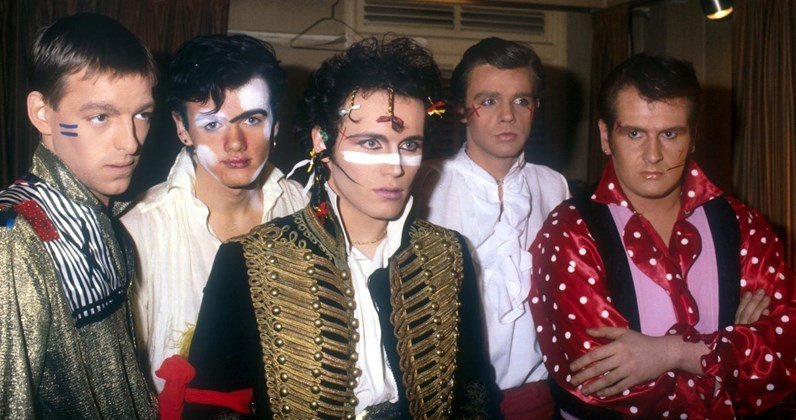
The Bank of England’s Monetary Policy Committee, April 2022.
“And I will destroy your high places, and cut down your images, and cast your carcases upon the carcases of your idols, and my soul shall abhor you.”
Who knew?
Print £440B of new money and you get, subsequently, inflation.
And yet we're all supposed to act like we're surprised. "Wow! Where did that come from?"
Exactly a year ago I compared inflation to Voldemort - the evil that dare not be spoken about. Something that had been vanquished back when Reagan and Thatcher were in office and we were all into Adam and the Ants and driving Mini Metros.
But with current inflation rates of 7% in the UK and 8.5% in the US, here we are again. Again. Learning economic truths anew. One almost wants to get Biblical on the ass of those in power who wilfully, stupidly, created this mess. The standards of public life - I’m afraid have declined. Or perhaps they were never that high. But this goof seems akin to a blindfolded man throwing darts at a dartboard framed by balloons and getting shocked by the the resulting bangs.
"Inflation is cause by prior expansion of the money supply." This dictum was drummed into us during mid 80's economics classes.
What about another old favourite from the dusty book of forgotten economic laws? "Inflation is caused by too much money chasing too few goods."
(There is another contributory cast of characters in this 70's revival; the knock-on effects of hysterical Government COVID measures which shut the economy down for nearly two years, the concomitant increase in the prices of commodities, oil price rises (COP26 & ESG), sanctions against Russia and the disruption in the world economy caused by the war with Ukraine. These latter two however just exacerbated an existing trend. Any politician who tells you otherwise is lying.)
"Why did no one see this coming?" the Queen famously asked professors at the London School of Economics in 2008 after the credit crunch - so obvious retrospectively - was completely missed by the world's financial authorities. Perverse incentive structures, complicated instruments and misdirected regulations would be the answer. And venality.
This time though, what were they thinking - printing money and then being surprised when this debasement did its destructive thing on the currency?
Inflation is a tax we all pay as I have pointed out previously. Currently this tax is - officially - 7% in the UK. Real rates of inflation - ie, what you and me actually pay, run to double digits. This is before - of course - any tax hikes our governing classes are belated throwing at their whipped populations. The answer to the errors of too much government is never, ‘more government’.
So, to return to the Queen's question, why did no one see this inflation coming? Some did (me! me!) but the dominant riff from central bankers, until recently, is that the return to inflation was transitory. How’s that working out for ya? That rhetorical construction seems wilfully, and conveniently, blind. My contempt for those in power grows.
Printing money is a very dry subject made all the more so by its modern nomenclature - Quantitative Easing. The sums involved are too high for most of us to imagine. The monetary authorities all have impressive credentials behind their names, and occupy the high places of financial respectability. If they say that Quantitive Easing is really okay, and we’re not going to get screwed, who are we - the poor population - to disagree?
Inflation and cost of living are becoming the next grand conversation and perhaps already are - if we can absorb more than one meta-narrative at a time. There’s a cynical edge to the media I realise more and more as I get older. The MSM push one meta narrative at a time and everything is seen through this distorted - and temporary - lens. Brexit. Trump. Covid. Ukraine. Everything is about this one issue. Until it’s not. Meanwhile, central banks roll the printing presses and none of us wonder how the hell anything is paid for.
Interests rates must rise to curb inflation. Similarly treasury bond yields must, and are, rising. The alternative - more QE - beyond the craziness of the ECB - must surely out of the question this time. Even in the thickest skulls. You can't fight a fire by dousing it with £1.62 a litre petrol. Weimar Germany, 70’s Britain or Mugabe’s Zimbabwe are not to be aspirational models of good stewardship.
And if someone - whether politician or central banker - suggests in the future that printing money is a good thing we'll know, perhaps - and again - that inflating a currency is a quick fix that carries long term, and destructive, consequences.
Won't we?
However, the cycle time it takes to forget stupidity in our society is diminishing. So, at the present rate of forgetfulness, I’d give it five years before some highly remunerated moron will suggest, pompously - like they know what they’re saying - that increasing liquidity in the economy by QE to stimulate investment is the way to go.
And they’ll be wrong but we’ll do it anyway.