Divine Discontent
Divine Discontent

(In which Tim strays semi-cluelessly into the realms of philosophy, ham fistedly applies it to business and then reverses himself at the end of the article inelegantly. Situation normal then!)
Linkedin is an unusual place to find philosophical insights laced with religious undertones.
Posts tend to celebrate being at an exhibition stand in a conference hall somewhere, are thrilled at coming third place in an obscure sectoral awards ceremony or enthusiastically virtue signal support for some fashionable cause.
All well and good, it is a business network after-all. Quotidian posts are gonna do what they’re gonna do. We all play the game.
So my interest was piqued when I saw a video featuring an old boss of mine - now head of a multinational organisation - in which he used the phrase ‘divine discontent’ to describe grappling with a large business problem.
Interesting phrase that - divine discontent. And not just because of the alliterative quality of the phrase, though poetry in written and spoken discourse always attracts being so rare.
An otherworldly dissatisfaction… An innate restlessness with the status quo... I can certainly picture a divine discontent driving a Weber-esque worldly asceticism, powering a Protestant work ethic of ceaseless productivity to be nearer the divine. (1)
But I can think of two other applications of divine discontent which eschew any religiosity; personal journeys and, more prosaically, business problems. Indulge me.
Firstly, and briefly, the personal. A divine discontent implies an uncomfortable gap between ‘what we are in comparison to what we have the power to become’. (2) Put simply, you could be achieving more in all the normal vectors of life - family, relationships, work, personal growth. The discontent drives change in your habits and aspirations. It propels you forward into being more engaged and, presumably, happy.
And Business? I believe this is the context where my ex boss was using the phrase. (3) Here a divine discontent suggests a discomfort with a process, a strategy or product. A feeling that those processes, strategies, and products could be better; that there is a gap between what is offered and what could be offered.
I’m sure we all have this feeling from time to time. Everybody knows that a camel is a horse designed by a committee, and that a fuzzy purpose results in an unsatisfactory result. Or that by constantly narrowing a scope results in timid innovation and lost opportunities.
So, maybe we should engage our divine discontent. Perhaps, as humans, we weren’t designed to be comfortable. Comfort suggests complacency and inertia neither of which are admirable qualities in business life.
Pearls are created by grit. Irritation can develop into beauty. Likewise divine discontent can transform that adequate, mediocre widget into a world beating semiconductor!
There is a potential downside of us all following our instincts though. Imagine everyone obeying their inner voices, articulating their inner discontent! Business life would become a constant and vexatious battle of self righteous bores convinced that God was telling them that the widget has been designed wrong.
Mmmm. maybe then, let me revise myself. Divine discontent is probably best in the religious field. How can I become closer to God, serve him better by good deeds, by engaging in my community? Second, the personal. Why am I unhappy? What can I do to reboot my life so it is purposeful and fulfilling? And then, in the business world, we should have leaders that are always uncomfortable with current successes, products and strategies and are looking for new horizons. Top down.
Or - if you have a divine discontent at work - get the hell out and follow your own dream. Your instincts are often right but are flattened by compromise. Be the pearl, not the mud!
Notes
1) Max Weber - The Protestant Ethic and the Spirit of Capitalism (1905)
2) Neal A Maxwell
3) I remember a time, was it 15 years ago?, when all senior managers at a certain multi national, started using the word ‘maniacal’ as if being paid to do so. Every project had to have a ‘maniacal focus’. We all had to be ‘maniacal’ in signing customers. In retrospect, and at the time, the herd like mentality of a certain type corporate animal appals me. Bellends.
Unkept Good Fridays

Unkept Good Fridays - Thomas Hardy
〰️
Unkept Good Fridays - Thomas Hardy 〰️
There are many more Good Fridays
Than this, if we but knew
The names, and could relate them,
Of men whom rulers slew
For their goodwill, and date them
As runs the twelvemonth through.
These nameless Christs' Good Fridays,
Whose virtues wrought their end,
Bore days of bonds and burning,
With no man to their friend,
Of mockeries, and spurning;
Yet they are all unpenned.
I hadn’t read this poem by Thomas Hardy until today. Written the year before he died in 1928, it discusses the unsung fates of ‘nameless Christs’ who likewise suffered throughout history but are unremembered, whose stories remain unpenned.
In one way, its rationalism is entirely correct; we are all God’s children and each of us are worthy of celebration and equality before history. We all navigate the same path, face the same doubts and share the same ultimate fate.
But the poem is not especially concerned with universal equality; in my reading it is a poem of courage. Like Christ, certain people have displayed this foundational quality; the courage to stand up and speak your truth. The consequences for doing so - like Christ - can be appalling. There is no end, or change, to human nature and it can be, as well as kind and compassionate, also cruel and uncaring. To stand against received opinion, in any age, is a dangerous pastime.
Christ died for our sins. He was an individual but, like many biblical stories, I think the truth is more instructive than literal. He was abandoned, put on trial, humiliated, tortured and killed but rose again from the dead to point the way of redemption. It is both personal but universal.
The correct path (one hesitates to write righteous) isn’t easy. We all know that and struggle daily to be better versions of ourselves. This takes courage. Courage takes many forms but the courage to seek out the better parts of human nature and avoid the easy, destructive path, is a strength all us ‘Christs of unwrit names’ must battle each day. There is no redemption without struggle and that struggle is personal, unremitting and, often as not, forgotten by history but, perhaps, perhaps, remembered in eternity.
And that is my Easter message through poetry and scripture.
The full Hardy poem can be read here.
Reversion to the Mean

Brighton West Pier - photo Tim Robson
Inevitably things revert to the mean. Over time, and on average, a variable will tend to regress back to its historical average. The term is often used mathematically, or in the study and prediction of the financial markets. We all know, I think, that stocks for example, tend to revert back to trend. It’s the underlying principle behind investments and, specifically, pensions.
Interesting but, I wonder, does this concept also apply to personalities? Stay with me; being at home and not commuting for a year, I had time to ponder abstract concepts, sift the data and make (wild) conclusions. It’s what I do.
My starting point might be relationships. From what I’ve observed, perhaps participated in, personalities tend to move back towards ‘normal’ behavioural characteristics within a relationship. A person may start in the honeymoon period all sweetness and unselfishness - this is natural; we all want to impress. But gradually, through familiarity and, I don’t know, confidence or boredom, a personality will inevitably revert back to its previous default setting.
I think instinctively every parent knows this. Much as educationalists and social theorists may wish environment to be key - the process of socialisation is a real thing after-all - any parent can observe their child’s character from early on. It doesn’t really change. Of course, children become adults, and as they do so, they become more sophisticated and learn to mask their impulses and imperfections, but ultimately, I think, character is formed at birth.
Yes I’m aware I’m treading leadenly where angels fear to tread and my assertion is the sort that only the very clever - or very stupid - would dare to cast out publicly but, there you go, it’s why I get paid the big bucks. My tens of readers would expect nothing less of me.
What about politics and economics? Do they revert to the mean, following a shock, a disruption? There’s some merit in that assertion - a period of correction following a market distortion for example. Expected and priced in. But what if things don’t revert? Or the reversion is delayed beyond reasonable?
Dictators all die. Evil regimes all fall. Good times are followed by bad and worse by better. Interest rates will rise and debt will be inflated away. Or will it? The problem with waiting for a reversion, a correction, is that whilst you live in that time, inhabit the bubble of expectation, the end point is unclear. No one wants to be the soldier shot five minutes before an armistice, the last investor before a price crash.
So, back to the personal.
People acting out of character, following a new fad, a regime, a diet or religion, often come a cropper. Actions following a divorce, maybe. Wild changes suggest and anticipate wild corrections. We can see the anomalous behaviour in real time and await the inevitable reversion to the mean of their lives.
But what about incrementalism? Slow changes, thought through and planned seem to be a positive way to go. A reversion to the mean implies a stability within that mean but what happens if the variables that calculate the stasis change? I think herein lies the answer, less dream big and fail, more baby steps in the right direction. Constantly and with purpose.
I think people tend to be more Fabius Maximus and less Scipio Africanus though that is a gross generalisation and rather insulting to the former. We need both archetypes but I suspect the broad mass of people are incrementalists, not bold strategists. A little movement in the right direction can shift mood and perspective and recalculate the equilibrium so that when a reversion happens - and it will - we’re no longer where we were but perhaps nearer where we want to be.
I used to end articles like these - ones where I feebly grasp at large concepts and often as not grab the air - with the motto ‘Socrates sleeps easy tonight’. You know, how great thinkers may read the abstract and shake their heads at my pretensions and go back to deliberating high thoughts and complex theorems. True enough. But the simple act of coalescing thoughts and putting them down pushes the needle ever so slightly in the right direction.
Whatever happens, happens rightly.
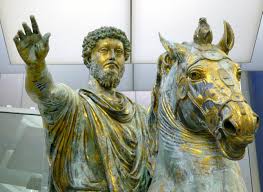
Recently I've been reading my long-neglected copy of Meditations by Marcus Aurelius. For those of you who are not familiar, Marcus Aurelius was the Roman Emperor between AD 161 - 180. He was the last in the series of 'The Five Good Emperors' - Nerva, Trajan, Hadrian, Antoninus Pious and himself. This time (96-180) is often considered the height of the Roman Empire, where the borders reached their fullest extent, the exterior walls were built and the citizens within enjoyed relatively long years of peace and good governance.
Marcus fitted the Platonic ideal of a philosopher-king. Invested with supreme power he was also a thoughtful and mediative man. He wrote Meditations whilst on the campaign trail fighting the Germanic tribes as a stoic guide to life and as a personal diary to himself. Stripped down, his philosophy was that life is essentially inconsequential, but what determines a worthwhile life is acting rationally and for good and not to be emotional about temporary highs or lows for they are as nothing in the broad sweep of history.
The above quotation - Whatever happens, happens rightly* - piqued my interest. It summarises in just four words, a whole philosophy and is thus a very powerful sentence. It appears on the surface to embrace a form of karma; that we are unwitting actors within a cosmic Fate of which we have no control but I think it goes a little deeper than this.
One has to understand where Marcus was coming from in order to do this full justice. I think the following quotation helps clarify a little more:-
Many grains of incense fall on the same altar: one sooner, another later - it makes no difference.**
Like the wisdom of Solomon I'm so fond of in Ecclesiastes, Marcus details the outward futility of man's actions. In this example, incense falling on the altar being a metaphor for successive waves of human generations, Marcus points out the folly of human vanities. The short term seeking of pleasures, accolades, profit, will be all be forgotten in the grand scheme of things.
A gloomy message, yes? And yet no - a realistic message, for Marcus discerns patterns and repetitions in human drama. Let's look at another quote to demonstrate:-
Reflect often how all the life of today is a repetition of the past; observe that it also presages what is to come. Review the many complete dramas and their settings, all so similar, which you have known in your own experience, or from bygone history... The performance is always the same; it is only the actors who change. ***
Anyone who has lived a few years can see the truth in the above and smile in recognition. This is even more emphatic for students of history. In politics, war, economics, human relations, there is, as I quoted previously in different article, 'nothing new under the sun'.
So far so rational. But what about the 'happens rightly' part? Doesn't this suggest some moral agency in what happens in life? Some 'good' pre-determined outcome? I would be equivocal about this. I suspect Marcus is using the word 'rightly' in a mechanicalistic manner, that universal laws of nature and humanity will always reassert themselves - like some cosmic regression towards the mean. For example, a forest may be cleared but, left to itself, it will grow again.
However, despite this, Marcus also believes in being rational, humane and good. In fact he believes that this is the only point of life; to live a 'good' life. And whilst one can only control oneself, the more good in the world, the better the outcomes and the higher the level of, temporary, human happiness. Nothing is perfect, everything has to re-won, the lessons of history always have to relearnt but, given a reasonable and sympathetic character, then things can be made better. And, that is what is important in life.
My quibble - if I have one - is that whilst I agree with much of Marcus' gloomy observation about each generation having to relearn the lessons of the past, is that I have a stubborn belief in the Enlightenment's idea of progress. Although each generation does have to relearn history and human relations, it does so not from some ground zero each day but 'standing on the shoulders of giants'.
Knowledge, inventions, the rule of law, democracy, freedom of speech, transparency, capitalism, food production, cheap transport, fast communications, the universalisation of knowledge via the internet, better health, drugs, sanitation; these are things that are spreading at the fastest rate ever in human history. We - pace Marcus - living only in the present - tend to ignore these advances but they are there and they are real. ****
So, what are we left with as base material concerns are stealthily obliterated? How can the sentient person avoid spiritual degradation, a creeping ennui? By doing good. Personal kindnesses. Rationality. Reason. Thoughtfulness. Curiosity.
The real battle, as suggested by Marcus Aurelius and other ancients texts, is, and always has been, individual and internal. And this is a fight that has to be won every day.
Firstly, avoid all actions that are haphazard or purposeless; and secondly, let every action aim solely at the common good. *****
Normal service resumed in the next article where I discuss the latest series of The Voice.
Laters
Tim
NOTES
* Meditations - Book IV, 10
** Meditations - Book iV, 15
*** Meditations - Book X, 27
**** One of the problems with a 24 hour media and - dare I say it - ignorant journalists with no understanding of history - is that the sensational, the temporary, the critical always wins the battle for attention against the long term, the underlying trend, the comparative. We are, as a world, empirically, more free, richer, healthier, better fed than EVER before. That is not to say that there aren't problems nor that there aren't temporary set-backs but, if you compare the world with 50 years ago, or 100 years ago, let alone 500, there is no comparison that we are better off in so many ways. Whether we are happier or more spiritually fulfilled is a completely separate issue, however.
***** Meditations Book XII, 20
Originally published 2016
The Seven Traits of Curious People (remix)
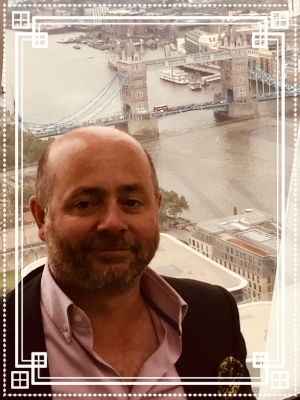
The sage of Clapham: Tim Robson preaching from his high places
Whoops! I did it again.
My Linkedin profile now proudly bears another article, another blind stumble through the dark alleys of wisdom. Yes, I recently posted The Seven Traits of Curious People. All very worthy and an exciting read, no doubt.
Why curiosity, Tim?
Why not, arsehole?
Seriously, why? Explain to us your thoughts in this windswept and ill-visited corner of the internet?
Okay. Let's lift the curtain behind the creative process this one time shall we?
At university I studied some evolutionary biology and psychology. Totem and Taboo, The Future of an Illusion, some bollocks by Marx (obligatory at Sussex), Durkheim's Protestant Work Ethic, Hobbes, Rousseau, Masters and Johnson and Shire Hite (for the more racy stuff). Recently, I've been reading my copy of Meditations by Marcus Aurelius, marvelling at Ecclesiastes and listening and purusing Jordan Peterson.
What interests me is the un-variability of the human condition. Again and again, Marcus Aurelius returns to this theme; how everything has been done before. Human emotions and dramas that is. Okay so we have a laptop and a mobile phone, Tinder and central heating but the pride, the wants, the seeking of status, the lies we tell others and ourselves; not changed.
And this interests me. Whilst we perfect the material side of life, the spiritual aspect remains the same. Marcus was, of course, a stoic who believed in the Pagan Gods. Solomon was a wise but over indulged King who sought meaning in life when none appeared to him (all is vexation and vanity). He moved away from his god (Jehovah).
Where rests truth and where lies meaning?
Fuck knows, to be honest. But let's be curious about everything, open our eyes and seek answers, however small, however insignificant.
Or maybe I've just turned fifty and so have tripped over the stone marked 'existentialist crisis'?
But I haven't the money for a red Ferrari, I don't seem able to attract women twenty five years younger than myself and I can't grow a ponytail. So, navel gazing philosophy and flimsy theories it is then.
As usual. Or as Danny Dyer - sage of our time says - Ter-wat!
Whatever happens, happens rightly
Recently I've been reading my long-neglected copy of Meditations by Marcus Aurelius. For those of you who are not familiar, Marcus Aurelius was the Roman Emperor between AD 161 - 180. He was the last in the series of 'The Five Good Emperors' - Nerva, Trajan, Hadrian, Antoninus Pious and himself. This time (96-180) is often considered the height of the Roman Empire, where the borders reached their fullest extent, the walls were built and the citizens within enjoyed relatively long years of peace and good governance.
Marcus fitted the Platonic ideal of a philosopher-king. Invested with supreme power he was also a thoughtful and mediative man. He wrote Meditations whilst on the campaign trail fighting the Germanic tribes as a stoic guide to life and as a personal diary to himself. Stripped down, his philosophy was that life is essentially inconsequential, but what determines a worthwhile life is acting rationally and for good and not to be emotional about temporary highs or lows for they are as nothing in the broad sweep of history.
The above quotation - Whatever happens, happens rightly* - piqued my interest. It summarises in just four words, a whole philosophy and is thus a very powerful sentence. It appears on the surface to embrace a form of karma; that we are unwitting actors within a cosmic Fate of which we have no control but I think it goes a little deeper than this.
One has to understand where Marcus was coming from in order to do this full justice. I think the following quotation helps clarify a little more:-
Many grains of incense fall on the same altar: one sooner, another later - it makes no difference.**
Like the wisdom of Solomon I'm so fond of in Ecclesiastes, Marcus details the outward futility of man's actions. In this example, incense falling on the altar being a metaphor for successive waves of human generations, Marcus points out the folly of human vanities. The short term seeking of pleasures, accolades, profit, will be all be forgotten in the grand scheme of things.
A gloomy message, yes? And yet no - a realistic message, for Marcus discerns patterns and repetitions in human drama. Let's look at another quote to demonstrate:-
Reflect often how all the life of today is a repetition of the past; observe that it also presages what is to come. Review the many complete dramas and their settings, all so similar, which you have known in your own experience, or from bygone history... The performance is always the same; it is only the actors who change. ***
Anyone who has lived a few years can see the truth in the above and smile in recognition. This is even more emphatic for students of history. In politics, war, economics, human relations, there is, as I quoted previously in different article, 'nothing new under the sun'.
So far so rational. But what about the 'happens rightly' part? Doesn't this suggest some moral agency in what happens in life? Some 'good' pre-determined outcome? I would be equivocal about this. I suspect Marcus is using the word 'rightly' in a mechanicalistic manner, that universal laws of nature and humanity will always reassert themselves - like some cosmic regression towards the mean. For example, a forest may be cleared but, left to itself, it will grow again.
However, despite this, Marcus also believes in being rational, humane and good. In fact he believes that this is the only point of life; to live a 'good' life. And whilst one can only control oneself, the more good in the world, the better the outcomes and the higher the level of, temporary, human happiness. Nothing is perfect, everything has to re-won, the lessons of history always have to relearnt but, given a reasonable and sympathetic character, then things can be made better. And, that is what is important in life.
My quibble - if I have one - is that whilst I agree with much of Marcus' gloomy observation about each generation having to relearn the lessons of the past, is that I have a stubborn belief in the Enlightenment's idea of progress. Although each generation does have to relearn history and human relations, it does so not from some ground zero each day but 'standing on the shoulders of giants'.
Knowledge, inventions, the rule of law, democracy, freedom of speech, transparency, capitalism, food production, cheap transport, fast communications, the universalisation of knowledge via the internet, better health, drugs, sanitation; these are things that are spreading at the fastest rate ever in human history. We - pace Marcus - living only in the present - tend to ignore these advances but they are there and they are real. ****
So, what are we left with as base material concerns are stealthily obliterated? How can the sentient person avoid spiritual degradation, a creeping ennui? By doing good. Personal kindnesses. Rationality. Reason. Thoughtfulness. Curiosity.
The real battle, as suggested by Marcus Aurelius and other ancients texts, is, and always has been, individual and internal. And this is a fight that has to be won every day.
Firstly, avoid all actions that are haphazard or purposeless; and secondly, let every action aim solely at the common good. *****
Normal service resumed in the next article where I discuss the latest series of The Voice.
Laters
Tim
NOTES
* Meditations - Book IV, 10
** Meditations - Book iV, 15
*** Meditations - Book X, 27
**** One of the problems with a 24 hour media and - dare I say it - ignorant journalists with no understanding of history - is that the sensational, the temporary, the critical always wins the battle for attention against the long term, the underlying trend, the comparative. We are, as a world, empirically, more free, richer, healthier, better fed than EVER before. That is not to say that there aren't problems nor that there aren't temporary set-backs but, if you compare the world with 50 years ago, or 100 years ago, let alone 500, there is no comparison that we are better off in so many ways. Whether we are happier or more spiritually fulfilled is a completely separate issue, however.
***** Meditations Book XII, 20